
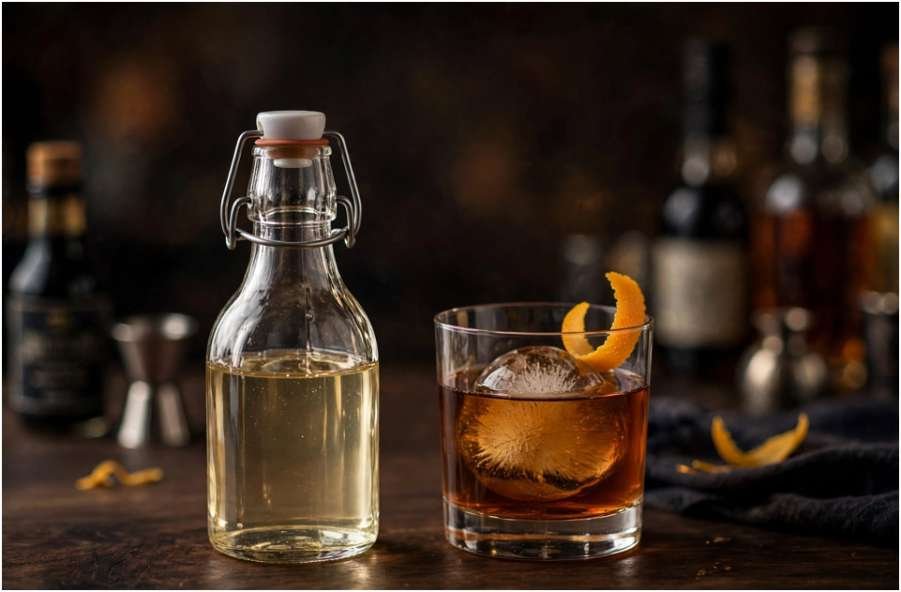
Every home bartender eventually hits a wall with watery Old Fashioneds and limp whiskey sours. I spent years wondering why my cocktails tasted thin despite using premium rye and fresh citrus. The culprit was not the liquor; it was the standard 1:1 simple syrup watering down each pour.
Learning how to make rich simple syrup 2 to 1 fundamentally changed my drinks. This heavy-density syrup introduces concentrated sweetness alongside luxurious mouthfeel without dumping unwanted water into spirit-forward drinks.
Why 2:1 Ratio Syrups Outperform Standard Bar Syrups
Standard simple syrup splits white sugar and water down the middle at a 1:1 ratio. While fine for high-acid long drinks, it introduces unnecessary water into cocktails that require restraint. Rich simple syrup doubles the sugar volume against the water base, producing a concentrated sweetener that behaves differently in a glass.
The Dilution Problem in Spirit-Forward Cocktails
Shaking and stirring drinks naturally melt ice, providing essential dilution that opens up ethanol flavors. When your sweetening agent is already 50% water, you lose control over total water volume. According to cocktail science insights detailed on Serious Eats, uncalibrated water in simple syrups causes over-dilution before a drink hits proper serving temperature. Using a 2:1 rich syrup lets your ice chilling do the work it was meant to do without drowning spirit nuances in your favorite classic cocktail recipes.
Viscosity, Brix, and Mouthfeel
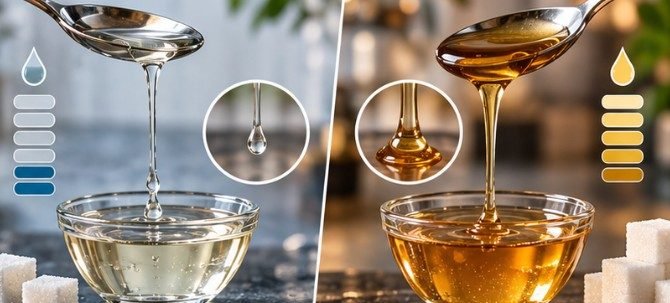
In professional beverage development, sweetness density is measured on the Brix scale. Standard 1:1 syrup measures approximately 50° Brix. Rich 2:1 syrup sits at roughly 66° to 67° Brix.
At this exact concentration, sucrose molecules create noticeable silkiness. The syrup clings to the palate, coats your tongue, and carries aromatic bitters across taste buds with far more weight than standard bar syrup could ever manage.
Equipment and Ingredient Proportions (Weight vs. Volume)
Precision dictates consistency. Measuring dry sugar by volume introduces error because granulated crystals pack unevenly depending on humidity and scoop density.
| Metric | Imperial (Volume) | Metric (Weight) |
| White Cane Sugar | 2 cups | 400 grams |
| Filtered Water | 1 cup | 200 grams |
For the cleanest flavor profile, use pure cane granulated sugar. Demerara or turbinado works wonderfully for dark spirits, but standard white sugar preserves neutral versatility. Always opt for filtered water; municipal chlorine distorts delicate aromatics.
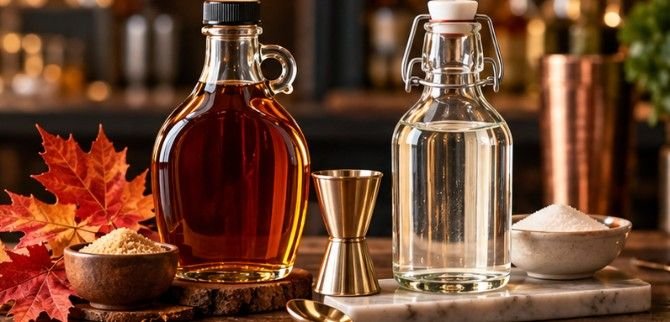
You need a small saucepan, an accurate digital kitchen scale, a funnel, and a clean glass swing-top bottle.
Two Reliable Methods to Make Rich Simple Syrup 2 to 1
Most traditional recipes instruct you to boil your mixture on high. That instruction is wrong. Boiling causes rapid water evaporation, instantly skewing your carefully measured 2:1 ratio into unpredictable candy territory. Here are the two ways I produce crystal-clear syrup behind the bar.
Method 1: The Gentle Warm Dissolve (Stovetop)
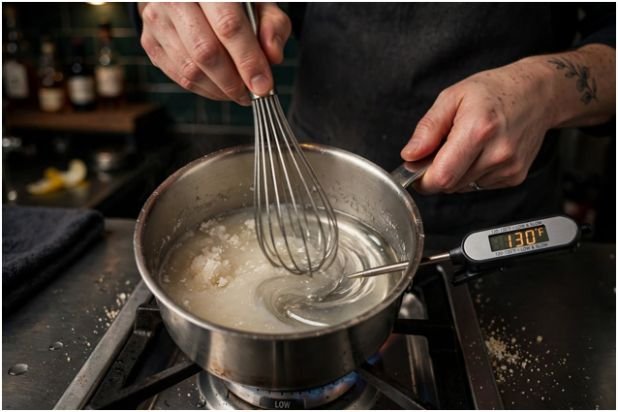
- Combine ingredients: Place your saucepan on the digital scale, tare to zero, and pour in 200 grams of water. Tare again, then add 400 grams of white granulated sugar.
- Apply low heat: Set your stove burner to medium-low.
- Stir continuously: Whisk gently. Keep the liquid moving so the sugar does not settle against the hot bottom and scorch.
- Dissolve without boiling: Watch the mixture turn from opaque sludge to clear amber, and finally into transparent liquid. The internal temperature needs to reach only 120°F to 135°F to dissolve sucrose entirely.
- Cool and bottle: Remove from heat the instant the liquid turns completely transparent. Let it settle to room temperature, then funnel it into a sanitized bottle.
Method 2: The Zero-Evaporation Blender Method
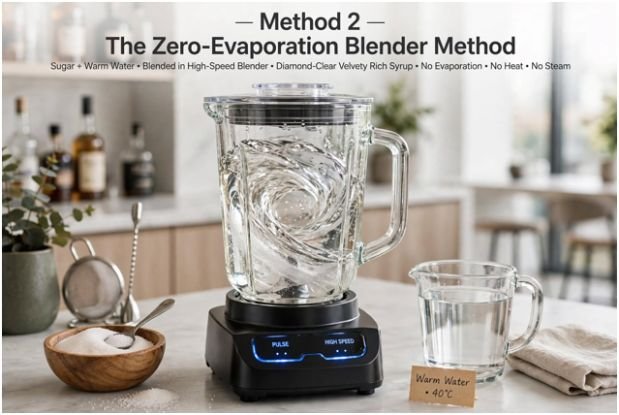
If you want zero water loss and perfectly uniform syrup, skip the stove entirely.
Pour 200 grams of warm tap water (about 110°F) and 400 grams of white sugar directly into a high-speed blender jar. Secure the lid tightly and run the blender on high speed for 60 to 90 seconds.
The mechanical shear forces and gentle friction dissolve the sugar completely without heating the liquid to evaporation points. Let the micro-bubbles settle for 10 minutes; you will be left with diamond-clear, velvety rich syrup.
Converting Legacy Recipes from 1:1 to 2:1 Syrup
You cannot swap rich simple syrup directly into cocktail recipes built for standard 1:1 syrup without over-sweetening your glass. Because 2:1 syrup is roughly 33% sweeter by volume, apply a standard reduction factor:
$$\text{Volume of 2:1 Syrup} = \text{Volume of 1:1 Syrup} \times 0.75$$
- If a recipe demands 1 oz of standard simple syrup, use 0.75 oz of rich simple syrup.
- If a recipe calls for 0.5 oz of standard simple syrup, drop to 0.375 oz (3/8 oz) of rich simple syrup.
This mathematical tweak cuts the volume of supplemental liquid while hitting the exact intended sweetness, making it a reliable base for experimenting with homemade infused syrups.
Storage Realities: Shelf Life, Crystallization, and Preservation
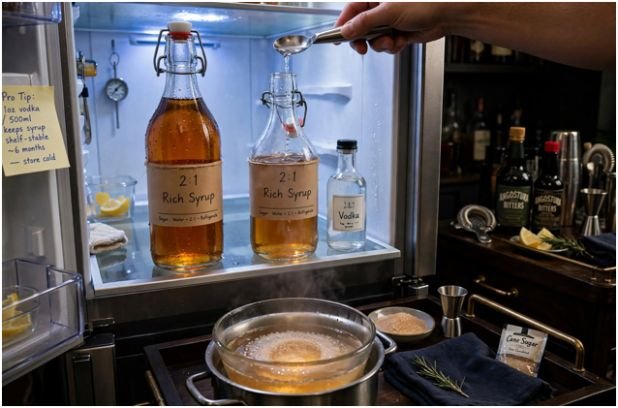
High sugar density makes rich simple syrup naturally shelf-stable. According to water activity data compiled by the USDA FoodData Central, solutions above 65° Brix create an osmotic environment that inhibits most common bacterial and mold growth.
- Refrigerated: Kept cold in an airtight glass container, 2:1 syrup maintains fresh quality for up to six months.
- Room Temperature: Safe on a dark bar cart for four to six weeks.
- The Pro Bartender Hack: Add half a barspoon (roughly 0.25 oz) of high-proof neutral spirit, like unflavored 80-proof vodka, to your finished batch. The spirit prevents surface mold spores from finding traction whenever the bottle opens.
If white sugar crystals gather around the neck or bottom of the bottle after several months, place the bottle in a warm water bath for ten minutes to dissolve them back into solution.
Frequently Asked Questions
1. Can I make 2:1 rich simple syrup using brown sugar or demerara?
Yes, using brown or demerara sugar at the exact same 2:1 weight ratio yields a rich, molasses-forward syrup ideal for whiskey and rum cocktails.
2. Why did my rich simple syrup crystallize in the bottle?
Crystallization happens when excess water evaporates during cooking or when sugar crusts on the bottle rim seed crystal formation throughout the syrup.
3. Do I need to boil the water to make 2:1 syrup?
No, sugar dissolves fully at temperatures well below boiling, and avoiding a boil keeps your measured liquid proportions perfectly accurate.
4. How long does rich simple syrup last compared to 1:1 simple syrup?
Rich simple syrup lasts up to six months refrigerated, whereas standard 1:1 simple syrup typically spoils within three to four weeks.
Stop Diluting Your Drinks
Ditching watery 1:1 syrup is the single fastest upgrade you can make to your cocktail program. Measure your sugar by weight, dissolve it with gentle heat or mechanical blender shear, and stash it in a clean glass bottle.
Once you experience the concentrated punch and velvety glide of true 2:1 rich syrup, standard bar syrups will never touch your shaker again.






5 comments on “How to Make Rich Simple Syrup 2 to 1: The Bar Pro’s Guide”