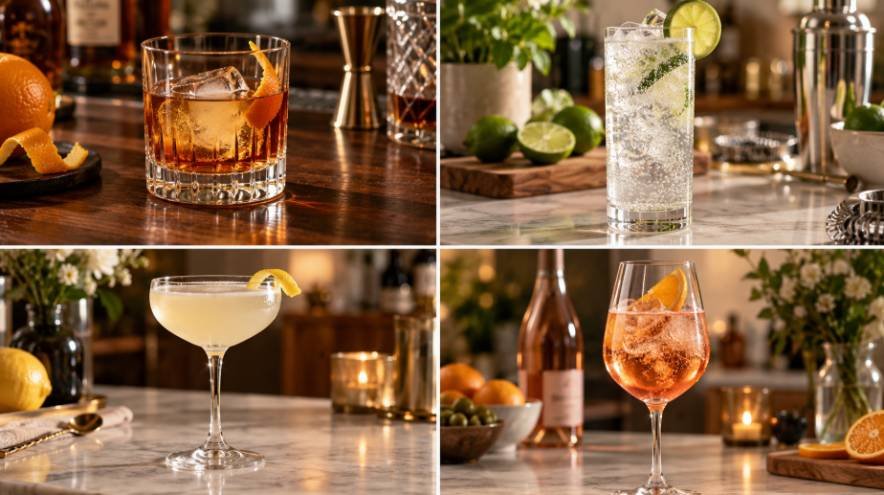
A beginner’s home bar does not need a cabinet full of specialty glasses. Four versatile shapes can cover most cocktails, spirits, wine, spritzes, and simple mixed drinks without wasting money or storage space. That is the practical idea behind choosing essential home bar glassware for beginners: buy by function first, not by appearance.
The right glass can also affect the experience. Shape changes room for ice, aroma exposure, and even how accurately you judge a pour. Cornell University reported that participants poured about 12% more wine into a wide glass than a standard one.
Start With Four Shapes, Not Fourteen
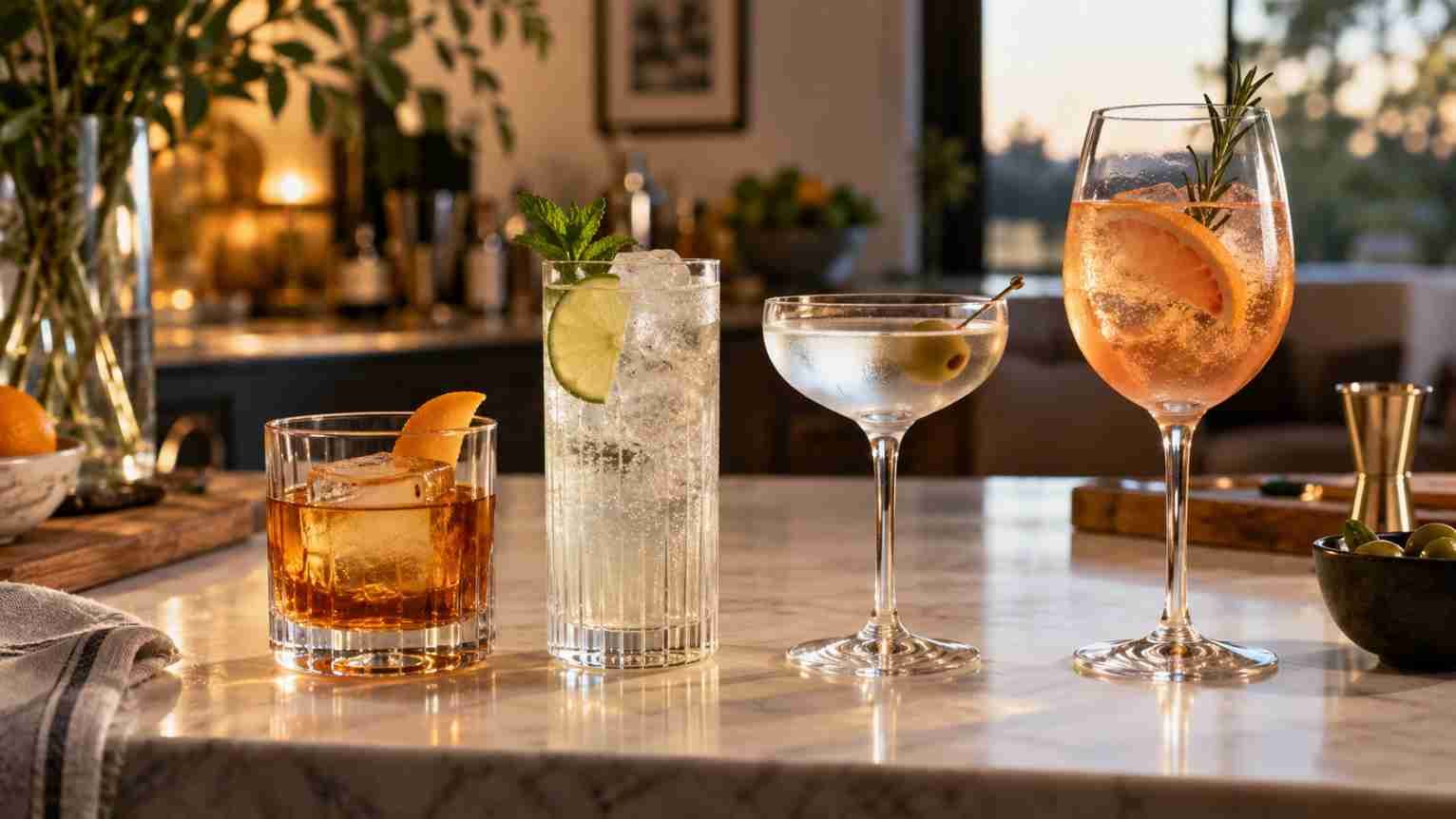
Most beginners can handle a broad drink menu with a rocks glass, a highball or Collins glass, a coupe or Nick & Nora, and one all-purpose wine glass.
| Glass | Useful capacity | Best for | Why it earns space |
| Rocks / double Old Fashioned | 9–12 oz | Old Fashioned, Negroni, whiskey | Stable and multipurpose |
| Highball / Collins | 10–14 oz | Gin and tonic, vodka soda, tall coolers | Room for ice and mixers |
| Coupe / Nick & Nora | 4–8 oz | Manhattan, Daiquiri, Gimlet | Ideal for drinks served up |
| Universal wine glass | About 12 oz | Wine, spritzes, Sangria | Replaces specialty shapes |
1. Rocks Glass: The Workhorse
Choose a double Old Fashioned or rocks glass in the 9- to 12-ounce range. Its wide opening makes it easy to add a large cube, build a drink in the glass, or express citrus oils over the surface.
It suits spirit-forward drinks such as Old Fashioneds and Negronis, but also works for whiskey neat, short sours over ice, and nonalcoholic drinks. Straight or gently tapered sides are usually easy to clean.
2. Highball or Collins: For Tall Mixed Drinks
A 10- to 14-ounce tall glass earns its place because many easy drinks share the same structure: spirit, ice, and a longer mixer. Think gin and tonic, vodka soda, whiskey highball, Paloma, or rum and Coke.
A Collins glass is generally taller and narrower; a highball is often slightly shorter and wider. Either works. Leave enough space for ice, mixer, and garnish without overflow.
3. Coupe or Nick & Nora: For Drinks Served “Up”
Once you start shaking Daiquiris or stirring Manhattans, you need a stemmed glass for drinks chilled and strained without ice.
These glass styles are particularly useful for spirit-forward cocktails, including options for people who prefer cocktails for people who don’t like sweet drinks.
A coupe has a broader bowl, while a Nick & Nora usually has a smaller opening and spills less easily. Buy the shape that feels more comfortable.
Glass shape can matter to aroma. The American National Standards Institute describes the standardized ISO wine-tasting glass standard as narrowing toward the rim to help concentrate aromas. That same principle helps explain the appeal of inward-curving cocktail glasses.
4. A Universal Wine Glass Is a Crossover Tool
A clear, medium-sized wine glass handles red or white wine, spritzes, Sangria, wine coolers, and many alcohol-free sparkling drinks. Beginners do not need separate Bordeaux, Burgundy, white wine, and sparkling sets.
Serving size matters too. The National Institute on Alcohol Abuse and Alcoholism defines a U.S. standard drink as 5 ounces of table wine at about 12% ABV, 12 ounces of 5% beer, or 1.5 ounces of 40% spirits. Measure those amounts once in your own glasses rather than assuming one filled glass equals one serving.
The Five-Point Buying Test
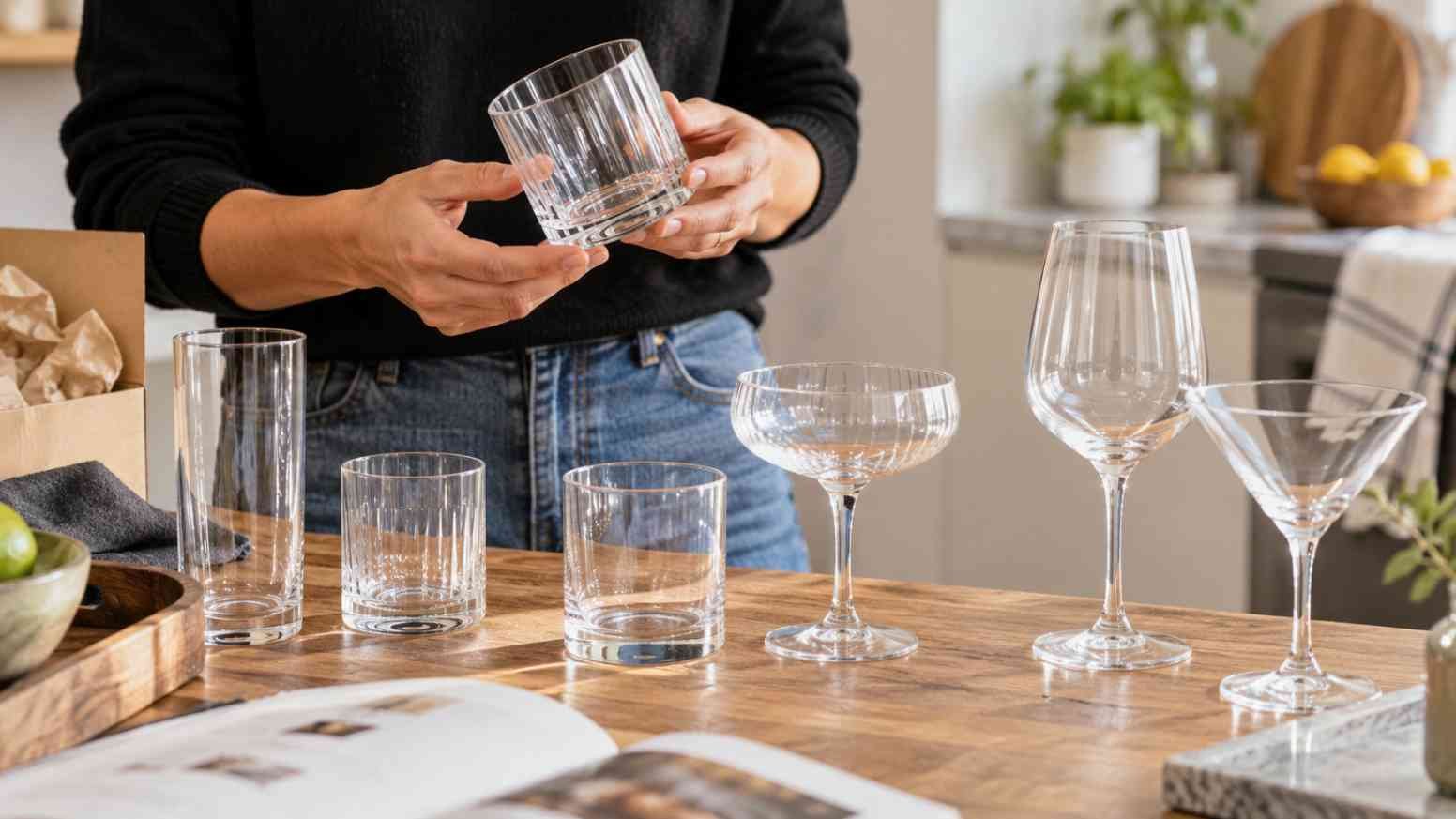
Use this quick test when shopping for essential home bar glassware for beginners.
First, check capacity. Avoid glasses so oversized that a normal serving looks lost.
If you regularly prepare drinks ahead for gatherings, glass capacity also becomes useful when deciding how to portion and serve batched cocktails.
Second, inspect the rim. A smooth, reasonably thin rim usually feels better for wine and cocktails served up.
Third, test stability. Rocks glasses should sit firmly, and stemware should not feel top-heavy.
Fourth, consider replacement cost. Everyday barware should be affordable enough to replace easily.
Fifth, read the care instructions. Dishwasher-safe glassware saves time, while delicate stems often benefit from hand washing.
For most homes, four of each style is enough. Six makes sense if you entertain regularly.
Material Matters, but “Crystal” Is Not Automatically Better
Lead-free crystal can offer clarity and a fine rim, but ordinary glass is often more durable and affordable. For daily use, lead-free, comfortable, and easy-to-clean matter more than prestige.
Older or decorative crystal deserves extra care. The U.S. Food and Drug Administration monitors lead in food and foodware and includes lead crystal and decorated glass among materials evaluated for leachable lead. Modern lead-free glassware is the simpler choice for a new everyday set.
Clear glass is also practical because it lets you judge color, dilution, clarity, and garnish.
Clean Glassware Is Part of the Drink
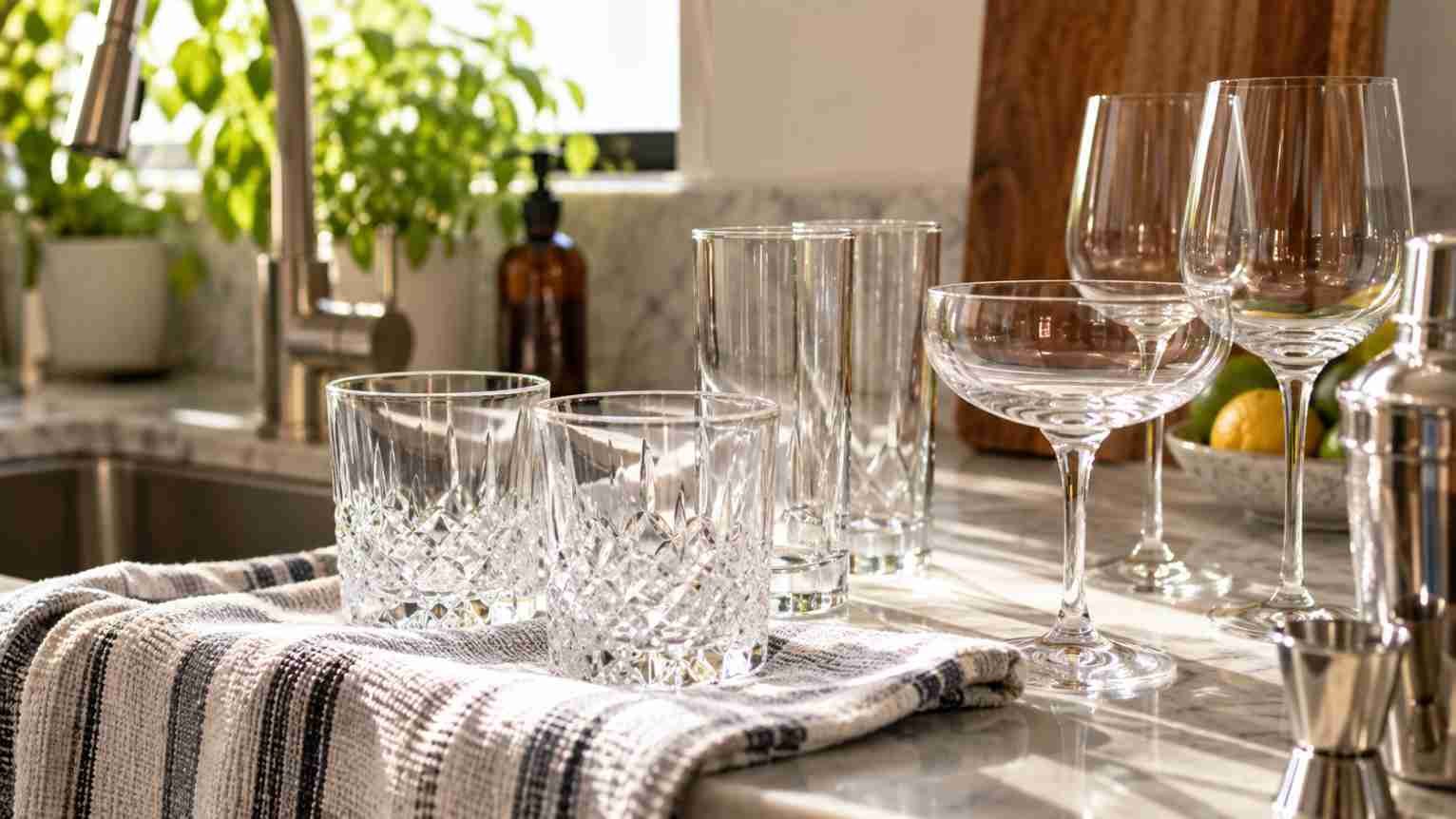
A glass may look clean while still carrying grease or detergent residue. That is especially noticeable with beer because residue can damage foam.
The Brewers Association advises that beer glassware be free of soil, grease, and lingering cleaner or sanitizer aromas. At home, rinse well, avoid oily residue, and let glasses dry fully before storage.
A simple check is to rinse a glass and watch the water. An even sheet suggests a cleaner surface; irregular droplets can indicate residue.
What Beginners Can Skip
Martini glasses, Champagne flutes, copper mugs, tiki mugs, whiskey tasting glasses, beer tulips, and shot glasses can all be useful, but none is essential on day one.
A classic V-shaped Martini glass is easy to postpone because a coupe or Nick & Nora serves the same chilled, strained drinks with fewer spills.
Specialize early only if one category dominates your routine. A whiskey drinker may value a tasting glass, while a sparkling-wine fan may want dedicated stemware. Buy for your habits, not a catalog checklist.
Frequently Asked Questions
1. How many types of glassware does a beginner home bar need?
Four versatile types are enough for most people: rocks, highball or Collins, coupe or Nick & Nora, and universal wine glasses.
2. Should beginners buy crystal or regular glass?
Lead-free crystal feels refined, but regular glass is often cheaper and more durable. Prioritize comfort, stability, safe materials, and easy cleaning.
3. How many glasses of each type should I buy?
Start with four of each style. Choose six if you regularly host friends or family.
4. What is the most useful glass for a beginner?
A rocks glass is hard to beat because it handles neat spirits, short cocktails, drinks over ice, and many alcohol-free serves.
A Smaller Bar Can Be a Better Bar
The best beginner collection is not the one with the most shapes; it is the one where every glass earns its shelf space. Start with four functional forms, learn how your favorite drinks fit them, and add specialty pieces only when a real need appears.
That approach saves money and reduces clutter while teaching you to notice capacity, aroma, ice, carbonation, and portion size. A thoughtful home bar can begin with sixteen glasses and still handle an impressive range of drinks. Buy fewer pieces, use them often, and let your actual habits decide what comes next.
Leave a Reply