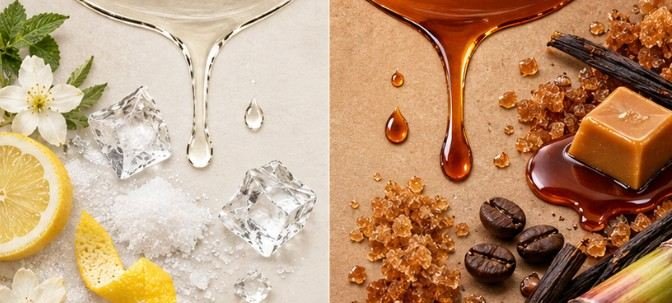
Two syrups made from sugar and water can make the same cocktail taste surprisingly different. demerara syrup vs simple syrup is not simply brown sugar versus white sugar. Simple syrup delivers clean sweetness with little extra flavor, while Demerara adds caramel, toffee, light molasses, and toasted-sugar character.
That difference matters in whiskey drinks, rum cocktails, coffee, iced tea, and mocktails. It can also be confused with another variable: syrup concentration.
The Real Difference Starts With the Sugar
Standard simple syrup is usually refined white granulated sugar dissolved in water, commonly at a 1:1 ratio. Demerara syrup uses golden-brown Demerara-style cane sugar.
The name is historically connected with Guyana’s Demerara region and sugar trade, although “Demerara” has also become a broader style name in global markets. Its residual molasses character is what gives the sugar its amber color and deeper taste.
One important correction: Demerara syrup is not automatically “rich.” Bartenders often make it 2:1 sugar to water, but it can also be 1:1. White sugar can likewise make a rich 2:1 simple syrup. Sugar type controls flavor; ratio controls concentration and much of the texture. Best for making cocktails for people who don’t like sweet drinks.
Demerara Syrup vs Simple Syrup at a Glance
| Feature | Demerara syrup | Simple syrup |
| Typical sugar | Golden-brown cane sugar | Refined white sugar |
| Flavor | Caramel, toffee, light molasses | Clean, neutral sweetness |
| Color | Amber to brown | Clear to pale |
| Common ratio | Often 2:1; 1:1 also works | Usually 1:1; 2:1 also works |
| Best fits | Bourbon, rye, aged rum, coffee | Gin, vodka, light rum, herbs, citrus |
| Limitation | Can dominate delicate flavors | Can feel flat in richer drinks |
Why Demerara Changes More Than Sweetness
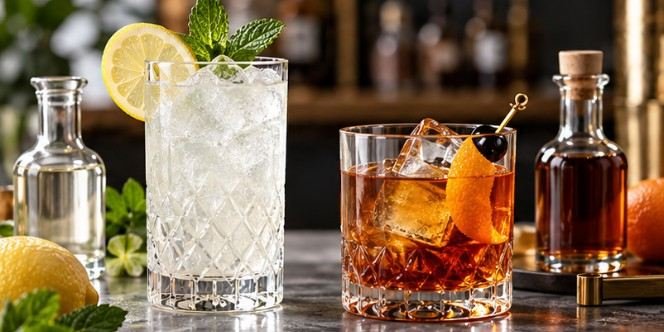
White simple syrup usually disappears into a drink. Demerara does not. Its darker sugar notes can make an Old Fashioned seem rounder even when the whiskey, bitters, dilution, and garnish stay unchanged.
That makes it useful with barrel-aged spirits. Bourbon, rye, and aged rum already carry flavors such as vanilla, oak, spice, caramel, or dark fruit, so Demerara often reinforces what is already there.
The same quality can work against a cucumber cooler, floral gin sour, or delicate fruit spritz. In those drinks, neutral simple syrup may leave more room for herbs, citrus oils, flowers, or subtle fruit.
Still, this is not a rigid rule. A Daiquiri variation can be excellent with Demerara if the goal is a richer, more rum-forward result.
The Best Home Test: Match the Ratio First
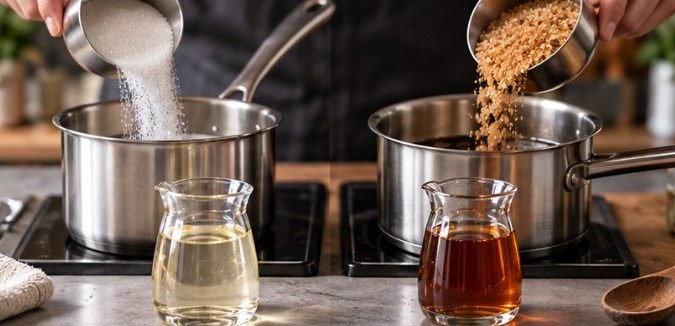
Make two small 1:1 batches. Use 100 grams of white sugar plus 100 grams of water for one, then the same amount of Demerara sugar and water for the other. Warm gently and stir only until dissolved.
Taste each in sparkling water, unsweetened iced tea, or the same cocktail. This isolates the flavor difference instead of letting thickness influence the comparison.
Then try a 2:1 Demerara syrup. It will feel denser and provide more sweetness per measured pour. If a recipe calls for 1:1 syrup, do not automatically replace it with the same volume of 2:1 syrup. Start with less, taste, and adjust.
Which Syrup Fits Which Drink?
Demerara often works especially well in Old Fashioneds, rum Old Fashioneds, tiki-inspired drinks, cold brew, shaken espresso, and chai because its caramelized flavors have enough structure around them.
Simple syrup is a safer starting point for Collins-style drinks, Mojitos, Gimlets, lemonades, fruit spritzes, and floral mocktails. It sweetens without introducing another strong flavor.
The practical question is not “which syrup is better?” Ask whether the sweetener should disappear or participate. That distinction usually makes the choice much easier.
A 20-Second Selection Checklist
- For aged spirits, roasted coffee, warming spices, or caramel-like flavors, test Demerara first.
- For cucumber, flowers, delicate fruit, herbs, or crisp citrus, begin with white simple syrup.
- Match 1:1 with 1:1 or 2:1 with 2:1 before judging the sugar itself.
- If the drink feels heavy, reduce the syrup before changing other ingredients.
This avoids a common testing mistake: changing sugar type and concentration simultaneously and then not knowing which adjustment improved the drink.
Is Demerara Syrup Healthier?
Not in a meaningful way for most people. Demerara’s darker color and less-refined image can sound nutritionally superior, but both syrups are primarily added sugar.
The FDA classifies syrups and packaged sweeteners as added sugars and lists a 50-gram Daily Value on a 2,000-calorie diet. USDA FoodData Central is useful for checking nutrient data on specific sugars and bottled syrups rather than relying on marketing language.
Harvard’s Nutrition Source notes that about 4 grams of sugar equals one teaspoon, a useful reference for putting sweetened drinks into perspective.
For broader intake guidance, the American Heart Association recommends limiting added sugars to no more than 6% of daily calories.
Choose Demerara for flavor, not because its brown color makes it a meaningful nutritional upgrade.
Homemade Syrup Needs Refrigeration
Homemade cocktail syrup should not be treated as automatically shelf-stable. Use clean equipment, refrigerate it in a sealed bottle, and make batches small enough to use while they still smell and taste fresh.
Oregon State University Extension includes syrup among foods that maintain quality longer under refrigeration.
If you notice mold, unexpected cloudiness, gas formation, or fermentation-like odors, discard the syrup rather than attempting to rescue it.
Misconceptions That Affect the Final Drink
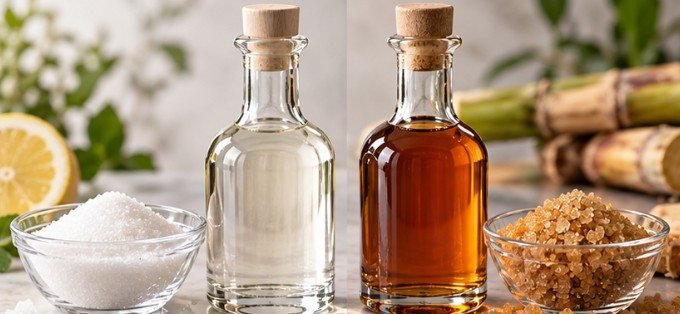
Demerara is not simply ordinary U.S. brown sugar. Commercial brown sugar is commonly refined sugar combined with molasses, while Demerara-style sugar generally has larger crystals and a different molasses profile. Turbinado can substitute in a pinch, but the finished syrup may taste lighter.
“Simple syrup” also does not mean only a 1:1 formula. Rich simple syrup is still simple syrup. The term describes the basic sugar-and-water preparation, not one mandatory concentration.
Finally, darker syrup is not automatically better in an Old Fashioned. If Demerara buries the whiskey or makes the finish seem unnecessarily heavy, use less or return to white syrup. Balance matters more than choosing the more fashionable ingredient.
Frequently Asked Questions
1. Can I substitute Demerara syrup for simple syrup?
Yes. Match the concentration first, then substitute and taste. Demerara adds caramel and molasses-like notes, so it can noticeably change delicate drinks.
2. Is Demerara syrup sweeter than simple syrup?
Not necessarily. At the same ratio, the bigger difference is flavor. Many Demerara syrups taste more intense because they are prepared as concentrated 2:1 syrups.
3. What syrup is better for an Old Fashioned?
Both can work. Demerara emphasizes caramelized and oak-friendly flavors, while white simple syrup keeps the sweetness cleaner and leaves the whiskey more exposed.
4. Can I use Demerara syrup in coffee?
Yes. Its toasted-sugar character pairs well with espresso, cold brew, milk drinks, and coffee cocktails. Start modestly, especially when using a rich syrup.
Make The Final Pour With Finese
The useful lesson in demerara syrup vs simple syrup is that sweetness is not always neutral. White simple syrup succeeds by staying out of the way; Demerara succeeds by bringing flavor with it.
If you make drinks regularly, compare both at the same ratio before experimenting with richer versions. Once flavor and concentration are separated, the choice becomes easier: use simple syrup when the drink already has the character you want, and choose Demerara when the sweetener should help build it.
Leave a Reply