Category: Drink Ingredients

  • Demerara Syrup vs Simple Syrup: Why One Changes the Drink

    Demerara Syrup vs Simple Syrup: Why One Changes the Drink

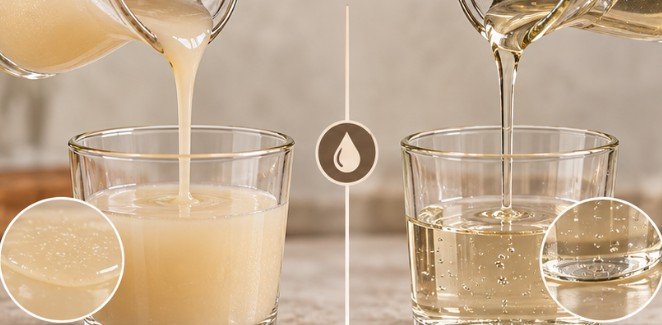
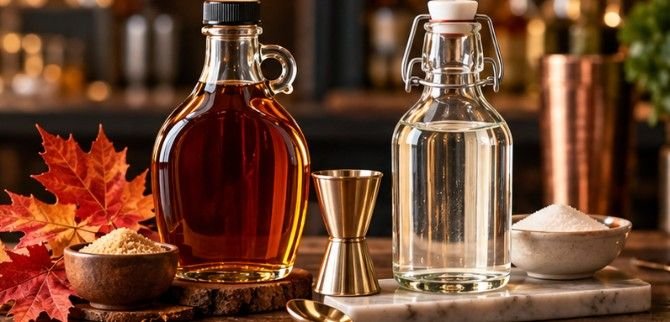
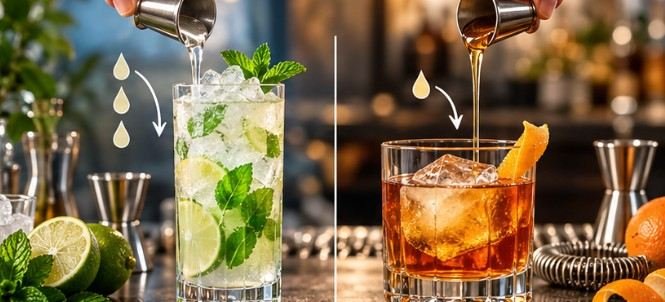
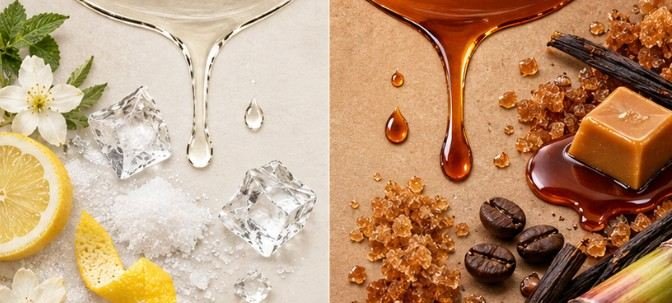
    Two syrups made from sugar and water can make the same cocktail taste surprisingly different. demerara syrup vs simple syrup is not simply brown sugar versus white sugar. Simple syrup delivers clean sweetness with little extra flavor, while Demerara adds caramel, toffee, light molasses, and toasted-sugar character.

    That difference matters in whiskey drinks, rum cocktails, coffee, iced tea, and mocktails. It can also be confused with another variable: syrup concentration.

    The Real Difference Starts With the Sugar

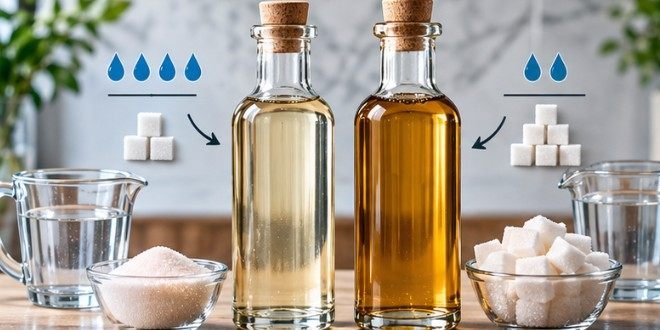
    Standard simple syrup is usually refined white granulated sugar dissolved in water, commonly at a 1:1 ratio. Demerara syrup uses golden-brown Demerara-style cane sugar.

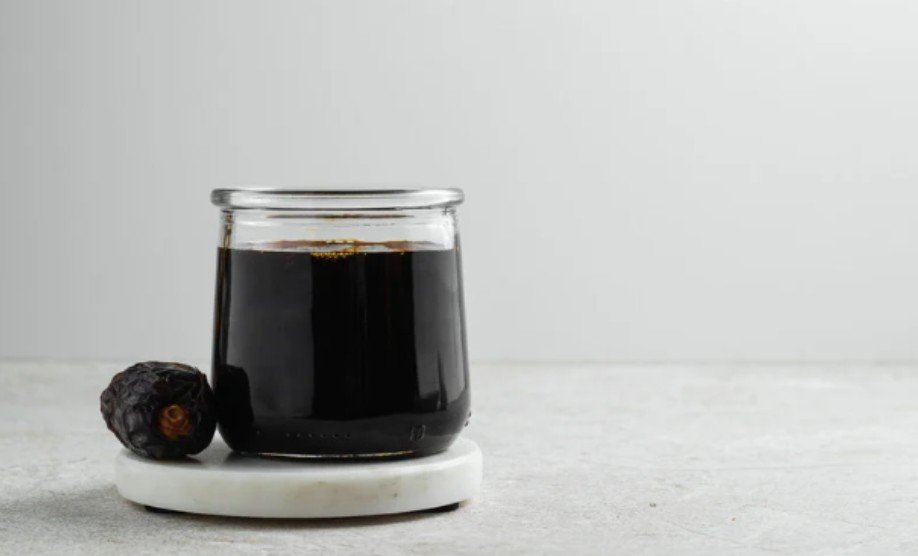
    The name is historically connected with Guyana’s Demerara region and sugar trade, although “Demerara” has also become a broader style name in global markets. Its residual molasses character is what gives the sugar its amber color and deeper taste.

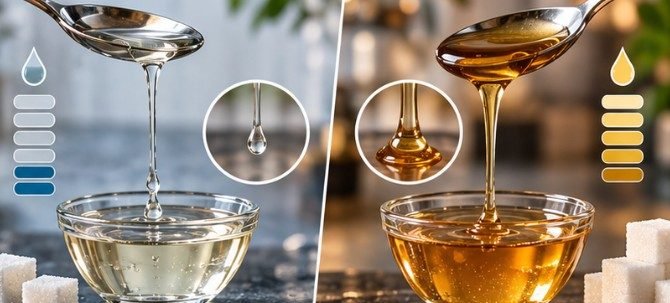
    One important correction: Demerara syrup is not automatically “rich.” Bartenders often make it 2:1 sugar to water, but it can also be 1:1. White sugar can likewise make a rich 2:1 simple syrup. Sugar type controls flavor; ratio controls concentration and much of the texture. Best for making cocktails for people who don’t like sweet drinks.

    Demerara Syrup vs Simple Syrup at a Glance

    Feature Demerara syrup Simple syrup
    Typical sugar Golden-brown cane sugar Refined white sugar
    Flavor Caramel, toffee, light molasses Clean, neutral sweetness
    Color Amber to brown Clear to pale
    Common ratio Often 2:1; 1:1 also works Usually 1:1; 2:1 also works
    Best fits Bourbon, rye, aged rum, coffee Gin, vodka, light rum, herbs, citrus
    Limitation Can dominate delicate flavors Can feel flat in richer drinks

    Why Demerara Changes More Than Sweetness

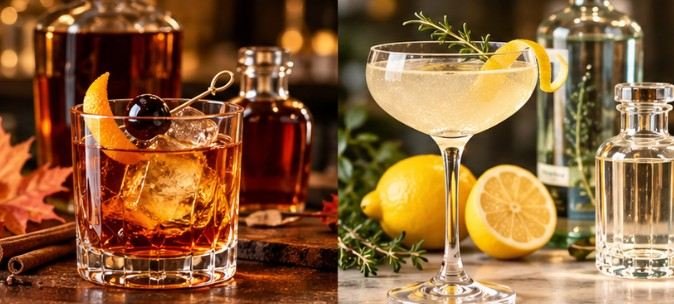
    White simple syrup usually disappears into a drink. Demerara does not. Its darker sugar notes can make an Old Fashioned seem rounder even when the whiskey, bitters, dilution, and garnish stay unchanged.

    That makes it useful with barrel-aged spirits. Bourbon, rye, and aged rum already carry flavors such as vanilla, oak, spice, caramel, or dark fruit, so Demerara often reinforces what is already there.

    The same quality can work against a cucumber cooler, floral gin sour, or delicate fruit spritz. In those drinks, neutral simple syrup may leave more room for herbs, citrus oils, flowers, or subtle fruit.

    Still, this is not a rigid rule. A Daiquiri variation can be excellent with Demerara if the goal is a richer, more rum-forward result.

    The Best Home Test: Match the Ratio First
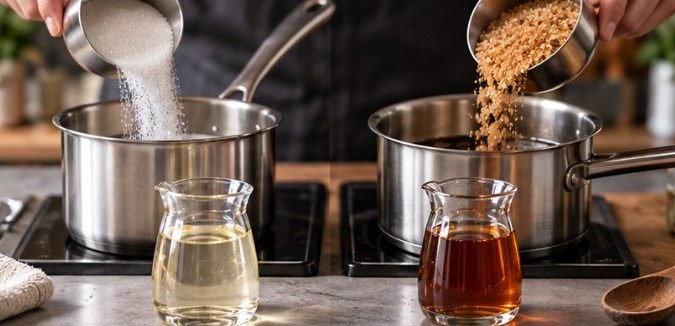
    The Best Home Test Match the Ratio First

    Make two small 1:1 batches. Use 100 grams of white sugar plus 100 grams of water for one, then the same amount of Demerara sugar and water for the other. Warm gently and stir only until dissolved.

    Taste each in sparkling water, unsweetened iced tea, or the same cocktail. This isolates the flavor difference instead of letting thickness influence the comparison.

    Then try a 2:1 Demerara syrup. It will feel denser and provide more sweetness per measured pour. If a recipe calls for 1:1 syrup, do not automatically replace it with the same volume of 2:1 syrup. Start with less, taste, and adjust.

    Which Syrup Fits Which Drink?

    Demerara often works especially well in Old Fashioneds, rum Old Fashioneds, tiki-inspired drinks, cold brew, shaken espresso, and chai because its caramelized flavors have enough structure around them.

    Simple syrup is a safer starting point for Collins-style drinks, Mojitos, Gimlets, lemonades, fruit spritzes, and floral mocktails. It sweetens without introducing another strong flavor.

    The practical question is not “which syrup is better?” Ask whether the sweetener should disappear or participate. That distinction usually makes the choice much easier.

    A 20-Second Selection Checklist

    1. For aged spirits, roasted coffee, warming spices, or caramel-like flavors, test Demerara first.
    2. For cucumber, flowers, delicate fruit, herbs, or crisp citrus, begin with white simple syrup.
    3. Match 1:1 with 1:1 or 2:1 with 2:1 before judging the sugar itself.
    4. If the drink feels heavy, reduce the syrup before changing other ingredients.

    This avoids a common testing mistake: changing sugar type and concentration simultaneously and then not knowing which adjustment improved the drink.

    Is Demerara Syrup Healthier?

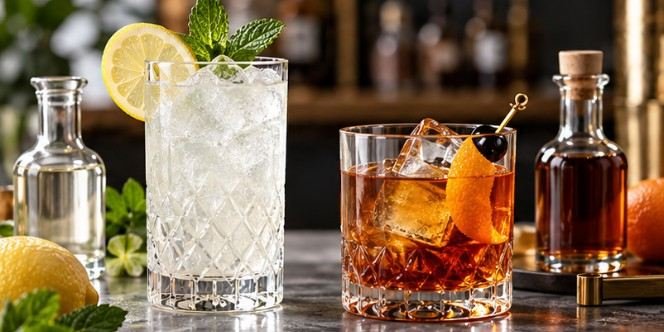
    Not in a meaningful way for most people. Demerara’s darker color and less-refined image can sound nutritionally superior, but both syrups are primarily added sugar.
    Is Demerara Syrup Healthier

    The FDA classifies syrups and packaged sweeteners as added sugars and lists a 50-gram Daily Value on a 2,000-calorie diet. USDA FoodData Central is useful for checking nutrient data on specific sugars and bottled syrups rather than relying on marketing language. 

    Harvard’s Nutrition Source notes that about 4 grams of sugar equals one teaspoon, a useful reference for putting sweetened drinks into perspective. 

    For broader intake guidance, the American Heart Association recommends limiting added sugars to no more than 6% of daily calories. 

    Choose Demerara for flavor, not because its brown color makes it a meaningful nutritional upgrade.

    Homemade Syrup Needs Refrigeration

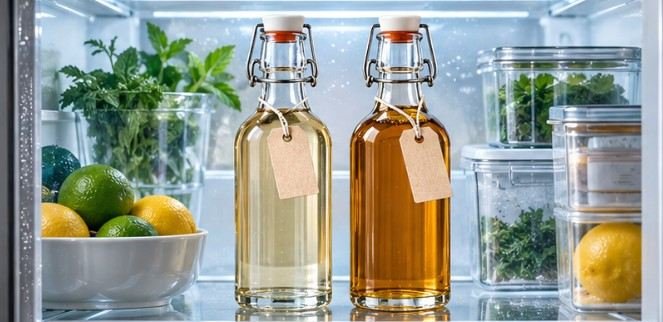
    Homemade cocktail syrup should not be treated as automatically shelf-stable. Use clean equipment, refrigerate it in a sealed bottle, and make batches small enough to use while they still smell and taste fresh.

    Oregon State University Extension includes syrup among foods that maintain quality longer under refrigeration. 

    If you notice mold, unexpected cloudiness, gas formation, or fermentation-like odors, discard the syrup rather than attempting to rescue it.

    Misconceptions That Affect the Final Drink
    Misconceptions That Affect the Final Drink

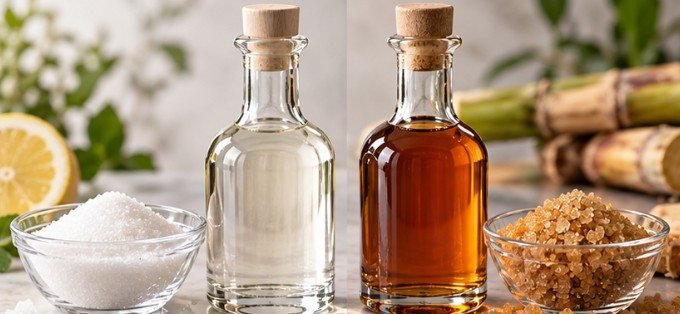
    Demerara is not simply ordinary U.S. brown sugar. Commercial brown sugar is commonly refined sugar combined with molasses, while Demerara-style sugar generally has larger crystals and a different molasses profile. Turbinado can substitute in a pinch, but the finished syrup may taste lighter.

    “Simple syrup” also does not mean only a 1:1 formula. Rich simple syrup is still simple syrup. The term describes the basic sugar-and-water preparation, not one mandatory concentration.

    Finally, darker syrup is not automatically better in an Old Fashioned. If Demerara buries the whiskey or makes the finish seem unnecessarily heavy, use less or return to white syrup. Balance matters more than choosing the more fashionable ingredient.

    Frequently Asked Questions

    1. Can I substitute Demerara syrup for simple syrup?

    Yes. Match the concentration first, then substitute and taste. Demerara adds caramel and molasses-like notes, so it can noticeably change delicate drinks.

    2. Is Demerara syrup sweeter than simple syrup?

    Not necessarily. At the same ratio, the bigger difference is flavor. Many Demerara syrups taste more intense because they are prepared as concentrated 2:1 syrups.

    3. What syrup is better for an Old Fashioned?

    Both can work. Demerara emphasizes caramelized and oak-friendly flavors, while white simple syrup keeps the sweetness cleaner and leaves the whiskey more exposed.

    4. Can I use Demerara syrup in coffee?

    Yes. Its toasted-sugar character pairs well with espresso, cold brew, milk drinks, and coffee cocktails. Start modestly, especially when using a rich syrup.

    Make The Final Pour With Finese

    The useful lesson in demerara syrup vs simple syrup is that sweetness is not always neutral. White simple syrup succeeds by staying out of the way; Demerara succeeds by bringing flavor with it.

    If you make drinks regularly, compare both at the same ratio before experimenting with richer versions. Once flavor and concentration are separated, the choice becomes easier: use simple syrup when the drink already has the character you want, and choose Demerara when the sweetener should help build it.
  • Orgeat Syrup vs Almond Syrup: Why Similar Bottles Behave Differently

    Orgeat Syrup vs Almond Syrup: Why Similar Bottles Behave Differently

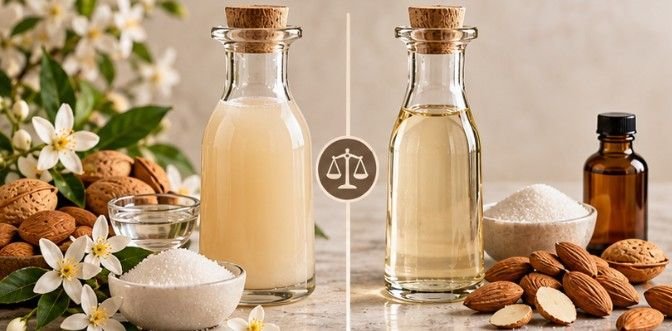
    If a Mai Tai tastes like sweet almond coffee instead of a layered tropical cocktail, the syrup may be the reason. Orgeat and ordinary almond syrup can seem interchangeable, but they do different jobs. In the orgeat syrup vs almond syrup comparison, the real divide is aroma, texture, and how each syrup changes the drink around it.

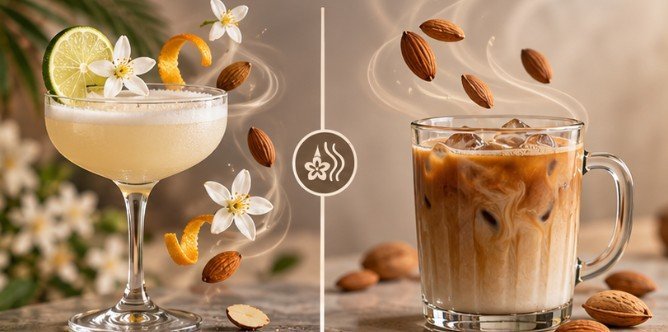
    Classic orgeat combines almond character with sugar and a floral accent, usually orange flower water and sometimes rose water. Standard almond syrup is more direct: sweetness plus almond flavor. That sounds like a small difference until citrus, coffee, rum, soda, or dessert enters the picture.

    Orgeat Is More Than Almond-Flavored Sugar

    Modern orgeat is closely associated with almonds, but its history began with barley. The name traces to the French word orge, meaning barley; almonds later became dominant. Today, classic orgeat is a sweet almond syrup scented with orange flower water and sometimes rose water, producing the marzipan-like, floral character bartenders expect.

    Orange blossom water does not make orgeat taste like orange juice. It adds perfume and lift. Real almonds can also contribute fat and protein, helping explain the fuller feel of traditionally made orgeat.

    A University of California, Davis review shows that almond aroma involves numerous volatile compounds and changes with processing, so nut-based products can taste meaningfully different from extract-led versions. 

    What Almond Syrup Usually Does Instead

    Almond syrup is generally built for consistency and easy mixing. It is common in coffee bars, flavored lattes, sodas, milkshakes, desserts, and baking because it adds a recognizable almond note without requiring much from the rest of the recipe.

    Commercial versions may use almond extract, natural flavor, artificial flavor, or combinations that vary by brand. The aim is usually straightforward sweetness and almond aroma rather than the floral, textured profile of classic orgeat.

    That simplicity works particularly well in coffee, where milk and roasted flavors already provide plenty of structure. The syrup can stay in the background instead of becoming another major flavor layer.

    The Fast Comparison

    Feature Orgeat Almond syrup
    Typical flavor Nutty, marzipan-like, floral Sweet, straightforward almond
    Common formula Sugar, almond component, floral water Sugar syrup plus almond flavor or extract
    Texture Often richer, cloudy or opalescent Usually thinner and clearer
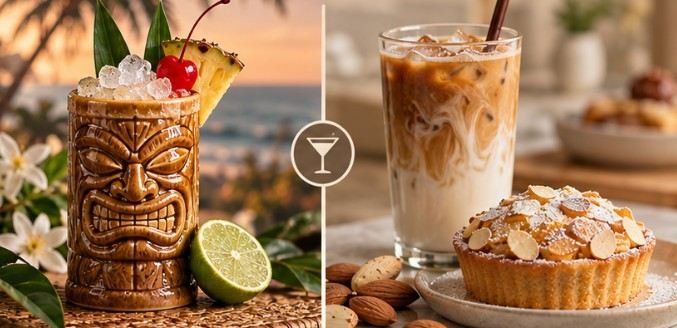
    Best-known use Mai Tai and tropical cocktails Coffee, lattes, sodas, desserts
    As a substitute Adds body and floral aroma Works in a pinch but can taste flatter

    If the syrup needs to shape the drink’s body and aroma, orgeat usually has the advantage. If it only needs to add almond sweetness, standard almond syrup is often the cleaner choice.

    Why the Difference Is Obvious in a Mai Tai

    Why the Difference Is Obvious in a Mai Tai

    A Mai Tai is a useful test because its ingredients compete for attention. Rum can be funky or oaky, lime is sharply acidic, and orange curaçao adds sweetness and citrus character. Orgeat sits between those flavors, softening the acid while adding nutty richness and floral aroma.

    Plain almond syrup can sweeten the same drink, but it may lack the same body and aromatic bridge. That is why bartenders treat orgeat as more than flavored simple syrup: even a small pour can alter texture as well as flavor. Classic Mai Tai recipes specifically rely on orgeat for that almond dimension.

    A 30-Second Label Test Before You Buy

    Ignore the front label for a moment and read the ingredients.

    Look for almonds, almond milk, almond extract, or almond flavor, then check for orange flower water, orange blossom water, or rose water. Also compare added sugar per serving and note any gums or stabilizers that may affect body.

    An almond component plus floral water points toward classic orgeat. Syrup plus almond flavor alone is closer to café-style almond syrup.

    For U.S. shoppers with food allergies, this check matters for safety too. The FDA classifies almonds as a major tree-nut allergen and requires the specific nut to be identified on covered packaged foods.

    Research indexed by the National Library of Medicine also documents multiple almond allergen proteins, so a product name alone is not enough for someone managing an almond allergy. 

    Can You Substitute One for the Other?

    Usually, but the swap is not neutral.

    If a cocktail calls for 1/2 ounce of orgeat and you only have almond syrup, start with the same amount. If the drink seems flat, one or two drops of orange blossom water can restore part of the missing floral character. Add cautiously; floral waters can become perfumy fast.

    Orgeat can also replace almond syrup in coffee or desserts. Start with slightly less than your usual dose because its aroma may be more assertive.

    In vanilla cakes, whipped cream, iced coffee, or other lightly flavored recipes, that blossom note becomes easier to notice. Whether that is desirable depends on the final flavor you want.

    Price, Texture, and Storage Matter Too

    Price, Texture, and Storage Matter Too

    Craft orgeat often costs more than mass-market almond syrup because it may use nuts or nut milk, floral waters, and more involved processing. Compare price per fluid ounce rather than sticker price, because bottle sizes vary substantially.

    Some versions also use gum arabic or other stabilizers for a smoother, fuller texture. That may be useful in cocktails where mouthfeel is important but unnecessary in an everyday latte.

    Homemade syrup raises a separate storage question. Oregon State University Extension notes that syrups intended for shelf storage require appropriate processing and that opened syrups should be refrigerated. 

    Homemade orgeat should therefore follow a reliable recipe and conservative refrigerated storage rather than relying on its sugar content alone.

    Neither Syrup Is a Nutrition Shortcut

    Neither Syrup Is a Nutrition Shortcut

    Even when orgeat begins with real almonds, it is still primarily a sweetener. The nutritional qualities associated with eating whole almonds do not automatically translate to a sugar-heavy syrup.

    The American Heart Association recommends checking Nutrition Facts panels for added sugars and reducing sweeteners in drinks where practical. Its guidance also identifies sweetened coffee and other beverages as common sources of added sugar.

    A more useful buying question is therefore not only, “Does this use real almonds?” but also, “How much do I need to get the flavor I want?” A strongly flavored syrup may achieve the desired result with a smaller pour.

    Also Read: Rich simple syrup vs regular simple syrup

    Frequently Asked Questions

    1. Is orgeat just another name for almond syrup?

    Not exactly. Orgeat is an almond-based syrup style that traditionally includes a floral element such as orange blossom water. Ordinary almond syrup is generally simpler and more sweetness-focused.

    2. How do you pronounce orgeat?

    Common English pronunciations include “or-zhat” and “or-zhay.” Pronunciation varies, so both forms may be heard in U.S. bars, restaurants, and stores.

    3. Does orgeat contain alcohol?

    Usually no. Commercial orgeat is commonly nonalcoholic, although some homemade or historical recipes include a small quantity of brandy or rum.

    4. Is orgeat safe for someone with an almond allergy?

    Do not assume so. Traditional orgeat contains almonds. Check ingredient and allergen statements carefully and contact the manufacturer when the formulation or cross-contact information is unclear.

    Choose for the Recipe, Not the Label

    The useful way to settle orgeat syrup vs almond syrup is not to crown one bottle the winner. Ask what the recipe needs. For fragrance, richness, and a syrup that links citrus, spirits, and sweetness, a well-made orgeat makes sense. For a predictable almond note in coffee, soda, or baking, ordinary almond syrup is often more practical.

    Two syrups built around the same basic flavor can behave surprisingly differently. Read the ingredients, compare sweetness, and taste with the finished drink in mind. The name on the bottle is only a clue; the recipe ultimately tells you which syrup belongs in the glass.

  • Honey Syrup vs Simple Syrup: Which One Works Best?

    Honey Syrup vs Simple Syrup: Which One Works Best?

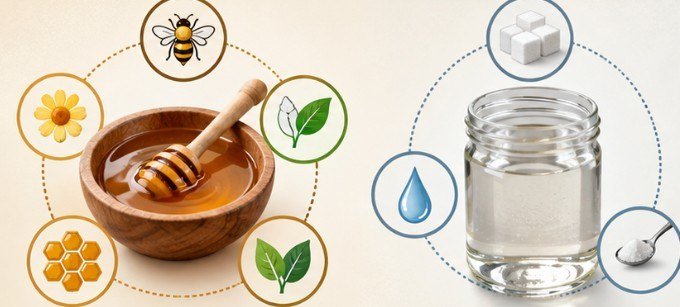
    A half-ounce of sweetener can change far more than the sweetness of a drink. Simple syrup usually stays in the background, while honey syrup can add floral, earthy, fruity, or almost caramel-like notes before you change a single other ingredient.

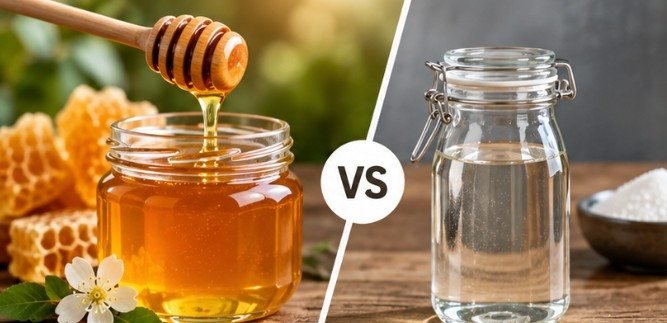
    That difference is the heart of honey syrup vs simple syrup. Both solve the same practical problem—getting sugar into a drink without leaving crystals or sticky honey at the bottom—but they behave very differently once flavor, concentration, temperature, and the rest of the recipe enter the picture.

    For cocktails, iced tea, coffee, lemonade, and alcohol-free drinks, choosing the right one is less about which sweetener is “better” and more about whether you want sweetness to disappear or become part of the flavor.

    Honey Syrup and Simple Syrup Are Not the Same Thing

    Classic simple syrup is usually made by dissolving granulated white sugar in water. A common home and bar formula is equal parts sugar and water, although richer versions use more sugar.

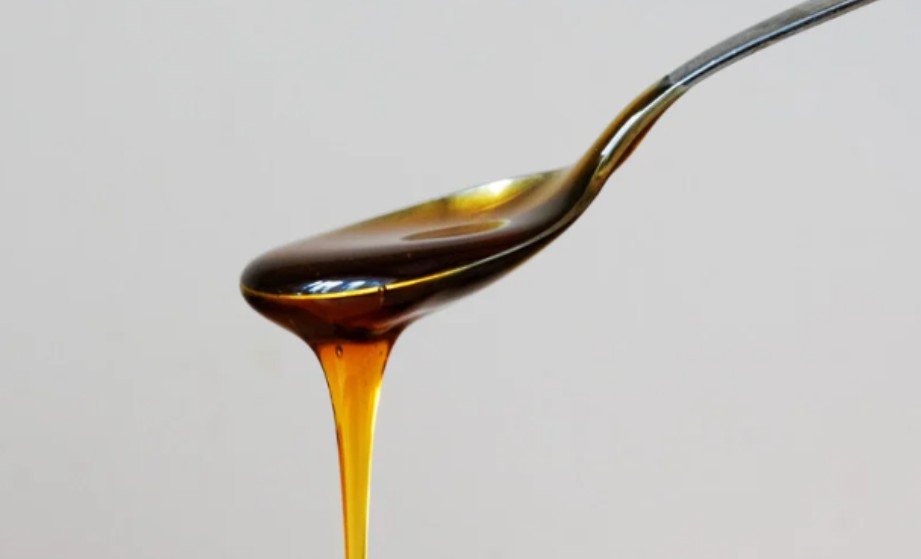
    Honey syrup follows the same basic idea but starts with honey. Instead of forcing thick honey into an ice-cold drink, you dilute it with warm water until it pours and measures easily.

    The chemistry behind honey also explains why the result tastes different. Penn State Extension describes honey as a supersaturated solution composed primarily of glucose and fructose, with roughly 18% water. Its sugar balance varies with the flowers visited by the bees.

    That natural variability is part of honey syrup’s appeal. Clover honey can be relatively gentle, while buckwheat or darker wildflower honeys may contribute considerably stronger aromas.

    Honey Syrup vs Simple Syrup at a Glance

    Feature Honey syrup Simple syrup
    Base ingredient Honey and water Granulated sugar and water
    Flavor Floral, fruity, earthy or robust Clean and relatively neutral
    Best role Sweetener plus flavor ingredient Primarily sweetness and balance
    Cold-drink mixing Good once diluted Excellent
    Consistency Varies with honey and ratio Highly predictable
    Useful pairings Whiskey, gin, citrus, tea, spices Nearly any cocktail, coffee or lemonade
    Cost Usually higher Usually inexpensive
    Nutritional advantage Small amounts of minor compounds, but still primarily sugar Primarily sucrose and water

    The important point is that honey syrup is not simply “natural simple syrup.” It changes the sensory structure of the drink in ways ordinary sugar generally does not.

    Why Bartenders Turn Honey Into Syrup

    Dropping a spoonful of honey directly into warm tea works because heat lowers its viscosity and encourages it to disperse.

    An iced cocktail is a different environment. Straight honey can stick to a jigger, cling to the glass, or remain concentrated in one part of the drink. Adding water first creates a more workable ingredient.

    Why Bartenders Turn Honey Into Syrup

    A 1:1 Honey Syrup

    Combine one part honey with one part warm water and stir until completely uniform. This produces a relatively loose syrup that incorporates easily into iced drinks. It is useful when you want honey flavor without overwhelming the recipe.

    A 2:1 Honey Syrup

    Use two parts honey to one part warm water when you want a richer syrup with greater honey intensity. Because different honeys vary in moisture, flavor, and perceived sweetness, recipes should be treated as starting points rather than universal mathematical substitutions.

    Avoid aggressively boiling good honey just to make syrup. Warm water is normally enough to dissolve and thin it, while excessive heating can mute some of the aromas you bought the honey for in the first place.

    Flavor Is the Biggest Difference

    Simple syrup has one major advantage: predictability.

    It softens acidity, balances alcohol, and adds sweetness without contributing a recognizable new flavor. That is useful in drinks where strawberry, mint, coffee, citrus, or a particular spirit should remain the dominant note.

    Honey syrup behaves more like another ingredient.

    A Bee’s Knees works because gin, lemon, and honey reinforce one another. In a Gold Rush-style whiskey drink, honey can complement vanilla, oak, citrus, and baking-spice notes. It can also give iced black tea or lemonade noticeably more character than white sugar.

    The same strength can become a weakness. A powerful honey may cover delicate cucumber, subtle floral spirits, light green tea, or gently flavored coffee.

    If you want the drink to taste sweeter but otherwise essentially unchanged, simple syrup is normally the easier choice.

    Is Honey Syrup Healthier Than Simple Syrup?

    This is where marketing often gets ahead of nutrition science.

    Honey can contain small amounts of minerals and other compounds, and its composition is more complex than refined table sugar. But a spoonful of honey syrup should not be treated like a meaningful vitamin or antioxidant supplement.

    For nutrition-label purposes, the U.S. Food and Drug Administration includes honey and syrups within its definition of added sugars. Daily Value for added sugars is 50 grams on a 2,000-calorie diet.

    Utah State University Extension similarly lists honey among common sources of added sugar.

    The practical lesson is simple: changing a cocktail from simple syrup to honey syrup changes the flavor much more meaningfully than it changes the basic fact that the drink contains concentrated sugar.

    Calorie comparisons can also be misleading unless the syrup concentrations and serving sizes are identical. A rich honey syrup and a thin simple syrup cannot fairly be compared tablespoon for tablespoon without accounting for how much actual sweetener each contains.

    The Two-Glass Test for Choosing the Right Syrup

    If I am developing a drink, I prefer a small comparison rather than guessing.

    The Two-Glass Test for Choosing the Right Syrup

    Make the unsweetened drink base first, then divide it equally between two glasses. Add the same small amount of simple syrup to one and honey syrup to the other—around 1/4 to 1/2 ounce is a reasonable testing range for many single drinks.

    Taste both before adding more.

    Ask three questions: Can I still taste the main ingredient? Does the sweetness balance the acidity or bitterness? Does the honey add a complementary flavor, or does it simply make the drink busier?

    Then adjust in small increments.

    This method works particularly well with whiskey sours, gin drinks, cold brew, iced black tea, lemonade, and fruit-forward mocktails because the flavor difference becomes immediately obvious.

    Where Each Syrup Works Best

    Simple syrup is especially useful when consistency matters. It is inexpensive, easy to reproduce, and adaptable to virtually any drink. It also makes sense when another strong flavor—such as passion fruit, berries, chocolate, or herbs—already has the spotlight.

    Honey syrup is better when the sweetener should participate in the recipe. Try it with bourbon, rye, gin, lemon, ginger, cinnamon, black tea, chamomile, grapefruit, or apple. Darker honey generally works more comfortably with bold ingredients, while mild honey is safer for lighter drinks.

    University of Minnesota Extension notes in its food-preservation guidance that mild-flavored honey can replace some granulated sugar in syrups, while also recognizing that different sweeteners change the finished product. That is essentially the same decision a drink maker faces: substitution affects more than sweetness.

    Storage and Food-Safety Details Worth Knowing

    Once water is added to a concentrated sweetener, it should not automatically be treated like the original shelf-stable jar of honey or bag of sugar.

    Storage and Food-Safety Details Worth Knowing

    For homemade drink syrups, use clean equipment, prepare manageable batches, keep the syrup covered, and refrigerate it rather than assuming it can remain indefinitely behind the bar or on the counter. Colorado State University Extension, for example, advises keeping prepared sugar syrup covered in the refrigerator when made ahead.

    There is also one important exception involving honey itself. The CDC states that children younger than 12 months should not be given honey because it can contain bacteria associated with infant botulism. That warning applies to foods and drinks containing honey as well.

    Frequently Asked Questions

    1. Is honey syrup sweeter than simple syrup?

    It can be, depending on the honey-to-water ratio. Honey composition also varies naturally, so equal volumes of two syrups do not necessarily deliver identical perceived sweetness.

    2. Can I replace simple syrup with honey syrup 1:1?

    You can start that way, but taste before finishing the drink. Honey contributes additional flavor and may require changes to the syrup, citrus, or other ingredients.

    3. Why not put regular honey directly into a cocktail?

    Thick honey disperses poorly in cold liquid. Diluting it with warm water creates a syrup that measures, pours, shakes, and mixes much more consistently.

    4. Is honey syrup healthier than simple syrup?

    Not in a way that makes either an unlimited sweetener. Honey contains additional compounds, but both contribute concentrated sugars and should be considered within overall added-sugar intake.

    The Better Syrup Depends on What You Want to Taste

    The most useful way to settle Honey syrup vs simple syrup is to stop thinking of them as interchangeable bottles of sweetness. Simple syrup is valuable because it is quiet: it balances a drink and then largely gets out of the way. Honey syrup earns its place by doing the opposite.

    Use simple syrup when precision and neutrality matter. Reach for honey syrup when floral character, depth, and a stronger connection between the sweetener and the other ingredients can improve the drink.

    That half-ounce may look minor in the measuring cup, but in the finished glass, it can determine the entire direction of the recipe.

  • Maple Syrup vs Simple Syrup in Cocktails: Why the Swap Changes More Than Sweetness

    Maple Syrup vs Simple Syrup in Cocktails: Why the Swap Changes More Than Sweetness

    Maple syrup is much closer to rich cocktail syrup than ordinary simple syrup. Pure maple syrup sold in the United States contains at least 66% soluble solids, while a 1:1 simple syrup made by equal weight is about 50% sugar. That difference affects sweetness, dilution, texture, and how prominently the sweetener appears in the finished drink.

    That is the useful starting point for understanding Maple syrup vs simple syrup in cocktails. Simple syrup is designed to disappear into a recipe. Maple syrup does almost the opposite: it sweetens while adding recognizable flavor, aroma, body, and color.

    The Real Difference Is Not Just Maple Flavor

    Standard simple syrup is essentially sugar dissolved in water. University of Maine Cooperative Extension describes a basic simple syrup as one part sugar to one part water, producing a liquid sweetener that blends easily into beverages.

    Because white granulated sugar has relatively little flavor beyond sweetness, simple syrup allows ingredients such as gin, citrus, herbs, bitters, vermouth, or whiskey to remain the focus.

    Pure maple syrup is different. Federal standards define it as maple sap concentrated through heat treatment until it contains at least 66% soluble solids. Cornell’s Maple Program explains that maple sap is boiled to roughly 66% sugar concentration and that heating contributes to the characteristic flavor development of the finished syrup.

    That concentration puts maple remarkably close to a 2:1 rich simple syrup made by weight, which is roughly 66.7% sugar.

    So maple syrup does not merely replace sweetness. It changes the architecture of the drink.

    Maple Syrup vs Simple Syrup in Cocktails at a Glance

    Feature Standard Simple Syrup Pure Maple Syrup
    Typical sugar concentration About 50% when made 1:1 by weight At least 66% soluble solids
    Flavor Clean and neutral Maple, caramelized and toasted notes
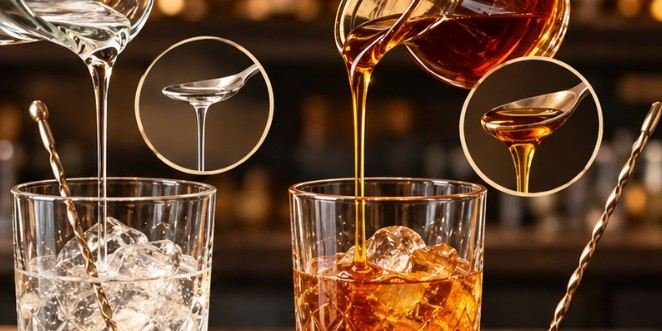
    Texture Light and fluid Fuller and more viscous
    Dilution added Relatively higher Lower for equivalent sweetness
    Best use Drinks where other flavors should lead Drinks where the sweetener can become part of the flavor
    Natural pairings Gin, vodka, tequila, citrus, herbs Bourbon, rye, aged rum, apple, bitters, warm spices

    The viscosity difference matters. Research published through the American Chemical Society shows that the viscosity of sugar-water solutions changes substantially as concentration changes. In practical bartending terms, a concentrated syrup can make a cocktail feel rounder and heavier even when the actual difference in measured volume is small.

    Why Maple Works Particularly Well With Whiskey

    Barrel-aged spirits already contain flavors that can overlap with maple.

    Why Maple Works Particularly Well With Whiskey

    Bourbon and rye may carry impressions of vanilla, caramel, toasted oak, baking spice, or char from barrel maturation. Maple syrup can reinforce those darker flavors instead of introducing an entirely separate direction.

    That explains why a maple Old Fashioned is usually an easier substitution than replacing simple syrup with maple in a delicate gin sour.

    A basic whiskey drink might contain 2 ounces of bourbon, bitters, and around 1/4 ounce of sweetener. Using maple at that level can create noticeable richness without turning the drink into something resembling pancake syrup.

    Dark or aged rum can work for similar reasons. Apple brandy, pear brandy, cinnamon, walnut bitters, ginger, coffee, and orange also have enough aromatic character to stand beside maple.

    When Simple Syrup Is the Better Choice

    Simple syrup wins whenever neutrality is valuable. Consider a drink built around floral gin, cucumber, mint, elderflower, grapefruit, or fresh berries. The purpose of the sweetener may simply be to soften acidity or alcohol.

    Adding maple introduces another flavor that the recipe was never designed to accommodate.

    Simple syrup is also easier when testing a new cocktail. A neutral sweetener lets you judge the relationship among spirit, acid, bitters, and dilution before adding another aromatic variable.

    This is why replacing simple syrup blindly does not always improve a drink. A substitute can be technically successful while changing the cocktail’s identity.

    How Much Maple Syrup Should Replace Simple Syrup?

    There is no universal substitution ratio because recipes differ in acidity, alcohol strength, other sweet ingredients, and serving dilution. However, sugar concentration provides a useful starting point.

    Replacing standard 1:1 simple syrup

    If a cocktail calls try choosing between orgeat syrup vs almond syrup for 1 ounce of ordinary simple syrup, start with approximately 3/4 ounce of pure maple syrup.

    Shake or stir the cocktail, taste it, and add another small measure only if needed.

    For a recipe calling for 1/2 ounce of simple syrup, roughly 3/8 ounce of maple is a sensible first test.

    Replacing 2:1 rich simple syrup

    Maple syrup is much closer in concentration to rich syrup, so begin with an equal-volume substitution.

    If a recipe uses 1/2 ounce of rich syrup, try 1/2 ounce maple.

    Sweetness may be similar, but flavor intensity will not be. Reduce the amount if maple begins masking the spirit.

    Use the Three-Sip Test Instead of Guessing

    The easiest way to improve a substitution is to evaluate three characteristics separately.

    Use the Three-Sip Test Instead of Guessing

    First, taste for sweetness. Does sugar dominate, or does the drink still have enough acidity, bitterness, or spirit character?

    Second, evaluate texture. Maple can make a drink feel noticeably denser. If the drink seems heavy, slightly more dilution may help.

    Third, evaluate aroma and finish. If maple remains the strongest flavor several seconds after swallowing, reduce it on the next attempt.

    This method is more reliable than assuming every sweetener can be exchanged ounce for ounce.

    Citrus Drinks Need Extra Attention

    Sugar and acid work against each other perceptually. A cocktail containing lemon or lime can tolerate more sweetness than a spirit-forward drink because acidity keeps the palate refreshed.

    Maple complicates that relationship because it contributes flavor in addition to sugar.

    If a whiskey sour becomes dull after a maple substitution, do not automatically add more whiskey. First try reducing the maple slightly. If the drink still feels heavy, a small increase in fresh citrus may restore brightness.

    Make adjustments in small increments. Changes of even 1/8 ounce are noticeable in a compact cocktail.

    Choosing Maple Syrup for Cocktails

    Look for a bottle labeled pure maple syrup rather than a maple-flavored breakfast syrup.

    USDA Grade A maple syrup is divided into flavor-related color classes, ranging from Golden with Delicate Taste through Amber with Rich Taste, Dark with Robust Taste, and Very Dark with Strong Taste.

    For cocktails, Amber is a flexible starting point because it provides clear maple character without necessarily overwhelming lighter ingredients. Dark syrup can be especially useful with rye, bourbon, aged rum, coffee, or baking spices.

    The stronger the syrup, however, the more carefully I would measure it.

    Should You Dilute Maple Syrup First?

    Should You Dilute Maple Syrup First

    Sometimes. Cold maple syrup can be thick enough to measure slowly, particularly when making several drinks. Adding a small amount of warm water creates a thinner maple syrup that is easier to pour and incorporate.

    The trade-off is concentration. Once water is added, the substitution ratios above no longer apply exactly.

    For home bartending, straight maple is usually simpler because every pour has the same predictable strength. For batching or high-volume service, a diluted maple syrup may be easier to handle.

    Frequently Asked Questions

    1. Can maple syrup replace simple syrup directly?

    Yes, but start with less maple when replacing standard 1:1 simple syrup because maple is more concentrated. Equal-volume substitutions work more predictably when replacing rich 2:1 syrup.

    2. What cocktails taste best with maple syrup?

    Whiskey, rye, aged-rum, apple, coffee, orange, and warming-spice cocktails are strong candidates because their flavors can complement maple’s deeper profile.

    3. Does maple syrup make cocktails thicker?

    Usually, yes. Its higher dissolved-solids concentration gives maple syrup greater body than standard simple syrup, which can make the finished drink feel fuller.

    4. Can I use pancake syrup instead?

    It will sweeten the drink, but it may contain different sweeteners and flavorings. For predictable flavor and concentration, use a bottle clearly labeled pure maple syrup.

    A Better Way to Choose Your Sweetener

    The most useful lesson from maple syrup vs simple syrup in cocktails is that sweeteners should not be treated as invisible teaspoons of sugar. Simple syrup is usually the better tool when you want sweetness without interference. Maple becomes more interesting when its flavor and texture reinforce the rest of the recipe.

    Start with about three-quarters as much maple when replacing ordinary simple syrup, then taste before adding more. With rich syrup, begin closer to a one-for-one swap. The goal is not to make every cocktail taste like maple. It is to use maple where the drink becomes more complete because of it.

  • Rich Simple Syrup vs Regular Simple Syrup: The Ratio Changes More Than Sweetness

    Rich Simple Syrup vs Regular Simple Syrup: The Ratio Changes More Than Sweetness

    Doubling the sugar in simple syrup does not make a cocktail taste twice as sweet. That small piece of kitchen chemistry is what makes rich simple syrup vs regular simple syrup more interesting than a basic 2:1-versus-1:1 comparison.

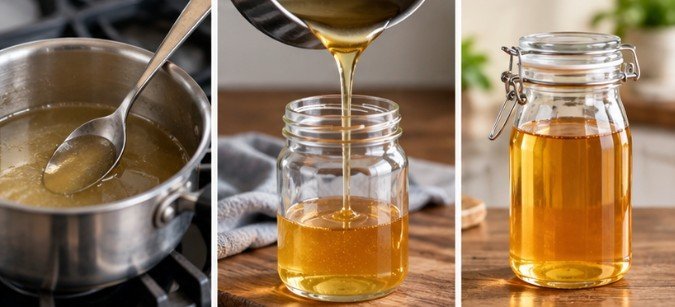
    Regular simple syrup is lighter, easier to measure, and adds more water along with its sweetness. Rich syrup is denser, more concentrated, and lets a bartender deliver similar sweetness with a smaller pour. That changes not only flavor but also texture, dilution, storage behavior, and the final balance of a drink.

    The Core Difference Is Sugar Concentration

    Regular simple syrup is traditionally made with one part granulated sugar and one part water. Rich simple syrup usually doubles the sugar, using two parts sugar for every one part water.

    For repeatable results, measuring by weight is better than measuring by cups. Granulated sugar and water have very different densities, so a “cup-for-cup” recipe is not chemically identical to a gram-for-gram recipe.

    A reliable home formula is simple: use 100 grams of sugar with 100 grams of water for regular syrup. For rich syrup, use 200 grams of sugar with 100 grams of water.

    That means regular syrup is approximately 50% sugar by weight before considering minor changes from heating and evaporation. A 2:1 rich syrup is roughly 66.7% sugar by weight.

    The same underlying principle in its guidance on food syrups for canning fruit: increasing the proportion of sugar produces progressively heavier, more concentrated syrups.

    Feature Regular Simple Syrup Rich Simple Syrup
    Typical ratio 1:1 sugar to water 2:1 sugar to water
    Sugar concentration by weight About 50% About 66.7%
    Texture Thin, easily pourable Thicker and more viscous
    Relative sweetness per equal serving Lower Roughly 1.3–1.5× stronger
    Water added to a drink More Less
    Best fit Shaken drinks, iced tea, lemonade Spirit-forward cocktails, concentrated drinks
    Refrigerated keeping quality Shorter Generally longer

    Why Rich Syrup Is Not Simply “Twice as Sweet”

    The phrase “twice the sugar” can be misleading.

    Why Rich Syrup Is Not Simply “Twice as Sweet”

    A rich syrup recipe contains twice as much sugar relative to its water, but the finished mixture also has greater total mass and density. Equal fluid ounces of the two syrups therefore do not represent a simple twofold sweetness difference.

    In practical bartending, rich syrup is commonly treated as approximately one-third to one-half sweeter than standard syrup.

    That is why replacing one ounce of regular syrup with one ounce of rich syrup usually makes a drink noticeably too sweet.

    A Better Substitution Rule

    If a recipe calls for 1 ounce of standard syrup, begin with about ⅔ ounce of rich syrup. Taste the finished drink before reducing further.

    Going directly to ½ ounce can work in some cocktails, especially those containing naturally sweet liqueurs, but it is not a universal conversion.

    The opposite substitution also works. If a recipe specifies ½ ounce of rich syrup and only regular syrup is available, roughly ¾ ounce of regular syrup is a sensible starting point.

    Taste remains the final test because citrus acidity, alcohol strength, bitterness, temperature, and other sweet ingredients all change perceived sweetness.

    Texture Is the Difference People Often Miss

    The most useful distinction in rich simple syrup vs regular simple syrup may actually be mouthfeel.

    Rich syrup flows more slowly and gives drinks slightly more body. That can be valuable in an Old Fashioned or another short, spirit-forward cocktail where a bartender wants sweetness without adding much extra water.

    Regular syrup disappears into a drink more quietly. Its lower viscosity makes it especially convenient for iced tea, lemonade, coffee drinks, punches, shaken cocktails, and recipes where plenty of dilution is already desirable.

    Neither texture is automatically superior. The correct syrup depends on what the drink needs.

    Rich Syrup Can Reduce Unwanted Dilution

    Imagine two cocktails that need roughly the same sweetness.

    Rich Syrup Can Reduce Unwanted Dilution

    One receives a larger measure of 1:1 syrup. The other receives a smaller measure of concentrated rich syrup.

    The second drink gets less added water from the sweetener itself. That can matter in cocktails served over a large ice cube or without much additional mixer, where a few fractions of an ounce can noticeably affect intensity.

    In a long drink filled with sparkling water, tea, juice, or crushed ice, the dilution difference is usually much less important.

    This gives home bartenders a simple decision test: if maintaining concentration and body matters, consider rich syrup. If easy measuring and lighter sweetness matter more, standard syrup is usually simpler.

    Does Rich Simple Syrup Really Last Longer?

    Generally, yes—but shelf-life claims need context.

    Higher sugar concentrations can make microbial growth more difficult. MIchigan University notes in syrup-preservation guidance that concentrations below approximately 66% sugar can permit microbial growth under storage conditions, while excessive concentration can encourage crystallization.

    A 2:1 syrup made accurately by weight lands close to that 66% level, which helps explain why rich syrup usually keeps better than a 1:1 syrup.

    You may see general recommendations suggesting refrigerated regular syrup lasts around one month while rich syrup can last several months. Those are useful quality estimates, not guarantees.

    Home preparation is not sterile. Dirty bottles, repeated opening, contaminated spoons, fruit residue, herbs, spices, and inaccurate ratios can shorten storage dramatically.

    University of Minnesota Extension also makes an important broader point: sugar syrup should not automatically be treated as a food-safety control.

    The Safer Home-Bar Method

    Use a clean container, prepare the syrup with clean utensils, cool it promptly, refrigerate it, and label the bottle with the preparation date.

    Discard plain syrup if you notice visible mold, fermentation, unexpected bubbling, a clearly abnormal odor, or other signs of spoilage.

    Flavored syrups deserve even more caution. Adding berries, citrus peel, herbs, fresh ginger, or other ingredients changes their microbial environment, so their storage behavior should not be assumed to match plain sugar-and-water syrup.

    How to Make Both Syrups Without Overcooking Them

    Simple syrup does not require aggressive boiling.

    How to Make Both Syrups Without Overcooking Them

    For regular syrup, combine equal weights of sugar and water. Warm gently while stirring until the crystals disappear.

    For rich syrup, use two parts sugar to one part water and apply moderate heat while stirring. Because the solution contains much more sugar, dissolving may take slightly longer.

    Avoid prolonged boiling. Evaporating too much water changes the concentration you carefully measured, and an excessively concentrated syrup becomes more prone to crystallization.

    For both versions, transfer the finished syrup to a clean bottle after preparation and refrigerate once cooled.

    What About Calories and Added Sugar?

    Using less rich syrup does not automatically make a drink low in sugar. What matters is how much actual sugar ends up in the serving.

    The FDA classifies sugars from syrups used in foods and drinks as added sugars and lists a Daily Value of 50 grams based on a 2,000-calorie diet. The American Heart Association uses a more restrictive recommendation, advising most women to stay near 6 teaspoons of added sugar daily and most men near 9 teaspoons.

    CDC guidance also identifies sweetened beverages, including coffee and tea drinks, as important contributors to added sugar intake in the U.S.

    That does not make simple syrup inherently problematic, but it makes portion size worth noticing—particularly when several sweet ingredients appear in the same drink.

    Frequently Asked Questions

    1. Is rich simple syrup twice as sweet as regular simple syrup?

    No. It contains twice as much sugar relative to water, but equal servings are generally closer to about 1.3–1.5 times as sweet because the finished syrups have different concentrations and densities.

    2. Can I substitute rich syrup for regular simple syrup?

    Yes. Start with roughly ⅔ ounce of rich syrup for every 1 ounce of regular syrup, then adjust according to the other ingredients and your preferred sweetness.

    3. Does rich simple syrup need refrigeration?

    Yes. Refrigeration is the sensible approach for homemade syrup. High sugar concentration can slow microbial growth, but homemade rich syrup should not automatically be considered shelf-stable.

    4. Why did my rich simple syrup crystallize?

    Crystallization may occur when the syrup becomes overly concentrated, water evaporates during prolonged boiling, or sugar crystals remain around the bottle or pan and encourage additional crystals to form.

    The Takeaway

    The decision between rich simple syrup vs regular simple syrup is really a decision about concentration. Regular syrup gives you an easy 1:1 formula, lighter body, and straightforward measuring. Rich syrup delivers more sweetness in less liquid while adding viscosity and reducing dilution.

    For most recipes, there is no reason to declare one universally better. Think about the drink instead. A tall iced beverage may benefit from standard syrup, while a compact whiskey cocktail may work beautifully with rich syrup. Measure by weight, substitute gradually, refrigerate homemade batches, and taste before assuming a mathematical conversion has created perfect balance.