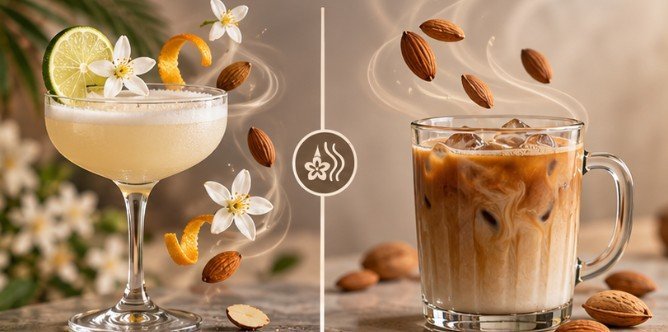
If a Mai Tai tastes like sweet almond coffee instead of a layered tropical cocktail, the syrup may be the reason. Orgeat and ordinary almond syrup can seem interchangeable, but they do different jobs. In the orgeat syrup vs almond syrup comparison, the real divide is aroma, texture, and how each syrup changes the drink around it.
Classic orgeat combines almond character with sugar and a floral accent, usually orange flower water and sometimes rose water. Standard almond syrup is more direct: sweetness plus almond flavor. That sounds like a small difference until citrus, coffee, rum, soda, or dessert enters the picture.
Orgeat Is More Than Almond-Flavored Sugar
Modern orgeat is closely associated with almonds, but its history began with barley. The name traces to the French word orge, meaning barley; almonds later became dominant. Today, classic orgeat is a sweet almond syrup scented with orange flower water and sometimes rose water, producing the marzipan-like, floral character bartenders expect.
Orange blossom water does not make orgeat taste like orange juice. It adds perfume and lift. Real almonds can also contribute fat and protein, helping explain the fuller feel of traditionally made orgeat.
A University of California, Davis review shows that almond aroma involves numerous volatile compounds and changes with processing, so nut-based products can taste meaningfully different from extract-led versions.
What Almond Syrup Usually Does Instead
Almond syrup is generally built for consistency and easy mixing. It is common in coffee bars, flavored lattes, sodas, milkshakes, desserts, and baking because it adds a recognizable almond note without requiring much from the rest of the recipe.
Commercial versions may use almond extract, natural flavor, artificial flavor, or combinations that vary by brand. The aim is usually straightforward sweetness and almond aroma rather than the floral, textured profile of classic orgeat.
That simplicity works particularly well in coffee, where milk and roasted flavors already provide plenty of structure. The syrup can stay in the background instead of becoming another major flavor layer.
The Fast Comparison
| Feature | Orgeat | Almond syrup |
| Typical flavor | Nutty, marzipan-like, floral | Sweet, straightforward almond |
| Common formula | Sugar, almond component, floral water | Sugar syrup plus almond flavor or extract |
| Texture | Often richer, cloudy or opalescent | Usually thinner and clearer |
| Best-known use | Mai Tai and tropical cocktails | Coffee, lattes, sodas, desserts |
| As a substitute | Adds body and floral aroma | Works in a pinch but can taste flatter |
If the syrup needs to shape the drink’s body and aroma, orgeat usually has the advantage. If it only needs to add almond sweetness, standard almond syrup is often the cleaner choice.
Why the Difference Is Obvious in a Mai Tai

A Mai Tai is a useful test because its ingredients compete for attention. Rum can be funky or oaky, lime is sharply acidic, and orange curaçao adds sweetness and citrus character. Orgeat sits between those flavors, softening the acid while adding nutty richness and floral aroma.
Plain almond syrup can sweeten the same drink, but it may lack the same body and aromatic bridge. That is why bartenders treat orgeat as more than flavored simple syrup: even a small pour can alter texture as well as flavor. Classic Mai Tai recipes specifically rely on orgeat for that almond dimension.
A 30-Second Label Test Before You Buy
Ignore the front label for a moment and read the ingredients.
Look for almonds, almond milk, almond extract, or almond flavor, then check for orange flower water, orange blossom water, or rose water. Also compare added sugar per serving and note any gums or stabilizers that may affect body.
An almond component plus floral water points toward classic orgeat. Syrup plus almond flavor alone is closer to café-style almond syrup.
For U.S. shoppers with food allergies, this check matters for safety too. The FDA classifies almonds as a major tree-nut allergen and requires the specific nut to be identified on covered packaged foods.
Research indexed by the National Library of Medicine also documents multiple almond allergen proteins, so a product name alone is not enough for someone managing an almond allergy.
Can You Substitute One for the Other?
Usually, but the swap is not neutral.
If a cocktail calls for 1/2 ounce of orgeat and you only have almond syrup, start with the same amount. If the drink seems flat, one or two drops of orange blossom water can restore part of the missing floral character. Add cautiously; floral waters can become perfumy fast.
Orgeat can also replace almond syrup in coffee or desserts. Start with slightly less than your usual dose because its aroma may be more assertive.
In vanilla cakes, whipped cream, iced coffee, or other lightly flavored recipes, that blossom note becomes easier to notice. Whether that is desirable depends on the final flavor you want.
Price, Texture, and Storage Matter Too
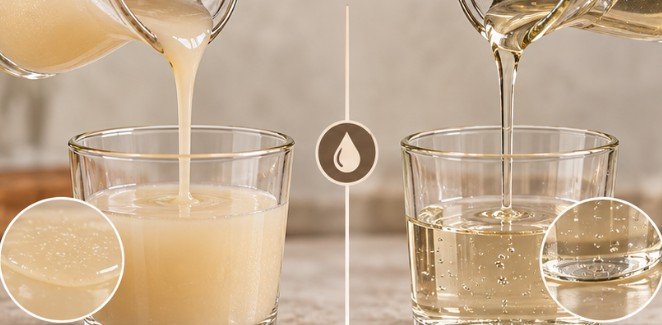
Craft orgeat often costs more than mass-market almond syrup because it may use nuts or nut milk, floral waters, and more involved processing. Compare price per fluid ounce rather than sticker price, because bottle sizes vary substantially.
Some versions also use gum arabic or other stabilizers for a smoother, fuller texture. That may be useful in cocktails where mouthfeel is important but unnecessary in an everyday latte.
Homemade syrup raises a separate storage question. Oregon State University Extension notes that syrups intended for shelf storage require appropriate processing and that opened syrups should be refrigerated.
Homemade orgeat should therefore follow a reliable recipe and conservative refrigerated storage rather than relying on its sugar content alone.
Neither Syrup Is a Nutrition Shortcut
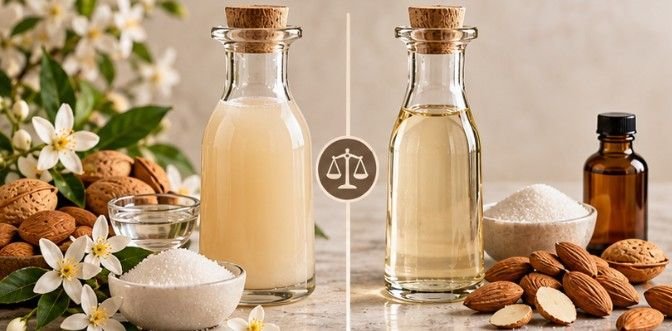
Even when orgeat begins with real almonds, it is still primarily a sweetener. The nutritional qualities associated with eating whole almonds do not automatically translate to a sugar-heavy syrup.
The American Heart Association recommends checking Nutrition Facts panels for added sugars and reducing sweeteners in drinks where practical. Its guidance also identifies sweetened coffee and other beverages as common sources of added sugar.
A more useful buying question is therefore not only, “Does this use real almonds?” but also, “How much do I need to get the flavor I want?” A strongly flavored syrup may achieve the desired result with a smaller pour.
Also Read: Rich simple syrup vs regular simple syrup
Frequently Asked Questions
1. Is orgeat just another name for almond syrup?
Not exactly. Orgeat is an almond-based syrup style that traditionally includes a floral element such as orange blossom water. Ordinary almond syrup is generally simpler and more sweetness-focused.
2. How do you pronounce orgeat?
Common English pronunciations include “or-zhat” and “or-zhay.” Pronunciation varies, so both forms may be heard in U.S. bars, restaurants, and stores.
3. Does orgeat contain alcohol?
Usually no. Commercial orgeat is commonly nonalcoholic, although some homemade or historical recipes include a small quantity of brandy or rum.
4. Is orgeat safe for someone with an almond allergy?
Do not assume so. Traditional orgeat contains almonds. Check ingredient and allergen statements carefully and contact the manufacturer when the formulation or cross-contact information is unclear.
Choose for the Recipe, Not the Label
The useful way to settle orgeat syrup vs almond syrup is not to crown one bottle the winner. Ask what the recipe needs. For fragrance, richness, and a syrup that links citrus, spirits, and sweetness, a well-made orgeat makes sense. For a predictable almond note in coffee, soda, or baking, ordinary almond syrup is often more practical.
Two syrups built around the same basic flavor can behave surprisingly differently. Read the ingredients, compare sweetness, and taste with the finished drink in mind. The name on the bottle is only a clue; the recipe ultimately tells you which syrup belongs in the glass.
Leave a Reply