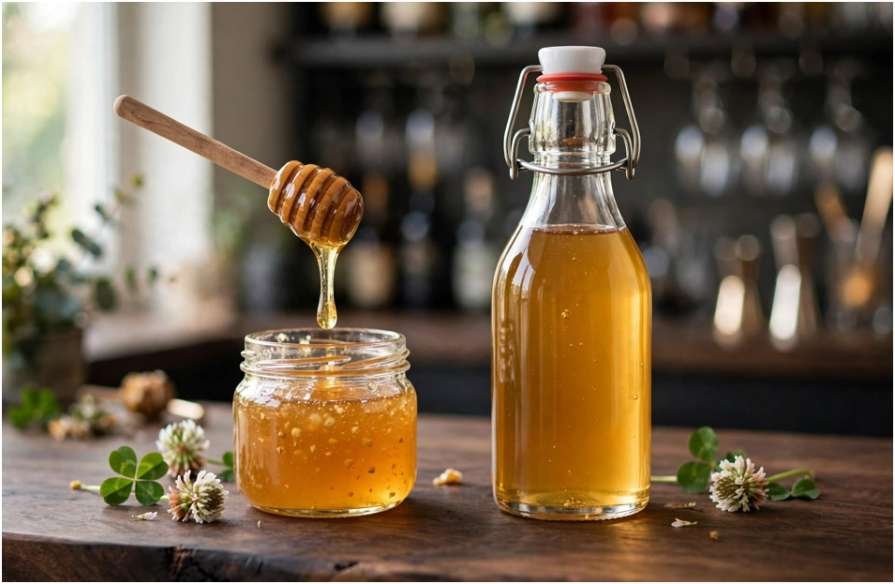
Raw honey turns into an unyielding, waxy pebble the second it strikes cold liquid. When I developed cocktail menus behind a high-volume bar, guests constantly asked for honey-sweetened drinks, yet shaking raw clover honey with ice leaves half the sweetener stuck to the base of your tin.
The fix is this tested honey simple syrup 1 to 1 ratio recipe, an equal-parts blend that delivers instant solubility, silky texture, and pure floral nuance without the clumping.
Why Standard Honey Fails in Cold Drinks
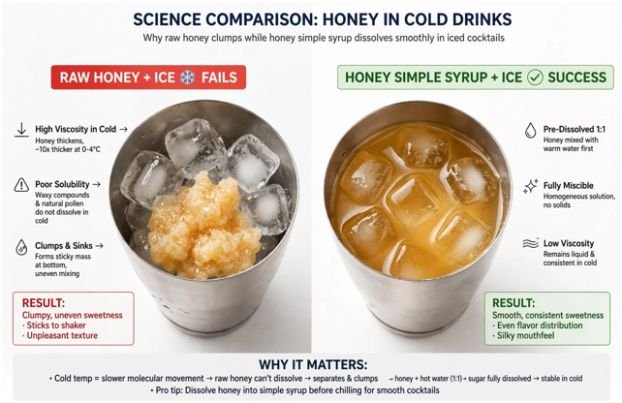
Honey is a supersaturated sugar solution containing approximately 80% natural sugars and 17% water, alongside trace minerals and aromatic compounds. Cold temperatures cause these sugars—primarily fructose and glucose—to seize up.
When you dilute honey with water, you drop its viscosity enough for it to disperse across cold iced tea, chilled lattes, and shaken sours. You can read deeper into the moisture profile of raw sweeteners via USDA FoodData Central.
The Brix Balance: Honey Volume vs. Granulated Sugar
Most bartenders know that standard simple syrup registers at roughly 50° Brix (50% sugar by weight). When you build a 1:1 honey syrup using equal liquid volumes, you are not hitting 50° Brix. Because honey contains native moisture, a volumetric 1:1 honey-to-water mixture lands closer to 41–43° Brix.
This means your syrup tastes slightly softer and less intensely sweet ounce-for-ounce than traditional white syrup. If a cocktail calls for rich, heavy body, you might lean toward a rich simple syrup 2 to 1.
Ingredients and Essential Gear
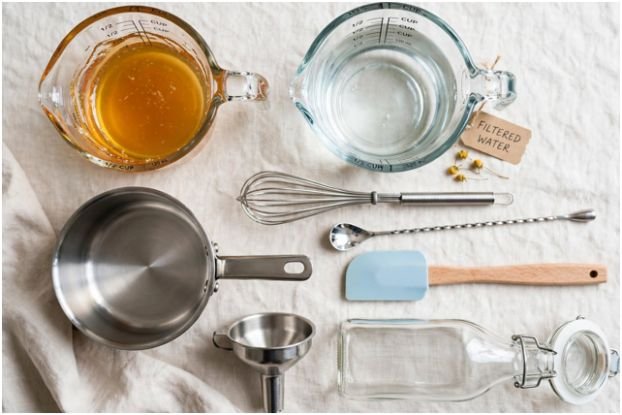
Great syrup requires only two pantry items and minimal kitchen hardware:
- ½ cup honey: Clover and orange blossom provide clean, bright floral notes. Wildflower yields a deeper, herbal punch, while buckwheat gives a bold, earthy profile. Consult the varietal guide from the National Honey Board to match varietals with your drink base.
- ½ cup filtered water: Avoid hard tap water, which contains mineral residues that cloud your syrup.
- Small saucepan or heat-proof jar
- Whisk or bar spoon
- Funnel and glass flip-top bottle
Step-by-Step: The Low-Heat Method
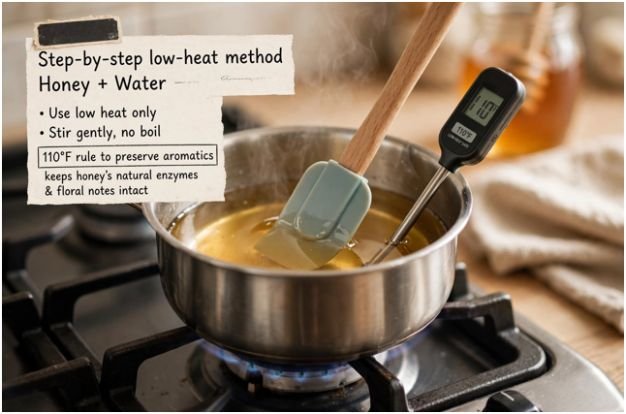
Follow this straightforward stove process for clarity and stability:
- Pour equal measures of honey and filtered water into a small saucepan over low heat.
- Stir constantly using a small silicone spatula or whisk.
- Keep the stove temperature low. Watch the edges closely so the liquid never simmers or bubbles.
- Once the honey fully dissolves and the surface looks clear, take the pan off the burner. This step takes roughly 3 minutes.
- Let the syrup sit at room temperature for 20 minutes before funneling it into a clean, sanitized glass bottle.
The 110°F Rule: Preserving Delicate Aromatics
Heat is the fastest way to ruin exceptional honey. Peer-reviewed research published through ScienceDirect shows that exposing honey to temperatures above 110°F (43°C) rapidly breaks down essential terpenes, pinene, and delicate volatile esters.
High heat boils away floral top notes, leaving behind a flat, generic sugar water. Warm your pan just enough to lower the viscosity and encourage the water molecules to separate the sugar chains. If the pan feels too hot to touch safely, your heat is set too high.
The Zero-Heat Shake Alternative
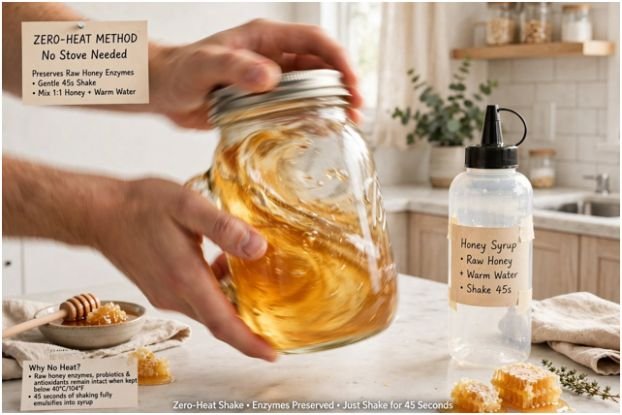
You do not need a stove if your honey is fresh and fluid. Combine equal parts honey and warm tap water (around 105°F) directly inside a clean squeeze bottle or Mason jar.
Seal the container tightly and shake vigorously for 45 to 60 seconds. The physical agitation disperses the honey without altering its raw biological enzymes or aromatic profile.
How to Use Your 1:1 Honey Mix in Cocktails and Coffee
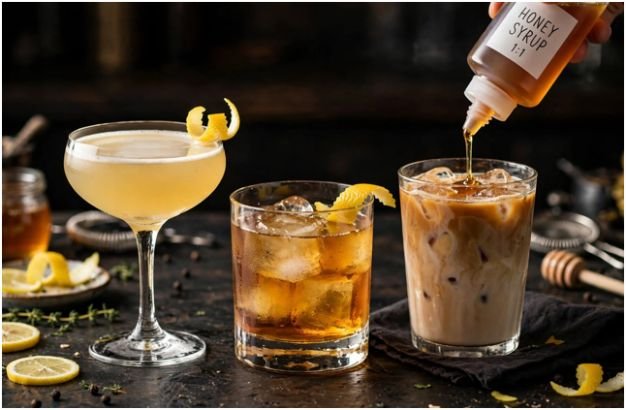
Once chilled, this syrup integrates seamlessly into cold beverages:
- Bee’s Knees: Shake 2 oz London Dry Gin, ¾ oz fresh lemon juice, and ¾ oz 1:1 honey syrup with ice. Fine strain into a chilled coupe for a balanced, herbal profile.
- Gold Rush: Shake 2 oz Bourbon, ¾ oz lemon juice, and ¾ oz honey syrup with ice. Strain over a single large cube in an old fashioned glass.
- Cold Brew Sweetener: Stir 1 tablespoon of honey syrup into 8 ounces of cold brew concentrate and splash with oat milk. Unlike plain honey, it integrates completely without resting on the bottom of your tumbler.
For a deeper dive into cocktail emulsification and proper dilution dynamics, review the mixology techniques cataloged on Serious Eats.
Shelf Life, Storage, and Spoilage Signs
Pure raw honey lasts indefinitely because its ultra-low water activity prevents bacterial multiplication. Once you add equal parts water, you introduce moisture that enables microbial growth.
Store your cooled syrup in an airtight glass container inside the coldest part of your refrigerator, never in the door. It remains fresh for roughly 3 to 4 weeks.
Inspect the bottle before pouring. If you notice white fuzz around the neck, cloudiness, active carbonation bubbles, or a fermented sour aroma, discard the batch immediately.
If a cocktail calls for rich, heavy body you might check out deep molasses notes of a demerara syrup. For bright sours like a Gold Rush or a Bee’s Knees, however, this lighter 1:1 ratio yields clean dilution and balanced acidity.
Frequently Asked Questions
1. Can I substitute clover honey with raw local honey?
Yes, raw local honey works cleanly and retains pleasant indigenous pollen notes.
2. Why did my honey simple syrup turn cloudy after a week?
Cloudiness usually points to natural glucose recrystallization from unfiltered honey or early microbial spoilage.
3. Can I freeze 1:1 honey syrup for longer storage?
Yes, it freezes solid for up to six months without muting its core flavor profile.
4. How does honey simple syrup compare to agave nectar?
Honey syrup offers round floral notes and higher glucose levels, whereas agave delivers concentrated neutral sweetness with higher fructose.
Shake It Before It Settles
Keep a sealed 8-ounce squeeze bottle of this syrup sitting on your top refrigerator shelf, and you will never struggle with stubborn sediment in your shakers again. Test a batch with local wildflower honey this weekend, squeeze a fresh lemon, and pull together a clean cocktail that proves why equal-parts simplicity rules behind the bar.
Leave a Reply