
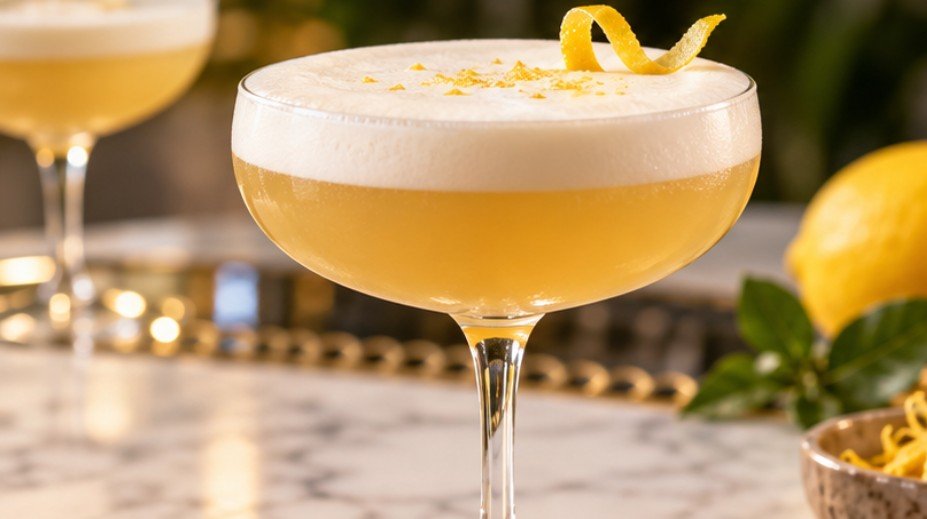
A thick cocktail foam does not depend on egg white. It depends on ingredients that trap tiny air bubbles and slow them from merging or draining away. That is why chickpea liquid, commercial foamers, lecithin, and hydrocolloid blends can all work.
For anyone seeking cocktail foam without egg white, the best substitute depends on the drink. A Whiskey Sour needs dense texture; a fruit or tea cocktail may only need a light aromatic cap. The goal is foam that improves aroma, mouthfeel, and appearance without changing the drink’s flavor.
Why Egg-Free Cocktail Foam Works
Foam needs a surface-active ingredient around each bubble plus enough viscosity to slow drainage. The Institute of Food Technologists’ food-foam explainer explains that proteins can unfold around air bubbles and form a stabilizing network. Research published by the American Chemical Society similarly describes surface-active proteins as important to foam formation.
Aquafaba reaches the same destination differently. Research on chickpea cooking water shows that proteins and carbohydrates work together to create foaming and emulsifying properties. A 2025 study found that concentrating aquafaba could improve foam stability because its functional proteins and carbohydrates become more concentrated.
Hydrocolloids take another route. The FDA’s food-additive guidance identifies xanthan gum as an ingredient used to add texture, while FDA ingredient records describe methylcellulose and gum arabic as stabilizing, thickening, or emulsifying agents. That helps explain why egg-free foaming blends often combine them.
Which Egg-Free Foamer Should You Choose?
| Option | Starting point | Result | Best for |
| Aquafaba | 1/2–3/4 oz | Dense, creamy | Sours |
| Commercial foamer | Follow label | Fine, consistent | Fast service |
| Soy lecithin | Small measured dose | Light, airy | Spoon-on “airs” |
| DIY hydrocolloid foam | 1/4–1/2 oz | Dense, stable | Repeatable cocktails |
Aquafaba is easiest at home. Commercial foamers are fastest. Lecithin suits airy surface foam, while methylcellulose-and-gum blends offer the most control.
Aquafaba: The Simplest Substitute
Aquafaba is the liquid from canned or cooked chickpeas. Studies document its ability to form and stabilize foam, although performance changes with chickpea variety, concentration, temperature, and processing.
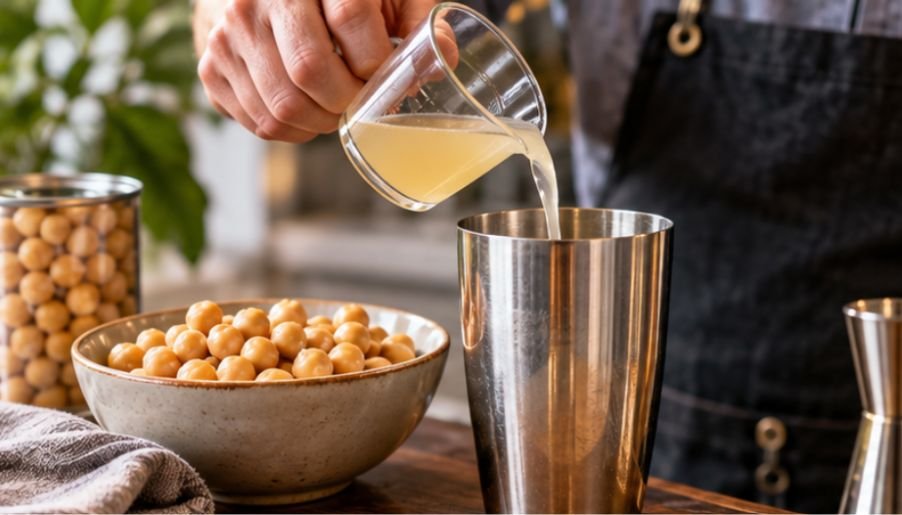
For a standard sour, start with 1/2 ounce of unsalted aquafaba.
If you’re new to mixing at home, these 3 ingredient cocktails for beginners are a good starting point for practicing simple ratios before adding foaming techniques.
Add the spirit, citrus, sweetener, and aquafaba to a shaker without ice. Shake hard for 10–15 seconds, add ice, shake again until cold, and fine-strain.
If the head is thin, try 3/4 ounce. If the drink tastes savory, reduce the amount or switch chickpea brands. Campari Academy’s testing also found that aquafaba can provide useful emulsification but may contribute a slight savory character in delicate drinks.
Why Dry Shaking Helps
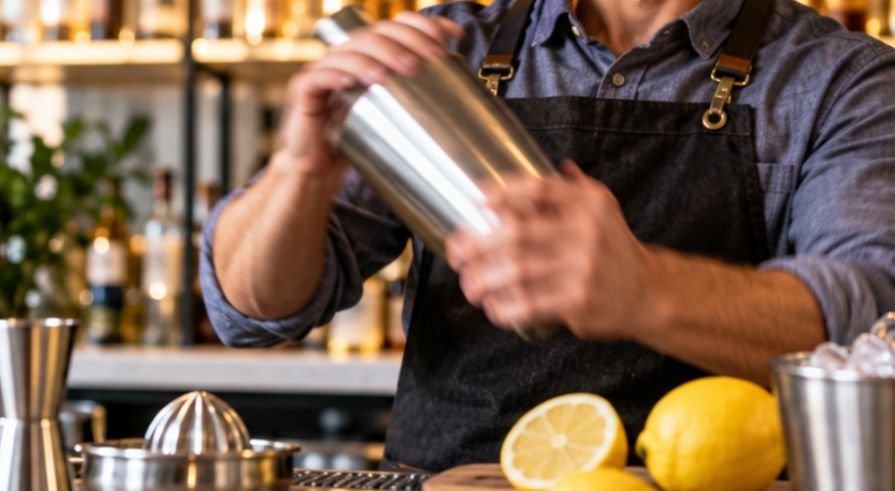
The first ice-free shake aerates the foamer before melting ice dilutes the mixture. A reverse dry shake—shake with ice first, strain, then shake again without ice—can also create a smooth, tight head.
The important variable is agitation. You are physically creating thousands of bubbles and giving the foaming ingredient time to stabilize their surfaces before the drink reaches the glass.
Commercial Foamers: Best for Speed
Bottled cocktail foamers are useful when you want predictable results without opening chickpeas or making a batch. Some need only drops or dashes, but there is no universal dose, so follow the manufacturer’s directions.
Overdosing can make the foam unusually stiff or introduce an aftertaste. If egg avoidance is allergy-related, read the complete ingredient and allergen statement because formulas differ.
Commercial products are especially practical for occasional home bartenders because they reduce waste. They also make it easier to reproduce the same head across several cocktails during a party.
Soy Lecithin: Better for Light “Air”
Soy lecithin is an emulsifier, not a perfect egg-white imitation. Harvard’s Nutrition Source notes that soy lecithin is commonly used to improve texture and mouthfeel in foods.
In cocktails, a hand blender or frother can turn a low-fat liquid such as juice, tea, or flavored water into a light layer of bubbles.
That makes lecithin useful for spooned aromatic foam, but less convincing for the creamy body of a classic sour. Because lecithin products vary in concentration and formulation, follow food-use directions and begin with a small measured dose.
How to Make a Stable DIY Super Foam
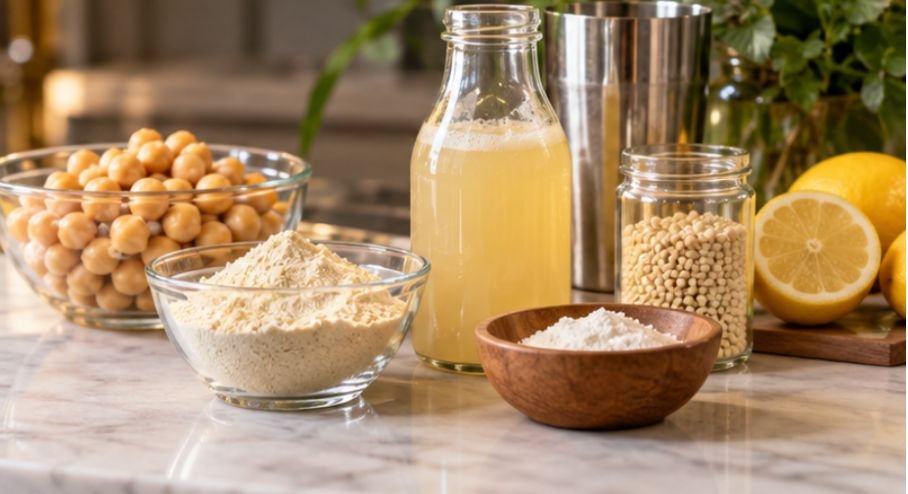
For serious home bartenders, a hydrocolloid blend can create cocktail foam without egg white while keeping sweetness separate from the foaming ingredient.
A widely published formula uses:
500 g water
3 g food-grade methylcellulose
0.3 g xanthan gum
20 g gum arabic
The xanthan amount matters. Some reposted versions show 3 grams, but a published version of this formula uses 0.3 gram—one-tenth as much.
Heat 160 grams of the water to a gentle simmer. Mix in the methylcellulose, xanthan gum, and gum arabic for about five minutes. Slowly add the remaining 340 grams of cold water and continue mixing until the blend is fully dispersed and hydrated.
Transfer it to a clean bottle and refrigerate. Start with about 1/4 ounce per cocktail, increasing toward 1/2 ounce if the drink needs more body.
Campari Academy tested several egg-white substitutes and found methylcellulose solutions especially effective for producing robust texture without a noticeable aroma or flavor.
Because homemade water-based mixtures do not automatically have validated shelf-life testing, make modest batches, refrigerate them, and discard the mixture if its odor, appearance, or texture changes.
Use a Three-Glass Test Instead of Guessing
Make three half-size versions of the same sour. Keep the spirit, citrus, sugar, ice, shake time, and glassware identical. Change only the amount of foamer.
Compare the drinks after one, five, and ten minutes. Judge foam height, bubble size, liquid separation, aroma, mouthfeel, and flavor.
This simple test quickly reveals whether you need more foaming power or whether you have already gone too far. The best version is not necessarily the tallest. It is the one whose foam stays attractive while the drink underneath still tastes balanced.
Mistakes That Make Egg-Free Foam Collapse
Fat can disrupt many foams by interfering with the film around bubbles, so oily shaker residue, creamy ingredients, or oily garnishes may weaken the head. IFT’s food-science material describes the same problem in protein foams.
Weak shaking, excessive dilution, or too much thickener can also hurt texture. More foamer does not automatically mean better foam.
If you want to practice balancing cocktails before experimenting with foam, these smoky mezcal cocktails offer useful examples of working with citrus, sweetness, bitters, and dilution.
Foam also says nothing about alcohol strength. The NIAAA mixed-drink calculator notes that one cocktail can contain one, two, or more U.S. standard drinks depending on the recipe. A fluffy sour can still be a strong drink.
Frequently Asked Questions
1. Can I use chickpea water straight from the can?
Yes. Unsalted canned aquafaba is easiest. Start with about 1/2 ounce per drink, dry-shake first, and increase slightly if needed.
2. What is the most neutral-tasting option?
A commercial foamer or well-made methylcellulose blend is usually more neutral than aquafaba. Test it in a simple sour before using it in delicate drinks.
3. Can I use a milk frother?
Yes. It works especially well for lecithin-based surface foams. For a classic sour, a shaker usually integrates the foam more evenly.
4. Does aquafaba always taste like chickpeas?
No. Flavor varies by brand and concentration. Unsalted aquafaba is often subtle, though delicate gin or vodka cocktails may reveal it more clearly.
The Takeaway
Egg white is one way to create cocktail foam without egg white alternatives being inferior by default—good foam ultimately comes down to bubble stability, texture, and flavor balance. Aquafaba is the easiest starting point, commercial foamers win on convenience, lecithin suits light aromatic airs, and methylcellulose-gum blends offer the most control.
Measure the foamer, control the shake, and judge the drink again after several minutes rather than immediately after pouring. Once you focus on how the foam behaves instead of simply how tall it looks, egg-free foaming becomes a useful bartending technique rather than a compromise.









One comment on “Cocktail Foam Without Egg White: Four Reliable Ways to Build a Better Head”