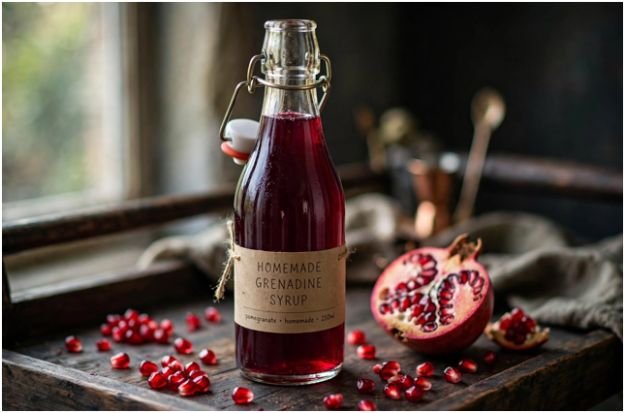
Commercial bright red bottles ruined an entire generation of classic drinks with high-fructose corn syrup and artificial food dyes. Making your own homemade real grenadine syrup from pomegranate juice restores the crisp acidity, deep ruby hue, and drying tannins that balance spirits properly.
I stopped buying commercial mixers years ago after tasting an authentic Jack Rose crafted with real reduced pomegranate, and the contrast is night and day.
Traditional grenadine derives its name from grenade, the French word for pomegranate. When you build this syrup at home with unsweetened juice and pure cane sugar, you produce a rich cocktail modifier that elevates drinks from cloying to complex.
The Industrial Corn Syrup Lie in Your Bar Cart
Walk down any grocery store mixer aisle, and you will find bottles filled with water, citric acid, sodium benzoate, Red #40, and high-fructose corn syrup. Most commercial brands contain zero pomegranate juice. They exist purely to dye drinks neon red and drown clean spirits under sticky, artificial sugar.
Real grenadine provides a tart backbone backed by natural astringency. Pomegranate arils contain punicalagins and tannins, the same compounds that give fine red wine its structured mouthfeel.
When mixed into shaken drinks, these tannins bind to citrus oils and mellow harsh alcohol bites. If you enjoy building nuanced cocktail modifiers like an oleo saccharum citrus base for punches, authentic grenadine belongs in that exact same craft rotation.
Cold Process vs. Gentle Warmth: The Science of Keeping Fruit Bright
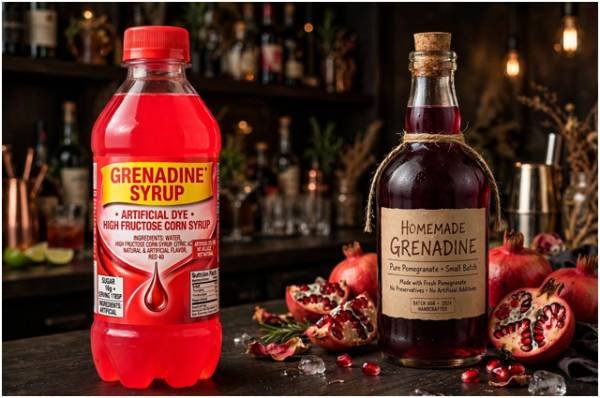
Home bartenders often make the mistake of boiling their pomegranate mixture down to thicken it. Doing so oxidizes the delicate aromatic compounds and changes fresh fruit juice into heavy, scorched jelly.
Why Boiling Destroys Pomegranate Polyphenols
According to nutritional data documented by the USDA FoodData Central, pomegranate juice is packed with heat-sensitive polyphenols and ascorbic acid. Boiling temperatures above 180°F (82°C) rapidly degrade anthocyanins, the pigments that give pomegranate its rich burgundy tone. Boiling also converts clean fructose into caramelized compounds that mute the fruit’s natural snap.
I use gentle warmth only long enough to dissolve sugar crystals, never letting the pot simmer or boil. Alternatively, you can use a high-powered blender to dissolve the sugar without heating the liquid at all, keeping every crisp, berry-like ester completely raw.
Dialing in Brix Density for Pour Precision
Syrup consistency dictates cocktail balance. A standard 1:1 simple syrup measures roughly 50° Brix on a refractometer, while a rich 2:1 syrup hits 66° Brix.
When you combine equal weights of unsweetened juice and granulated sugar, the natural fruit sugars boost your finished product to around 58° Brix. That specific density yields a clean, silky pour that disperses evenly throughout shaken drinks without dropping directly to the bottom of the glass.
Ingredients and Ratios for Authentic Pomegranate Grenadine
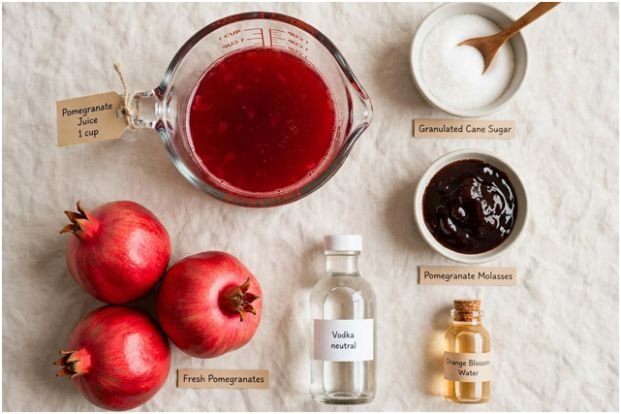
You do not need an entire afternoon or rare equipment to execute this recipe. High-quality inputs yield superior cocktail modifiers, much like brewing a delicate dried lavender simple syrup for floral gin sours.
- 1 cup 100% pure unsweetened pomegranate juice: Bottled POM Wonderful works reliably year-round due to its consistent pH and acid profile, though freshly squeezed arils produce unbeatable brightness.
- 1 cup granulated cane sugar: Standard refined white sugar or organic cane sugar lets the pomegranate flavor shine through without introducing the molasses heavy-handedness of dark brown sugar.
- 1 tablespoon pomegranate molasses: This middle-eastern pantry staple adds concentrated tartness and deepens the final color.
- 1/2 teaspoon orange blossom water: Popularized by bar professional Jeffrey Morgenthaler, this tiny floral addition introduces authentic Mediterranean nuance.
- 1 tablespoon high-proof neutral spirit (optional): Adding unflavored vodka or grain alcohol prevents microbial contamination without skewing the flavor profile.
How I Make Real Grenadine Step by Step
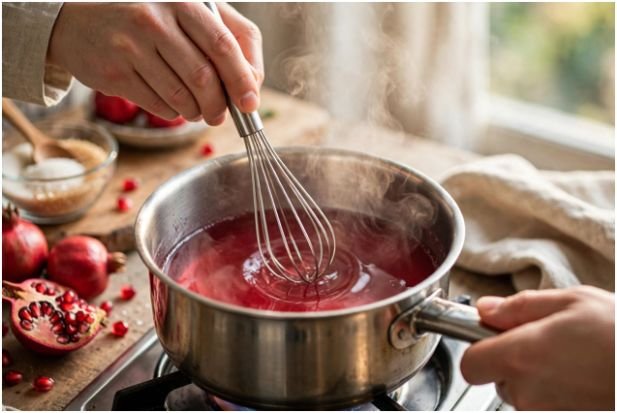
Start by combining one cup of unsweetened pomegranate juice and one cup of sugar in a small, non-reactive stainless steel saucepan. Keep reactive aluminum pans out of this process; the high acidity of the pomegranate juice will leach metallic notes into your batch.
Place the saucepan over low heat. Whisk the mixture continuously for three to four minutes until the liquid transitions from cloudy to completely translucent, indicating the sugar crystals have dissolved entirely. Keep the surface quiet and steady; do not let the pan bubble.
Pull the pot off the stove immediately. Whisk in one tablespoon of pomegranate molasses and a half teaspoon of orange blossom water. Let the syrup rest until it comes down to room temperature. Transfer the dark red syrup into a clean glass bottle using a sanitized funnel.
Storage, Fortification, and Extending Fridge Life
Unfortified 1:1 fruit syrups run a high risk of mold formation within a few weeks due to their water content. Standard food preservation recommendations from the National Center for Home Food Preservation highlight that cold temperatures combined with low water activity restrict spoilage organisms.
Kept raw in a sealed glass bottle in the coldest spot of your refrigerator, real grenadine holds peak flavor for roughly three to four weeks. Stirring in one tablespoon of neutral vodka or unaged brandy extends that freshness past eight weeks. If you build seasonal bar batches, freeze the surplus in silicone ice molds, then pop individual frozen cubes into a sealed bag for year-round access.
Cocktails Transformed by Real Pomegranate Grenadine

Using authentic grenadine completely rehabilitates several historic drinks that commercial mixer syrups ruined.
- The Jack Rose: Shake two ounces of bonded applejack or Calvados, three-quarters of an ounce of fresh lemon juice, and three-quarters of an ounce of homemade grenadine with ice. The tart pomegranate drys out the robust apple spirit beautifully.
- Ward Eight: Combine two ounces of rye whiskey, a half-ounce of lemon juice, a half-ounce of orange juice, and two barspoons of grenadine. Real syrup turns this classic Boston cocktail from watery citrus into a vibrant whiskey sour riff.
- El Presidente: Stir one and a half ounces of aged white rum, one and a half ounces of blanc vermouth, a barspoon of dry curaçao, and a barspoon of real grenadine over ice. The floral pomegranate notes bring elegance without excess sweetness.
Frequently Asked Questions About Real Grenadine
1. Can I use brown sugar instead of white cane sugar?
White cane sugar preserves crisp fruit tartness, whereas brown sugar adds heavy molasses notes that overpower the pomegranate.
2. Why did my homemade grenadine turn brown instead of bright red?
Excess heat during cooking oxidizes pomegranate anthocyanins, turning the vibrant red juice a dull brown color.
3. Can I make grenadine without turning on the stove?
Yes, combine equal parts juice and sugar in a blender on medium speed for two minutes until dissolved.
4. How do I know when the syrup has spoiled?
Discard the batch immediately if you see cloudy sediment strings, floating mold specs, or notice a carbonated fizzy pressure release.
Shake Off the Neon Bottle Curse
Reclaiming authentic grenadine turns your bar cart into a temple of genuine flavor rather than a dumping ground for artificial chemicals. Take fifteen minutes this week, warm a cup of unsweetened juice with pure sugar, and mix up a real Jack Rose to experience what this storied syrup was always meant to deliver.
Leave a Reply