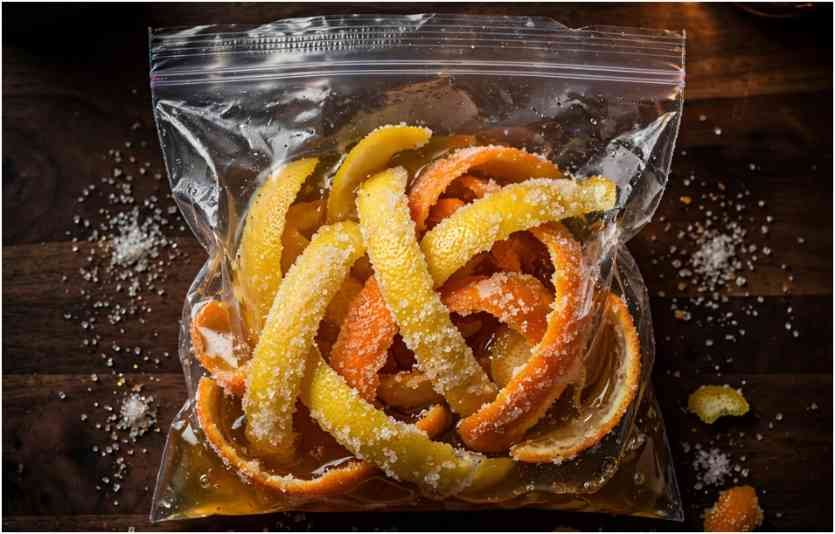
Learning how to make oleo saccharum citrus syrup unlocks the single most aromatic mixer in classic beverage craft. Citrus juice supplies acidity, but the colored skin holds the plant’s volatile aromatic compounds. When dry sugar pulls those oils out through pure osmotic pressure, you get an electric, concentrated syrup that transforms punches, sodas, and sours.
Over a decade behind craft cocktail bars taught me that traditional bowl-and-muddler methods waste half the oils. Here is the exact friction-and-vacuum method I use to extract every drop of flavor from discarded citrus rinds.
The Chemistry of Osmotic Citrus Oil Extraction
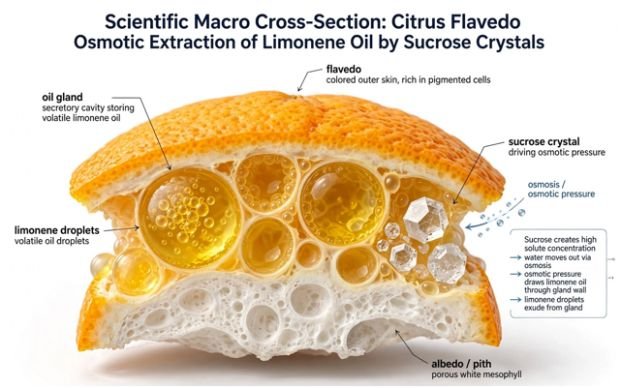
Oleo saccharum translates directly from Latin as “oily sugar.” The process relies on hygroscopic osmosis. Granulated sucrose draws water and volatile terpenes out of the oil glands located in the citrus flavedo. The primary aromatic compound here is limonene, as detailed by botanical research hosted on the National Center for Biotechnology Information (NCBI).
Muddling rinds against a ceramic bowl ruptures only the top layer of oil pockets. Surrounding each peel with fine sucrose crystals triggers a slow collapse of the cellular walls. As the sugar dissolves in the escaping moisture, it forms an intensely fragrant liquid solution saturated with cold-pressed citrus oil.
Why Essential Oils Beat Citrus Juice in Cocktail Architecture
Citrus juice contains citric and malic acids that alter the pH balance of a drink. Juice spoils within 24 to 48 hours as oxidation sets in, turning bright flavors stale and flat.
Oleo saccharum captures pure citrus aroma without shifting acidity. You control the tartness of your final drink separately using fresh juice, while the syrup carries the heavy aromatic top notes.
Unlike cooked syrups, this ambient extraction protects heat-sensitive aromatics, mirroring the technique used by bar directors on Punch Drink.
Ingredients and Essential Tools for Citrus Oil Extraction
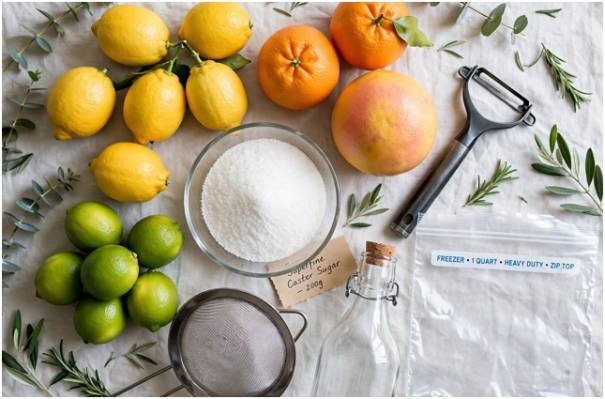
Quality ingredients make a measurable difference in yield. Always reach for unwaxed, organic fruit whenever possible to avoid commercial food-grade shellac or synthetic coatings.
- Citrus Fruit: 6 medium lemons, naval oranges, grapefruits, or limes
- Sugar: 1 cup (200 grams) superfine caster sugar
- Peeling Tool: Sharp carbon steel Y-peeler
- Container: 1-quart heavy-duty freezer zip-top bag
- Filtration: Fine-mesh conical strainer and clean glass storage bottle
Selecting the Right Citrus Variety and Sugar Crystal Size
Standard granulated sugar crystals are large and sharp, but they take excessive time to dissolve into heavy oils. Confectioners’ sugar contains cornstarch and ruins the syrup. Caster sugar, or superfine baker’s sugar, hits the optimal sweet spot. The smaller surface area accelerates oil dissolution without turning chalky.
Lemons and grapefruits yield the most punchy, expressive syrups due to their thick flavedo layer. Limes contain delicate aromatics but possess thinner skins that tear easily. Blood oranges and Meyer lemons create rich, floral profiles that pair well alongside herbal infusions like dried lavender simple syrup.
Step-by-Step Method: The High-Yield Ziplock Technique
Skip the wooden muddler and mixing bowl. Enclosing the mixture in a flexible plastic bag creates immediate surface-to-surface contact between the crystals and the peels.
Phase 1: Precision Peeling Without the White Pith
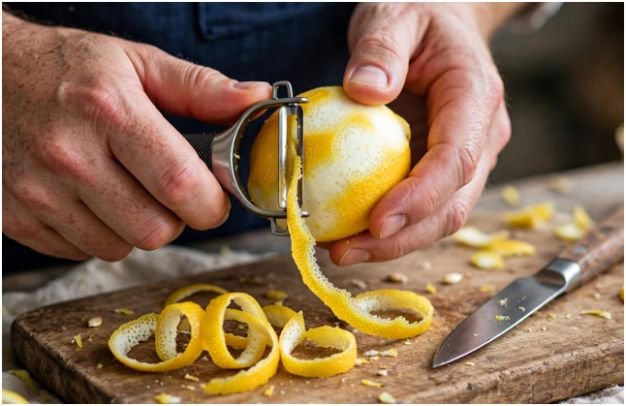
Thoroughly scrub your fruit under warm running water using a produce brush to remove dirt. Dry the fruit completely before cutting into it.
Hold the fruit firmly and glide your Y-peeler across the surface in smooth, shallow ribbons. Remove only the colorful outer skin. The white spongy layer underneath is the albedo, which contains bitter limonin compounds that muddy the bright fruit profile. If you see white pith on the backside of your peeled ribbons, scrape it off gently with a paring knife.
Phase 2: Maceration, Massage, and Osmotic Rest
Weigh your prepared peels on a digital kitchen scale. Measure an equal weight of caster sugar for a 1:1 ratio. Transfer both ingredients into the heavy-duty freezer bag.
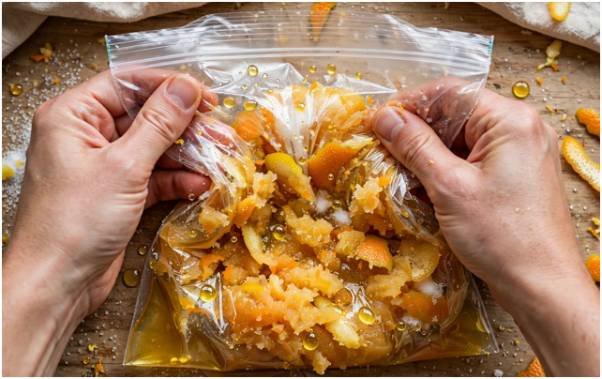
Seal the bag, leaving a small opening at one corner. Press out all excess air to pull the plastic tight against the contents, then seal it completely. Massage the bag firmly between your palms for two minutes. You will feel the sugar turn into a wet, abrasive paste as the crystals break open the oil glands.
Lay the bag flat on your kitchen counter at room temperature. Let it rest for 4 to 8 hours. Shake and knead the bag once every hour to redistribute the pooling syrup over dry patches.
Phase 3: Straining and Recovering the Trapped Sugar
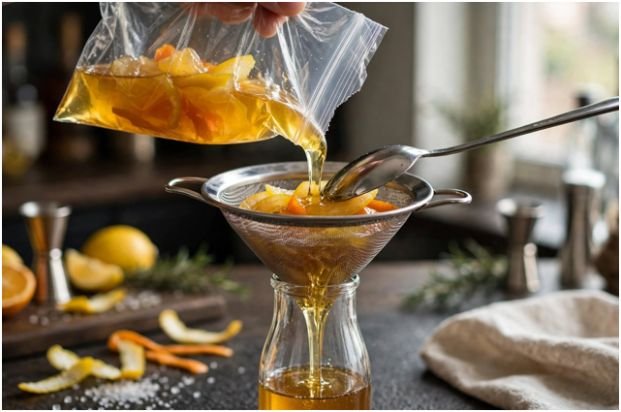
After resting, you will see a pool of rich, translucent liquid surrounding shriveled, translucent peels. Snip a bottom corner off the plastic bag and drain the syrup through a fine-mesh conical strainer into a sanitized glass bottle. Press firmly against the peels using the back of a stainless steel spoon to force out the trapped liquid.
If undissolved sugar clings to the peels, add one tablespoon of boiling water or fresh citrus juice directly to the bag. Shake vigorously for thirty seconds to dissolve the remaining crystals, then pass that final liquid through the strainer.
How to Fix, Stabilize, and Store Citrus Oleo Saccharum
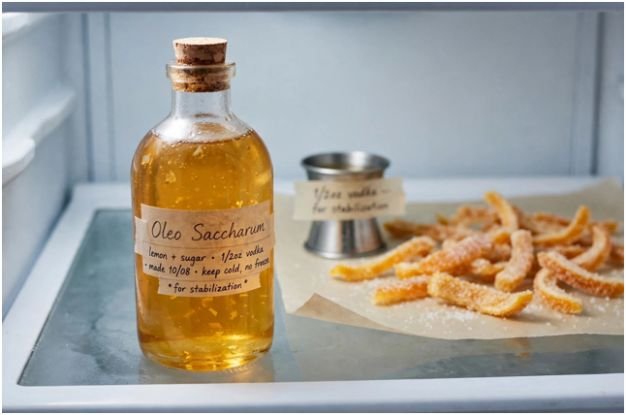
Raw oleo saccharum lasts roughly two weeks in an airtight container kept in the coldest section of your refrigerator. Because the sugar concentration is high, spoilage usually occurs from airborne mold spores rather than yeast fermentation.
To extend the shelf life to six weeks, stir half an ounce of 80-proof neutral grain spirit or unaged vodka into the finished syrup. The alcohol halts bacterial development without masking the citrus perfume. Never freeze oleo saccharum, as cold separation damages the delicate emulsion between the water content and the suspended essential oils.
For deep-dive food science on cold-solvent extractions, Serious Eats details extensive tests on sugar-to-peel weight efficiencies.
Creative Ways to Build Drinks Around Citrus Syrup
Oleo saccharum acts as an exceptional foundation for large-format punches, where it forms the aromatic base alongside tea, rum, and Cognac, following historical techniques archived on Difford’s Guide.
In single-serve drinks, swap standard simple syrup for lemon oleo saccharum in a Gin Collins to add depth. For stirred drinks, use orange oleo saccharum in a classic Old Fashioned to replace both the sugar cube and the expressed twist. You can also alternate citrus syrup with herbal bases like fresh mint simple syrup to make crisp sodas and iced teas.
Frequently Asked Questions About Oleo Saccharum
1. Can I use brown sugar instead of white sugar?
Yes, but demerara or brown sugar introduces heavy molasses notes that overpower subtle lemon or lime oils.
2. How long can oleo saccharum sit at room temperature?
Let it rest on the counter for a maximum of 12 hours before straining and transferring it into refrigeration.
3. What should I do with the leftover candied peels?
Toss the drained peels in extra granulated sugar, let them dry overnight on parchment paper, and use them as garnishes.
4. Why did my oleo saccharum turn cloudy?
Cloudiness simply means the citrus oils formed a dense, natural suspension with the dissolved sugar crystals.
Stop Throwing Out Citrus Peels
Throwing away citrus peels means discarding the most aromatic portion of the fruit. Turning those skins into oleo saccharum saves kitchen scrap, boosts home bar efficiency, and delivers brighter, more complex cocktails. Grab a bag of lemons, peel them clean, and let the sugar do the heavy lifting tonight.
Leave a Reply