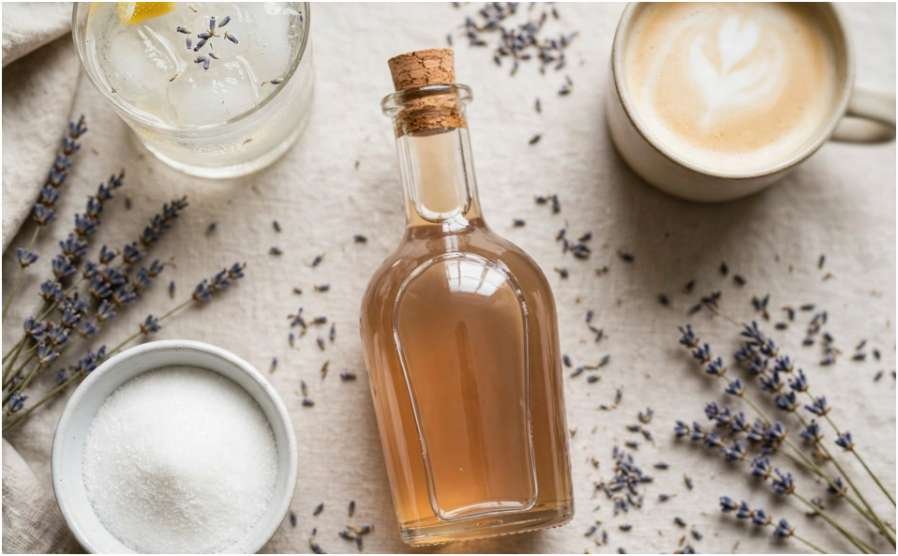
Finding the right dried lavender simple syrup recipe ratio makes the difference between a luxurious cafe-quality drink and a beverage that tastes like liquid French bath soap. Lavender holds high concentrations of aromatic terpenes and volatile camphor compounds. Overdo the flower volume or steep time, and your sweetener ruins an expensive espresso or gin cocktail instantly.
I tested multiple sugar densities and infusion windows in my kitchen to establish the exact sweet spot. Whether you want a light syrup that dissolves cleanly into iced drinks or a heavy cordial that lasts for months, the measurements below deliver balanced, sweet floral notes every single time.
The Exact Dried Lavender Simple Syrup Recipe Ratio
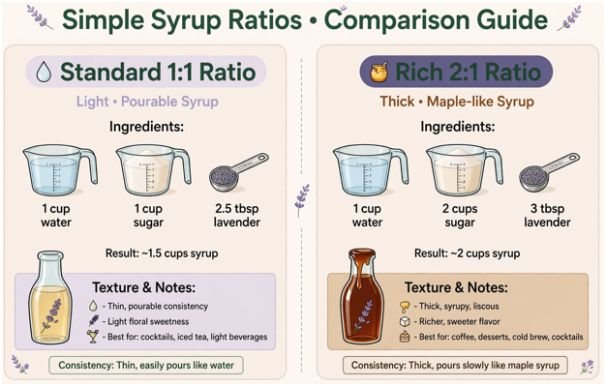
A balanced floral syrup requires a baseline formula that complements the herbal bitterness rather than magnifying it.
Standard 1:1 Ratio for Cocktails and Lattes
The standard ratio consists of one cup of filtered water, one cup of granulated white cane sugar, and two to two-and-a-half tablespoons of culinary dried lavender buds. This equal-parts ratio creates a pourable, light syrup that blends seamlessly into cold liquids like iced matcha, lemonade, and shaken cocktails. It provides clean sweetness without altering the final viscosity of your beverage.
Rich 2:1 Ratio for Longer Shelf Life
If you want a thicker mouthfeel and extended preservation, use a rich syrup formula: two cups of sugar to one cup of water, paired with three level tablespoons of dried lavender. According to beverage science principles highlighted by Serious Eats, higher sugar concentrations lower the water activity of a solution, making it difficult for wild mold or bacteria to colonize. The rich version pours like warm maple syrup and coats the tongue beautifully in hot drinks.
Culinary Lavender vs. Craft Store Lavender
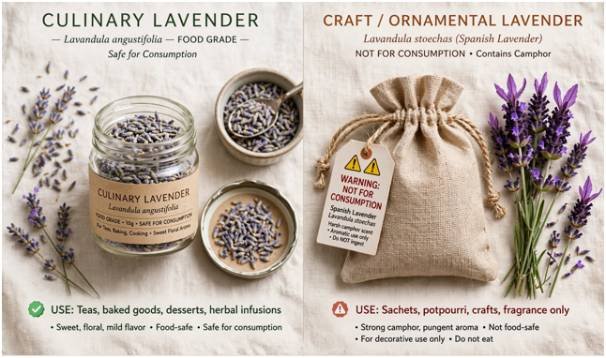
Never brew simple syrup using dried lavender from a floral shop or sachet display. Ornamental lavender varieties often receive commercial synthetic pesticide sprays not approved for human consumption. Furthermore, ornamental strains often come from Lavandula stoechas (Spanish lavender) or Lavandula dentata, which contain harsh concentrations of camphor.
Always verify you are purchasing food-grade Lavandula angustifolia, often labeled English culinary lavender.
The USDA Plants Database details the distinct agricultural profile of true English lavender, which produces lower camphor levels and higher sweet linalool content. This culinary botanical yields a delicate, soft perfume ideal for culinary syrups and baking.
Step-by-Step Infusion Method
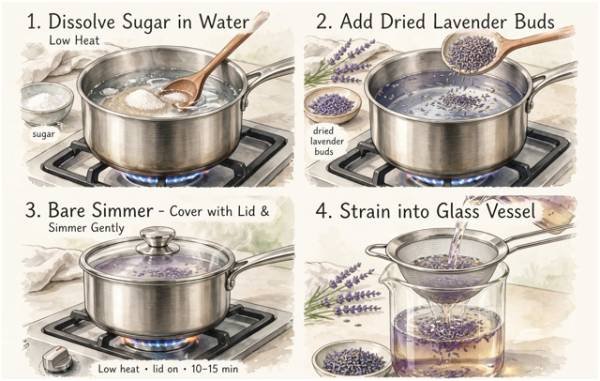
Great syrup relies on heat control rather than prolonged boiling. Follow this extraction process to keep the floral aromatics pristine:
Measure one cup of granulated sugar and one cup of water into a heavy-bottomed saucepan. Set the heat to medium and stir gently until the sugar crystals dissolve completely. Do not let the liquid boil violently; excessive boiling evaporates your water volume and throws off the balance.
Stir in two-and-a-half tablespoons of dried culinary lavender buds. Lower the burner to its lowest setting, cover the pan, and maintain a bare simmer for exactly five minutes to bloom the dried botanicals. Remove the pot from the heat element immediately.
The 20-Minute Steep Window (Avoiding the Soap Flavor)
Leaving dried flowers in hot sugar water too long ruins the syrup. During testing, an infusion steeped for 45 minutes produced sharp, medicinal notes that lingered unpleasantly on the palate.
Set a timer for 15 to 20 minutes the moment the pan leaves the heat. This gives the hot water enough time to extract the delicate linalool and geraniol oils while leaving the bitter plant tannins trapped inside the dried calyx.
Once your timer chimes, pour the liquid through a fine-mesh stainless steel strainer into a heatproof glass vessel. Press the lavender flowers very gently with the back of a spoon to collect residual syrup, but do not crush them aggressively.
Achieving That Elusive Natural Violet Hue
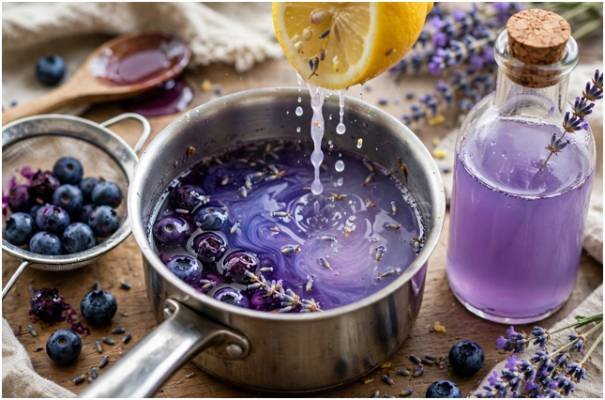
Authentic lavender syrup does not turn purple on its own. Natural flower extraction yields an uninspiring, pale yellowish-amber tint. If you see neon purple syrup in coffee shops, you are drinking artificial dye.
You can create an organic, pastel-violet hue using standard kitchen chemistry. Drop eight to ten fresh or frozen blueberries into your saucepan during the final two minutes of your simmer. As the blueberries soften, they release anthocyanins—natural water-soluble plant pigments. Strain them out alongside the lavender buds, then whisk in one teaspoon of freshly squeezed lemon juice.
The citric acid shifts the anthocyanin pH, turning the muddy liquid into an ethereal lavender-violet tone without altering the floral flavor profile.
Botanical Blends and Herb Cabinet Pairings
Mastering this core recipe allows you to build complex herbal variations. If you enjoy garden-forward profiles, pair lavender with other earthy notes.
Try splitting the botanical volume in half by combining lavender with mint to craft a refreshing twist on fresh mint simple syrup. The cool menthol sharpens the floral notes and cuts through heavy milk drinks.
Storage Realities and Spoilage Indicators
Homemade botanical simple syrups lack chemical preservatives, so proper refrigeration is non-negotiable.
Store your finished syrup in a glass bottle with an airtight seal. Wash and sterilize the bottle with boiling water before filling. The National Center for Home Food Preservation emphasizes clean containers to prevent microbial contamination in homemade syrups and preserves.
A standard 1:1 ratio syrup remains fresh in the refrigerator for two to three weeks. A rich 2:1 syrup lasts up to three months under cold storage. If your syrup develops a cloudy haze, exhibits white sediment along the bottom, or develops a sour, fermented cider aroma, discard it immediately.
If you prefer woodsy, savory tones in fall and winter cocktails, blend dried lavender with crushed herbs using the method from this rosemary simple syrup. One sprig of fresh rosemary simmered alongside a tablespoon of lavender adds resinous depth that pairs exceptionally well with aged whiskey or dark rum.
Frequently Asked Questions
1. Why does my homemade lavender simple syrup taste like soap?
You steeped the dried buds longer than 20 minutes, extracting bitter camphor compounds and astringent tannins.
2. Can I use fresh lavender flowers instead of dried buds?
Yes, but you must double the amount to five tablespoons because fresh flowers contain higher water weight and less concentrated oils.
3. How do I make sugar-free lavender syrup?
Replace the granulated cane sugar with an equal volume of allulose or erythritol, simmering just until the crystals dissolve.
4. Can I freeze lavender simple syrup for long-term storage?
Yes, pour the cooled syrup into clean silicone ice cube trays and freeze for up to six months.
Stop Drinking Bland Lattes
Elevating your home beverage routine does not require an artisanal pantry or costly barista equipment. Measure out your sugar, keep an eye on your steeping timer, and strain the infusion before the botanicals turn astringent.
Whip up a batch this morning, pour a splash into an iced latte or crisp sparkling water, and leave commercial flavored syrups behind for good.
Leave a Reply