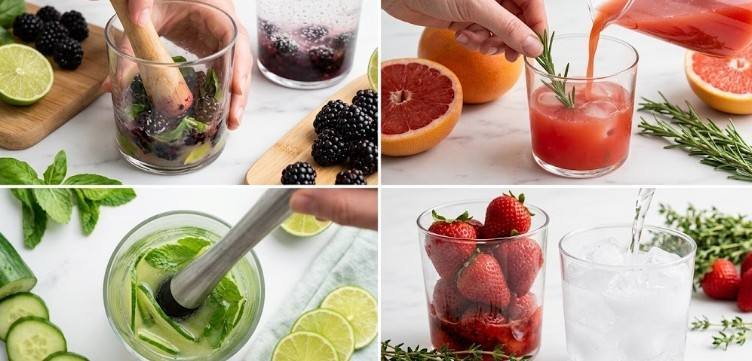
A mocktail does not need a large pour of syrup to taste finished. Great alcohol-free drinks rely on contrast: tart citrus, fragrant herbs, ripe fruit, bitterness, spice, bubbles, and just enough sweetness to connect the flavors. That is the idea behind these low sugar mocktail recipes with fresh ingredients—build complexity first, then sweeten only if the drink needs it.
Sugary drinks are a leading source of added sugars in the American diet, according to the CDC’s guidance on added sugars. The American Heart Association recommends limiting added sugars to no more than 6% of daily calories. The goal here is not to make every glass sugar-free; it is to stop sweetness from doing all the work.
What “Low Sugar” Means in a Homemade Mocktail
The FDA has not formally defined “low sugar” as a nutrient-content claim. At home, it is better treated as a practical goal: use little or no added sweetener, avoid sugar-heavy mixers, and let fresh ingredients provide most of the character.
The FDA’s Added Sugars guidance distinguishes total sugar from added sugar. Fruit naturally contains sugar, while syrups, honey, table sugar, and concentrated fruit juices can contribute added sugars. So a drink can contain no added sugar yet still have a meaningful amount of total sugar.
Harvard T.H. Chan School of Public Health’s Nutrition Source notes that 100% fruit juice can still deliver substantial sugar and calories. Using one or two ounces of juice, then stretching it with sparkling water, tea, cucumber, or herbs, keeps the drink bright without making it syrupy.
The Flavor Formula That Replaces Heavy Syrup
A balanced mocktail needs more than sweetness. Think in terms of acid, aroma, body, contrast, and dilution.
| Flavor tool | What it does | Fresh options |
| Acid | Adds brightness | Lemon, lime, grapefruit |
| Aroma | Makes flavor feel bigger | Basil, mint, rosemary |
| Body | Prevents a thin drink | Berries, cucumber |
| Contrast | Keeps sweetness in check | Ginger, chile, citrus peel |
| Length | Extends flavor | Club soda, mineral water, tea |
Penn State Extension’s guidance on cooking with herbs notes that herbs can deepen flavor while helping reduce reliance on sugar, salt, or fat. In drinks, lightly bruise mint, clap basil between your palms, or gently press rosemary to release aroma without extracting too much bitterness.
Four Low Sugar Mocktail Recipes With Fresh Ingredients
Blackberry Basil Ginger Fizz
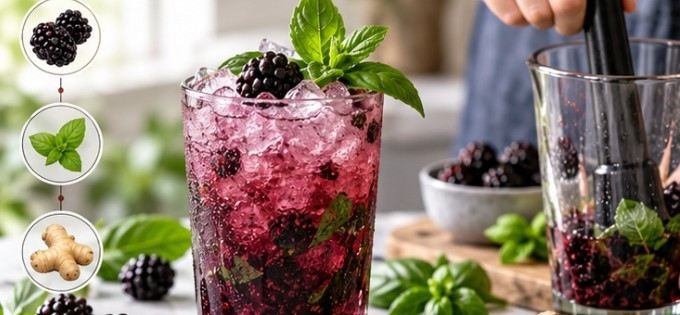
Use 4 to 5 blackberries, 2 basil leaves, 1/2 ounce lime juice, 3 ounces sparkling water, and about 2 ounces lower-sugar ginger beer or diet ginger ale.
Muddle the berries and basil with lime. Shake briefly with ice, strain if preferred, and top with the fizzy mixer. Taste before adding anything else; ginger beer often supplies enough sweetness.
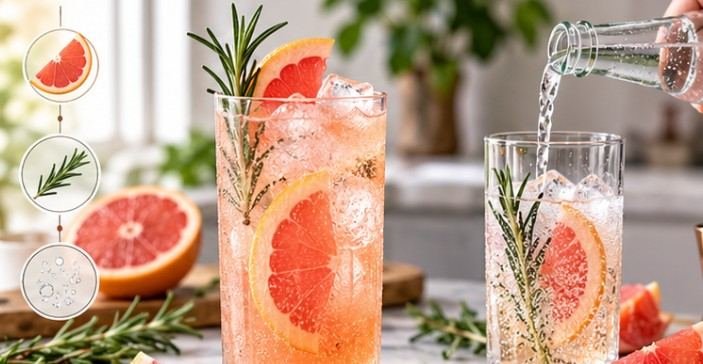
Grapefruit Rosemary Spritz
Combine 2 ounces grapefruit juice, 1/2 ounce lemon juice, one small rosemary sprig, and 4 ounces club soda.
Press the rosemary once or twice rather than pulverizing it. Add ice and soda, then taste. If the grapefruit is especially sharp, add a small amount of honey or agave. A tiny pinch of salt can also soften acidity without making the drink sweeter.
Cucumber Mint Lime Cooler
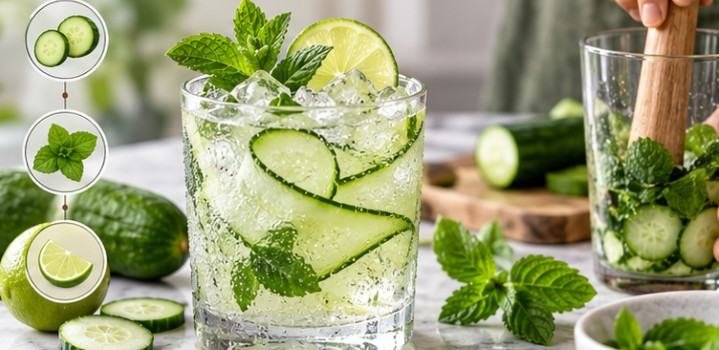
Muddle several cucumber slices with 4 mint leaves and 3/4 ounce lime juice. Add ice, then top with about 4 ounces sparkling mineral water.
Cucumber gives the drink volume without requiring much juice. Treat mint gently; heavy muddling can make leafy herbs bitter. A cucumber ribbon or lime wheel adds aroma at the rim.
Strawberry Thyme Soda
Muddle two ripe strawberries with 1/2 ounce lemon juice and a small thyme sprig. Add ice and 4 to 5 ounces plain seltzer.
If the berries taste flat, try lemon zest or another thyme sprig before adding sugar. Aroma can make fruit seem more vivid even when sweetness stays unchanged.
Use This 30-Second Test Before Adding Sweetener
Take three small sips. First, decide whether the drink is too sour. Second, ask whether the aroma is weak. Third, notice whether the finish feels thin.
If it is too sharp, add soda water or reduce the citrus. If it lacks aroma, use zest, herbs, ginger, or cucumber. If the finish seems flat, try carbonation, chilled tea, or a bitter element.
Only then add sweetness, in small increments. If you overcorrect and end up with too much acid, the True Syrups guide on how to fix a cocktail that is too sour uses the same balancing logic that works for zero-proof drinks.
Keep Packaged Mixers From Undoing the Recipe
A bottled mixer can quietly change the whole drink. The FDA recommends using the Nutrition Facts label to compare products; 5% Daily Value or less of a nutrient per serving is considered low, while 20% or more is high.
Check serving size too. Plain seltzer, club soda, mineral water, and unsweetened tea are easy foundations because you control what gets added afterward.
The same principle applies to alcoholic drinks: these low-sugar cocktail options for home bartenders focus on controlling the mixer instead of repairing an overly sweet drink later.
Fresh Does Not Automatically Mean Low Sugar
Large amounts of fruit juice can still make a mocktail quite sweet. Orange, pineapple, grape, mango, and watermelon juice are easy to overpour.
Use roughly 1 to 3 ounces of juice for flavor, then lengthen the drink with sparkling water, tea, cucumber, herbs, or ice. If you need to closely manage carbohydrate intake for a medical reason, use ingredient-specific nutrition information instead of relying on the phrase “low sugar.”
Frequently Asked Questions
1. What is the easiest way to reduce sugar in a mocktail?
Replace part of the juice or sweet mixer with club soda, sparkling water, or unsweetened tea. Then use citrus zest, herbs, ginger, or spice to restore intensity.
2. Can I use fresh fruit instead of simple syrup?
Yes. Berries, citrus, and melon can provide flavor and natural sweetness. Use modest portions, especially with sweeter fruits, and taste before adding another sweetener.
3. Are zero-sugar sodas useful in mocktails?
They can be. Choose one you enjoy, check caffeine if relevant, and use it as part of the drink rather than letting it overwhelm fresh ingredients.
4. How do I make a low-sugar mocktail taste sophisticated?
Layer acid, herbs, bitterness, ginger, chile, tea, or carbonation. Complex drinks feel satisfying because several flavor signals work together, not because they are intensely sweet.
A Better Way to Build the Next Glass
The lesson from these low sugar mocktail recipes with fresh ingredients is that reducing sweetness does not mean reducing flavor. It means moving flavor into other places: citrus oils, basil aroma, ginger heat, cucumber freshness, grapefruit bitterness, and carbonation.
Start with fresh ingredients, keep juice portions intentional, and taste before adding syrup. Once you learn to adjust acid, aroma, dilution, and texture separately, sweetener becomes an optional finishing tool rather than the foundation of the drink.
Leave a Reply