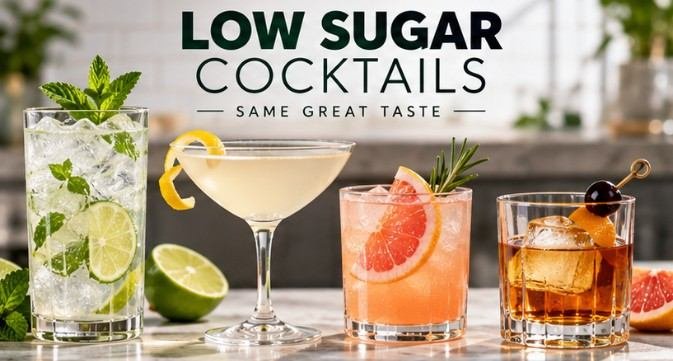
A cocktail can become sugar-heavy before the liquor even matters. Sweetened tonic, ginger beer, bottled sour mix, flavored liqueurs, and generous syrup pours can stack sweetness quickly. The better fix is not to make every drink taste “diet.” It is to build flavor from acidity, aroma, dilution, and texture.
For home bartenders, low sugar cocktail options for home bartenders are often simpler than elaborate classics: a measured spirit, fresh citrus, bitters or herbs, ice, and unsweetened bubbles can do most of the work.
Low Sugar Does Not Mean Flavorless
Sugar softens acidity, rounds off alcohol, adds body, and tames bitterness. Remove it without adjusting anything else and a drink may taste thin or harsh.
The American Heart Association recommends limiting added sugars to no more than 6% of daily calories, with suggested limits of 36 grams per day for men and 25 grams for women. That makes sweet mixers worth noticing, especially when several are combined in one glass.
The FDA also distinguishes total sugar from added sugar. On packaged mixers, check the “Added Sugars” line and the serving size; 5% Daily Value or less is considered low, while 20% or more is high.
A Four-Part Formula for Lower-Sugar Cocktails
Start With the Base, Not the Mixer
Gin, vodka, tequila, whiskey, and rum can carry a drink without needing a sugary soda.
Portion still matters. The National Institute on Alcohol Abuse and Alcoholism defines one U.S. standard drink as 1.5 fluid ounces of 80-proof distilled spirits. A cocktail containing 2 or 2.5 ounces of liquor can therefore contain more than one standard drink even when its sugar content is minimal.
Use Acid for Brightness
Fresh lime, lemon, or grapefruit can make a cocktail taste lively without making it sweet. Start with about 1/2 ounce, chill and dilute the drink, then adjust.
If the result feels too sharp, try bitters, cucumber, herbs, citrus peel, or a modest amount of vermouth before automatically reaching for syrup.
Build Aroma
Mint, basil, rosemary, ginger, jalapeño, cucumber, citrus zest, and aromatic bitters can add complexity without requiring a large dose of sweetness.
This is one reason a simple gin-and-soda garnished with fresh basil and lemon can feel more interesting than a drink loaded with flavored syrup.
Lengthen With Unsweetened Bubbles
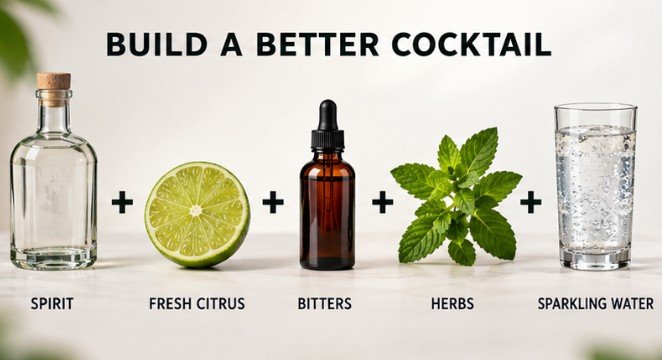
One of the best savory cocktails to make at home using club soda, mineral water, and unsweetened flavored sparkling water add volume and dilution while leaving the main flavors intact.
They work particularly well in tall drinks where a few ounces of sugary soda or tonic might otherwise supply much of the sweetness.
Six Low-Sugar Drinks Worth Learning
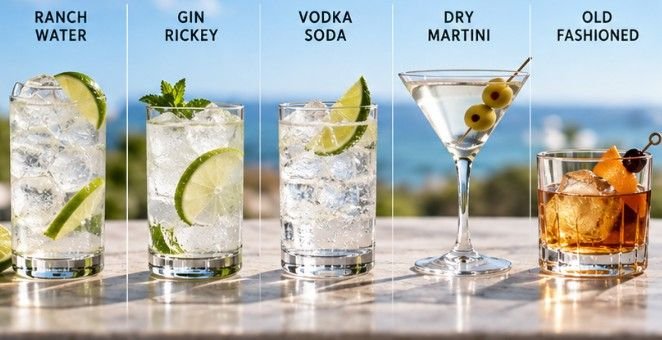
| Drink | Basic Build | Sugar-Control Advantage |
| Ranch Water | Tequila, lime, mineral water | No syrup required |
| Gin Rickey | Gin, lime, club soda | Bright without sweet soda |
| Dry Martini | Gin or vodka, dry vermouth | Compact instead of mixer-heavy |
| Vodka Soda | Vodka, soda, citrus | Easy to customize without syrup |
| Light Old Fashioned | Whiskey, bitters, small sugar dose | Controls rather than eliminates sweetness |
| Tequila-Grapefruit Highball | Tequila, grapefruit, soda | Acidity and bitterness reduce the need for sweet soda |
Ranch Water
Add 1.5 to 2 ounces of blanco tequila to an ice-filled glass, squeeze in fresh lime, and top with sparkling mineral water. Carbonation and acidity keep the drink refreshing without syrup.
For additional aroma, run a lime peel around the rim before dropping it into the glass.
Gin Rickey
Combine gin, fresh lime, and club soda. If the drink tastes too austere, express a lime peel over the glass or add more ice rather than immediately sweetening it.
Botanical gin, citrus, and carbonation give this classic considerably more flavor than its short ingredient list suggests.
Dry Martini
A dry Martini uses spirit and dry vermouth instead of sugary soda or syrup, making it relatively low in sugar compared with many mixer-heavy cocktails.
It is still alcohol-forward. Low sugar does not mean low alcohol. CDC guidance emphasizes that drinking less alcohol is better for health than drinking more, regardless of the drink’s sugar level.
A Restrained Old Fashioned
Use whiskey, bitters, orange peel, and a smaller amount of sugar or simple syrup.
Instead of automatically adding a full sugar cube or a heavy syrup pour, start with a small quantity, stir with ice, taste, and adjust. Good whiskey, bitters, citrus oils, and correct dilution already provide considerable character.
The 60-Second Cocktail Sugar Audit
When evaluating low sugar cocktail options for home bartenders, use a quick four-step test.
First, identify every sweetened ingredient: syrup, liqueur, tonic, soda, ginger beer, sweet vermouth, fruit nectar, bottled juice blend, or sweetened coconut product.
Second, check serving sizes on packaged mixers. FDA labeling guidance emphasizes that nutrition values apply to the listed serving, so using two servings also increases the sugar contribution accordingly.
Third, decide which sweet ingredient is actually necessary. A Margarita may benefit from orange liqueur or another balancing element, but it does not necessarily need a large pour of bottled sweet-and-sour mix as well.
Finally, replace lost volume. If you remove several ounces of sugary mixer, use soda water, additional ice, citrus, or unsweetened tea so the cocktail still has length and texture.
Three Mistakes That Undercut the Goal
The first is assuming fruit juice is unlimited because it contains no added sugar. Juice still contains naturally occurring sugar, so portions matter for anyone monitoring total sugar or carbohydrates.
The second is treating honey, agave, or maple syrup as sugar-free upgrades. Their flavors differ, but they still contribute sugars. Use them because their flavor improves the drink rather than because they make sweetness disappear.
The third mistake is compensating with more liquor. A stronger cocktail is not automatically healthier because it contains less syrup. Sugar intake and alcohol intake are separate considerations.
Harvard’s Nutrition Source identifies sugar-sweetened beverages as a major source of added sugar in the American diet. For a home bar, that makes tonic, soda, ginger beer, lemonade, and bottled cocktail mixers logical products to scrutinize first.
Stock a Smarter Home Bar
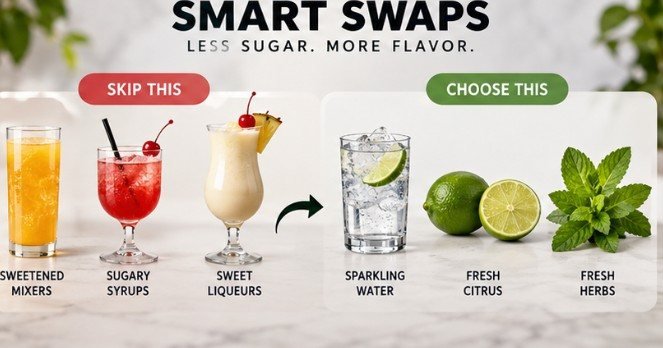
You do not need shelves full of specialty “skinny” products. Keep lemons and limes, club soda, unsweetened sparkling water, aromatic bitters, fresh herbs, cucumber, and dry vermouth available.
Keep sweetness measurable, too. A squeeze bottle of simple syrup allows you to add 1/4 ounce, taste, and decide whether the cocktail actually needs more.
The most useful habit is to add sweetness last. Chilling, dilution, acidity, aroma, and carbonation may already have solved the balance problem.
Frequently Asked Questions
1. What cocktail has the least added sugar?
Spirit-and-soda drinks with fresh citrus are among the simplest choices because they do not require syrup or sweetened mixers. Actual sugar depends on the ingredients and portions used.
2. Are sugar-free mixers always better?
Not necessarily. They may reduce added sugar, but sweeteners, caffeine, sodium, and taste vary between products. Compare labels and choose according to your needs.
3. Can I make an Old Fashioned with less sugar?
Yes. Reduce the sugar gradually. Bitters, orange peel, proper dilution, and flavorful whiskey can help preserve balance while using a smaller amount of sweetener.
4. Are low sugar cocktail options for home bartenders also low calorie?
Not automatically. Alcohol contributes calories even when a cocktail contains little added sugar, so a low-sugar drink can still be alcohol-forward.
The Takeaway
Good low-sugar drinks rarely require specialty ingredients. They require better control. Measure the spirit, identify hidden sweeteners, use citrus and bitters for structure, and let ice and carbonation do more of the work.
That preserves what makes a cocktail satisfying: contrast, aroma, temperature, and texture. Start with a Ranch Water or Gin Rickey, then apply the same logic to drinks you already make. The goal is not “no sugar at any cost.” It is deliberate sweetness, better balance, and a drink that still tastes unmistakably like a cocktail.
Leave a Reply