A spicy drink does not need tequila, orange liqueur, and a salted rim to work. Spicy cocktails beyond margaritas can use rum, gin, mezcal, bitter aperitifs, herbs, tropical fruit, or whiskey to make chile heat feel more layered.
The key is balance. Capsaicin—the compound responsible for much of a chile pepper’s burn—activates receptors involved in heat and pain sensation. A good spicy cocktail should not taste like liquid hot sauce. It should give the burn somewhere to go: into citrus, sweetness, bitterness, smoke, herbs, or dilution.
Why Chile Heat Works in More Than Tequila Drinks
New Mexico State University’s Chile Pepper Institute explains that chile pungency is commonly expressed in Scoville Heat Units, and peppers can differ dramatically in intensity. A jalapeño and a habanero are not interchangeable simply because both are “hot.”
That matters behind the bar. A mild pepper can be muddled directly into a long drink, while a powerful pepper is better handled through a carefully dosed syrup, tincture, or infusion.
University of Illinois Extension notes that capsaicinoids are concentrated around the pale inner tissues and walls near the seeds. Removing those tissues can lower the heat before a pepper reaches the shaker.
Five Spicy Cocktails Worth Trying Beyond the Margarita
| Cocktail | Base spirit | Heat source | What balances it |
| Firecracker | Aged rum | Cayenne | Watermelon, lime, orange liqueur |
| Spicy Paloma riff | Tequila | Chile-infused aperitif | Grapefruit, lime, soda |
| Jalapeño-cilantro mojito | White rum | Fresh jalapeño | Lime, herbs, soda |
| Dirty Old Man | Tequila + mezcal | Chile-infused Aperol | Pineapple, lime, agave |
| Spicy Greyhound | Gin | Cayenne + jalapeño | Grapefruit, lemon, cinnamon |
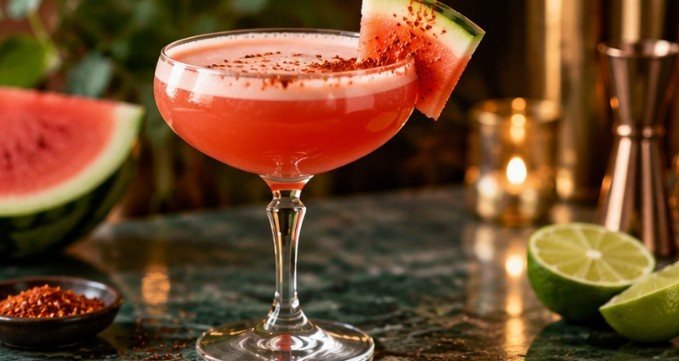
Firecracker: Rum, Watermelon, and Cayenne
The Firecracker proves spice does not require pepper slices. Liquor.com’s version combines aged rum, watermelon, orange liqueur, lime, simple syrup, and cayenne.
Watermelon softens the pepper’s sharp edges, while lime keeps the drink bright. Aged rum adds deeper caramel and oak notes than a typical blanco-tequila base, making the heat feel rounder.
Spicy Paloma: Bitter Citrus With Controlled Heat
A spicy Paloma can move beyond the familiar jalapeño-tequila formula by infusing a bitter orange aperitif with chile, then pairing it with tequila, grapefruit, lime, and soda.
The advantage is control: you can measure the spicy component instead of guessing how much heat muddled pepper will release. Grapefruit bitterness also gives the drink a drier profile.
Jalapeño-Cilantro Mojito: Fresh and Herbal
Rum is friendly to fresh green chile because sugarcane sweetness cushions the burn. Add cilantro or mint, lime, jalapeño, and soda, and the result becomes a bright herbaceous highball.
For a gentler version, use one or two thin slices. At parties, a mild jalapeño syrup gives more consistent results than muddling peppers to order.
Dirty Old Man: Smoke, Bitter Orange, and Pineapple
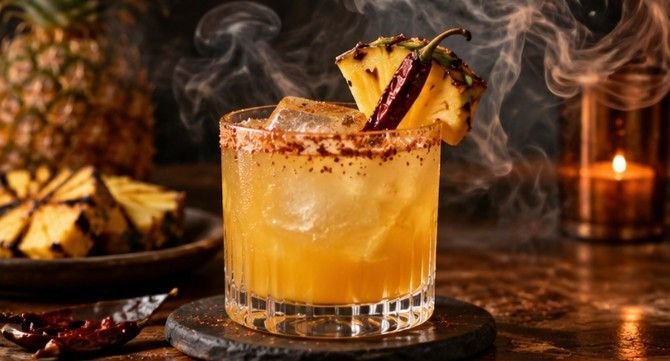
This drink combines tequila and mezcal with chile-infused Aperol, pineapple, lime, agave, and bitters.
Mezcal brings smoke, Aperol bitter orange, pineapple sweetness, and lime acidity. The chile becomes one layer rather than the entire point.
Spicy Greyhound: Gin Can Handle Heat Too
A Greyhound-style drink with gin, grapefruit, lemon, cinnamon, cayenne, and a jalapeño coin takes spice in another direction.
Gin’s botanicals can make chile seem aromatic rather than merely hot, while cinnamon reinforces warmth.
A Four-Step Test for Building Your Own Spicy Cocktail
For home bartenders exploring spicy cocktails beyond margaritas, this method keeps experimentation manageable.
First, pick the base spirit. Rum suits tropical fruit and fresh peppers; gin works with grapefruit, cucumber, and herbs; bourbon handles hot honey; mezcal pairs naturally with smoky dried chiles.
Second, choose one heat source. Fresh pepper gives vegetal heat. Infused syrup is easier to control. Hot honey combines sweetness and warmth. Cayenne is powerful. Tinctures are precise but should be added drop by drop.
Third, add two balancing forces. Acid plus sweetness is classic, but bitterness plus fruit or herbs plus soda can work just as well.
Fourth, taste before garnishing. A pepper slice left in the glass can continue extracting, making the last sip hotter than the first.
How to Fix a Cocktail That Is Too Hot
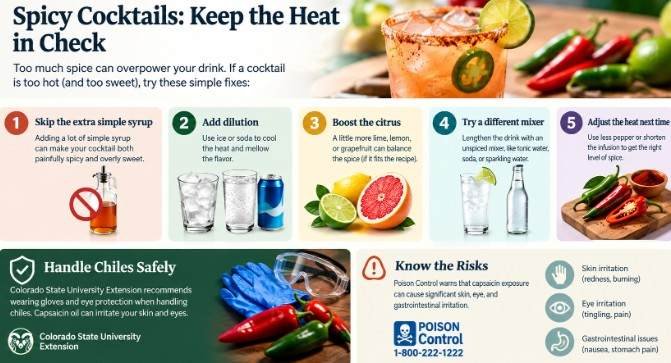
Do not automatically add a large pour of simple syrup. That can create a drink that is both painfully spicy and overly sweet.
Instead, increase dilution with ice or soda, add a little more citrus if the recipe can support it, or lengthen the drink with an unspiced mixer. Next time, use less pepper or shorten the infusion.
Colorado State University Extension recommends gloves and eye protection when handling chiles because capsaicin oil can irritate skin and eyes. Poison Control also warns that capsaicin exposure can cause significant skin, eye, and gastrointestinal irritation.
Do Not Forget the Alcohol While Chasing the Heat
Strong spice can distract from how much alcohol is actually in the glass. The National Institute on Alcohol Abuse and Alcoholism defines one U.S. standard drink as 14 grams, or about 0.6 fluid ounces, of pure alcohol; one cocktail may contain one standard drink or several depending on the recipe.
That matters with split bases, liqueurs, and infused spirits. Measure pours rather than free-pouring, and do not assume a tall glass or lots of ice automatically means less alcohol.
Mistakes That Flatten a Spicy Cocktail
Using the hottest pepper available is rarely the best move. Super-hot chiles can erase the character of gin, rum, smoky mezcal drinks, or fruit.
Inconsistent muddling is another problem. Crushing one jalapeño gently and another aggressively can create dramatically different heat.
Also watch extraction time. Pepper left in a bottle, syrup, or finished drink continues changing the flavor. Avoid stacking multiple hot ingredients unless you have tested the combination.
Frequently Asked Questions
1. What is the best pepper for beginners?
Jalapeño is a useful starting point because its heat is generally manageable and its fresh green flavor works with rum, gin, tequila, citrus, and cucumber.
2. Can I make spicy cocktails with vodka?
Yes. Vodka is neutral, so chile, ginger, fruit, herbs, or hot honey become more prominent. Start with a small amount of heat and build gradually.
3. How can I make a spicy cocktail less hot?
Add dilution, soda, or more of the unspiced base mixture. For the next drink, use less pepper, remove inner ribs, or shorten infusion time.
4. Can spicy cocktails be batched ahead?
Yes, but strain out fresh peppers once the desired heat is reached. Otherwise, the batch can become noticeably hotter during storage.
A Better Way to Think About Heat
The best spicy drinks are not endurance tests. Heat should behave like acidity, bitterness, sweetness, or smoke: noticeable, deliberate, and in proportion.
Once the margarita stops being the default template, the possibilities open quickly. Rum can carry cayenne and watermelon, gin can sharpen grapefruit and jalapeño, mezcal can frame chile with smoke, and whiskey can turn hot honey into something richer. Start mild, measure carefully, and taste as you build. Let the pepper support the drink instead of dominating it. That is the real appeal of spicy cocktails beyond margaritas.
Leave a Reply