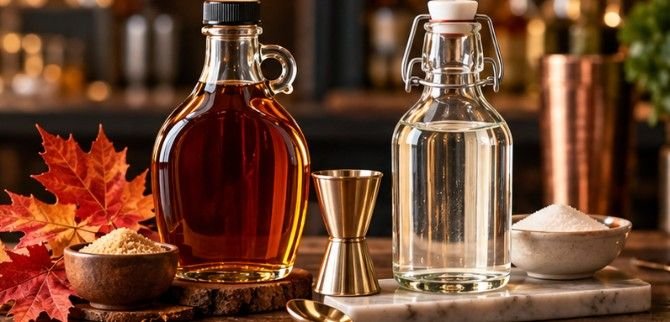
Maple syrup is much closer to rich cocktail syrup than ordinary simple syrup. Pure maple syrup sold in the United States contains at least 66% soluble solids, while a 1:1 simple syrup made by equal weight is about 50% sugar. That difference affects sweetness, dilution, texture, and how prominently the sweetener appears in the finished drink.
That is the useful starting point for understanding Maple syrup vs simple syrup in cocktails. Simple syrup is designed to disappear into a recipe. Maple syrup does almost the opposite: it sweetens while adding recognizable flavor, aroma, body, and color.
The Real Difference Is Not Just Maple Flavor
Standard simple syrup is essentially sugar dissolved in water. University of Maine Cooperative Extension describes a basic simple syrup as one part sugar to one part water, producing a liquid sweetener that blends easily into beverages.
Because white granulated sugar has relatively little flavor beyond sweetness, simple syrup allows ingredients such as gin, citrus, herbs, bitters, vermouth, or whiskey to remain the focus.
Pure maple syrup is different. Federal standards define it as maple sap concentrated through heat treatment until it contains at least 66% soluble solids. Cornell’s Maple Program explains that maple sap is boiled to roughly 66% sugar concentration and that heating contributes to the characteristic flavor development of the finished syrup.
That concentration puts maple remarkably close to a 2:1 rich simple syrup made by weight, which is roughly 66.7% sugar.
So maple syrup does not merely replace sweetness. It changes the architecture of the drink.
Maple Syrup vs Simple Syrup in Cocktails at a Glance
| Feature | Standard Simple Syrup | Pure Maple Syrup |
| Typical sugar concentration | About 50% when made 1:1 by weight | At least 66% soluble solids |
| Flavor | Clean and neutral | Maple, caramelized and toasted notes |
| Texture | Light and fluid | Fuller and more viscous |
| Dilution added | Relatively higher | Lower for equivalent sweetness |
| Best use | Drinks where other flavors should lead | Drinks where the sweetener can become part of the flavor |
| Natural pairings | Gin, vodka, tequila, citrus, herbs | Bourbon, rye, aged rum, apple, bitters, warm spices |
The viscosity difference matters. Research published through the American Chemical Society shows that the viscosity of sugar-water solutions changes substantially as concentration changes. In practical bartending terms, a concentrated syrup can make a cocktail feel rounder and heavier even when the actual difference in measured volume is small.
Why Maple Works Particularly Well With Whiskey
Barrel-aged spirits already contain flavors that can overlap with maple.
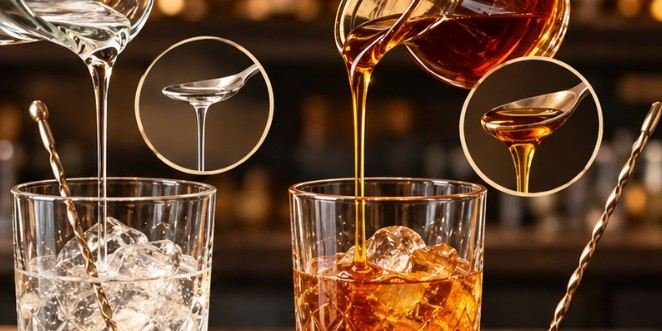
Bourbon and rye may carry impressions of vanilla, caramel, toasted oak, baking spice, or char from barrel maturation. Maple syrup can reinforce those darker flavors instead of introducing an entirely separate direction.
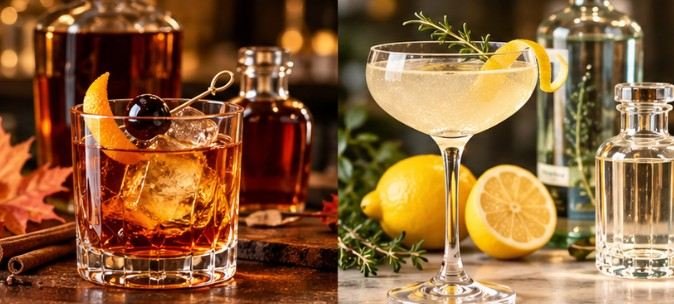
That explains why a maple Old Fashioned is usually an easier substitution than replacing simple syrup with maple in a delicate gin sour.
A basic whiskey drink might contain 2 ounces of bourbon, bitters, and around 1/4 ounce of sweetener. Using maple at that level can create noticeable richness without turning the drink into something resembling pancake syrup.
Dark or aged rum can work for similar reasons. Apple brandy, pear brandy, cinnamon, walnut bitters, ginger, coffee, and orange also have enough aromatic character to stand beside maple.
When Simple Syrup Is the Better Choice
Simple syrup wins whenever neutrality is valuable. Consider a drink built around floral gin, cucumber, mint, elderflower, grapefruit, or fresh berries. The purpose of the sweetener may simply be to soften acidity or alcohol.
Adding maple introduces another flavor that the recipe was never designed to accommodate.
Simple syrup is also easier when testing a new cocktail. A neutral sweetener lets you judge the relationship among spirit, acid, bitters, and dilution before adding another aromatic variable.
This is why replacing simple syrup blindly does not always improve a drink. A substitute can be technically successful while changing the cocktail’s identity.
How Much Maple Syrup Should Replace Simple Syrup?
There is no universal substitution ratio because recipes differ in acidity, alcohol strength, other sweet ingredients, and serving dilution. However, sugar concentration provides a useful starting point.
Replacing standard 1:1 simple syrup
If a cocktail calls try choosing between orgeat syrup vs almond syrup for 1 ounce of ordinary simple syrup, start with approximately 3/4 ounce of pure maple syrup.
Shake or stir the cocktail, taste it, and add another small measure only if needed.
For a recipe calling for 1/2 ounce of simple syrup, roughly 3/8 ounce of maple is a sensible first test.
Replacing 2:1 rich simple syrup
Maple syrup is much closer in concentration to rich syrup, so begin with an equal-volume substitution.
If a recipe uses 1/2 ounce of rich syrup, try 1/2 ounce maple.
Sweetness may be similar, but flavor intensity will not be. Reduce the amount if maple begins masking the spirit.
Use the Three-Sip Test Instead of Guessing
The easiest way to improve a substitution is to evaluate three characteristics separately.
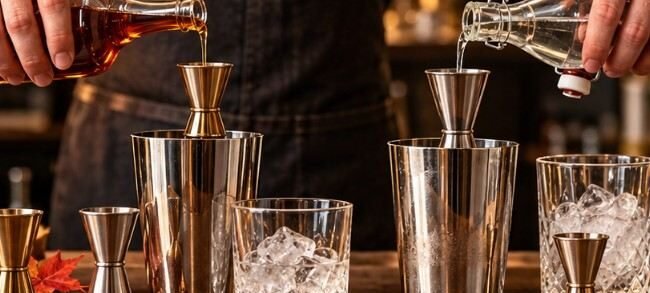
First, taste for sweetness. Does sugar dominate, or does the drink still have enough acidity, bitterness, or spirit character?
Second, evaluate texture. Maple can make a drink feel noticeably denser. If the drink seems heavy, slightly more dilution may help.
Third, evaluate aroma and finish. If maple remains the strongest flavor several seconds after swallowing, reduce it on the next attempt.
This method is more reliable than assuming every sweetener can be exchanged ounce for ounce.
Citrus Drinks Need Extra Attention
Sugar and acid work against each other perceptually. A cocktail containing lemon or lime can tolerate more sweetness than a spirit-forward drink because acidity keeps the palate refreshed.
Maple complicates that relationship because it contributes flavor in addition to sugar.
If a whiskey sour becomes dull after a maple substitution, do not automatically add more whiskey. First try reducing the maple slightly. If the drink still feels heavy, a small increase in fresh citrus may restore brightness.
Make adjustments in small increments. Changes of even 1/8 ounce are noticeable in a compact cocktail.
Choosing Maple Syrup for Cocktails
Look for a bottle labeled pure maple syrup rather than a maple-flavored breakfast syrup.
USDA Grade A maple syrup is divided into flavor-related color classes, ranging from Golden with Delicate Taste through Amber with Rich Taste, Dark with Robust Taste, and Very Dark with Strong Taste.
For cocktails, Amber is a flexible starting point because it provides clear maple character without necessarily overwhelming lighter ingredients. Dark syrup can be especially useful with rye, bourbon, aged rum, coffee, or baking spices.
The stronger the syrup, however, the more carefully I would measure it.
Should You Dilute Maple Syrup First?
Sometimes. Cold maple syrup can be thick enough to measure slowly, particularly when making several drinks. Adding a small amount of warm water creates a thinner maple syrup that is easier to pour and incorporate.
The trade-off is concentration. Once water is added, the substitution ratios above no longer apply exactly.
For home bartending, straight maple is usually simpler because every pour has the same predictable strength. For batching or high-volume service, a diluted maple syrup may be easier to handle.
Frequently Asked Questions
1. Can maple syrup replace simple syrup directly?
Yes, but start with less maple when replacing standard 1:1 simple syrup because maple is more concentrated. Equal-volume substitutions work more predictably when replacing rich 2:1 syrup.
2. What cocktails taste best with maple syrup?
Whiskey, rye, aged-rum, apple, coffee, orange, and warming-spice cocktails are strong candidates because their flavors can complement maple’s deeper profile.
3. Does maple syrup make cocktails thicker?
Usually, yes. Its higher dissolved-solids concentration gives maple syrup greater body than standard simple syrup, which can make the finished drink feel fuller.
4. Can I use pancake syrup instead?
It will sweeten the drink, but it may contain different sweeteners and flavorings. For predictable flavor and concentration, use a bottle clearly labeled pure maple syrup.
A Better Way to Choose Your Sweetener
The most useful lesson from maple syrup vs simple syrup in cocktails is that sweeteners should not be treated as invisible teaspoons of sugar. Simple syrup is usually the better tool when you want sweetness without interference. Maple becomes more interesting when its flavor and texture reinforce the rest of the recipe.
Start with about three-quarters as much maple when replacing ordinary simple syrup, then taste before adding more. With rich syrup, begin closer to a one-for-one swap. The goal is not to make every cocktail taste like maple. It is to use maple where the drink becomes more complete because of it.
Leave a Reply