A cocktail does not need syrup to taste balanced. Salt, acid, herbs, pepper, brine, broth, and umami can do the structural work usually assigned to sugar—often with more complexity and less sweetness. That is why savory cocktails to make at home are especially appealing to martini drinkers, brunch hosts, and anyone who prefers a drink that feels more like an appetizer than dessert.
There is one important catch: savory flavors can soften the perception of alcohol. The National Institute on Alcohol Abuse and Alcoholism standard-drink guide defines 1.5 ounces of 80-proof spirits as one U.S. standard drink. A cocktail containing 2 ounces of 40% ABV gin or vodka therefore has about 1.3 standard drinks before alcoholic modifiers are added. Measuring beats free-pouring.
Why Savory Cocktails Work Without Much Sugar
Sweet cocktails often balance spirit, sugar, and acid. Savory drinks use a wider toolkit. Brine contributes salt and acidity, tomatoes provide tartness and natural glutamates, miso adds fermented depth, and herbs supply aroma.
The objective is not to make a cocktail taste like soup. Strong savory ingredients still need contrast: salty ingredients need brightness, richer ingredients need acidity, and aggressive aromatics require restraint.
| Savory element | Starting amount | Pairs well with |
| Olive, pickle, caper, or pepperoncini brine | 1/4–1/2 oz | gin, vodka, tequila |
| Miso solution | 1/4 oz | whiskey, tequila |
| Chilled broth | 3–4 oz | vodka, gin |
| Fresh herbs | 1 small sprig | gin, tequila, vodka |
| Worcestershire or hot sauce | 1–3 dashes | tomato, broth |
Seven Savory Drinks Worth Making
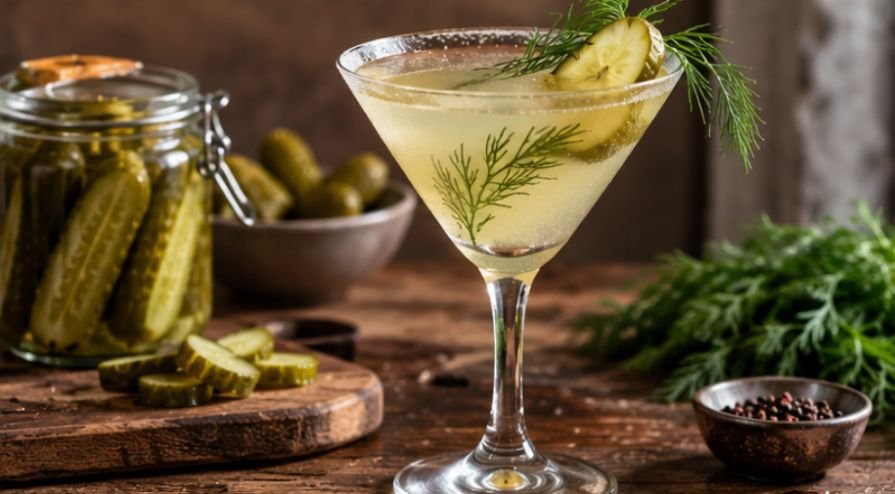
1. Dill Pickle Martini
Shake 2 ounces vodka or London dry gin, 1/2 ounce dry vermouth, and 1/2 ounce dill pickle brine with ice. Strain into a chilled coupe and garnish with dill or a small pickle.
For a sharper drink, reduce the vermouth slightly. Gin gives the cocktail more herbal complexity, while vodka allows the pickle character to dominate.
2. Properly Dirty Martini
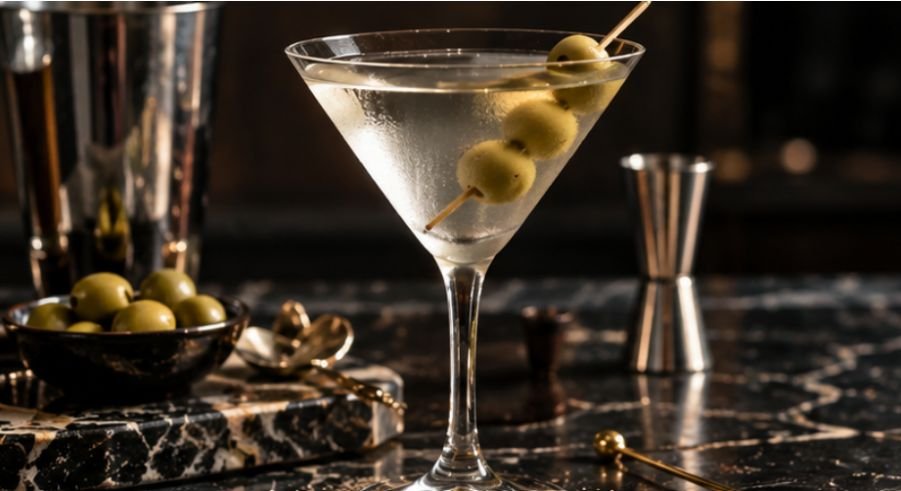
Stir 2 1/2 ounces gin or vodka, 1/2 ounce dry vermouth, and 1/2 ounce olive brine with ice. Strain into a chilled martini glass and garnish with olives.
The common mistake is assuming dirtier always means better. Excess brine can flatten the botanical or grain character of the spirit. Start with 1/2 ounce and make further adjustments by teaspoons.
If you’re new to mixing at home, starting with simple recipes can make it easier to understand how a few ingredients work together. Try these 3-ingredient cocktails for beginners before experimenting with more complex savory combinations.
3. Chilled Bullshot
Combine 1 1/2 ounces vodka, 4 ounces cold beef broth, 1/2 ounce lemon juice, one dash Worcestershire sauce, black pepper, and a pinch of celery salt. Roll gently with ice instead of shaking aggressively, then strain over fresh ice.
Broth changes the food-safety equation. USDA food-safety guidance recommends refrigerating meat broth at 40°F or below and generally using it within three to four days. Keep homemade or opened broth properly chilled until mixing.
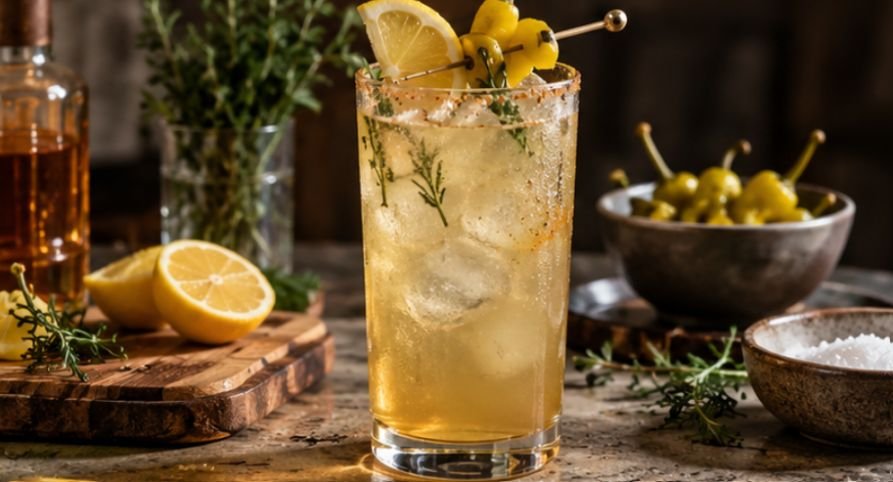
4. Tomato-Celery Gin Cooler
Shake 1 1/2 ounces gin, 2 ounces tomato juice, 1/2 ounce lemon juice, two dashes of hot sauce, and a pinch of celery salt. Strain over ice and top with 2 ounces soda water.
It has some Bloody Mary character without the weight of a large brunch drink. A celery leaf, cucumber ribbon, or cracked black pepper adds aroma without turning the garnish into a meal.
5. Miso-Ginger Whiskey Highball
Whisk 1 teaspoon white miso with 1 tablespoon warm water until smooth. Add 1 1/2 ounces bourbon, 1/4 ounce miso solution, 1/2 ounce lemon juice, and a thin ginger slice to an ice-filled highball. Top with 3 ounces soda water.
White miso is easier to control than darker varieties. The final drink should taste lightly saline and nutty rather than strongly reminiscent of soup.
The final drink should taste lightly saline and nutty rather than strongly reminiscent of soup. For a lighter, more textured variation, you can also explore cocktail foam without egg white.
6. Pepperoncini Tequila Cooler
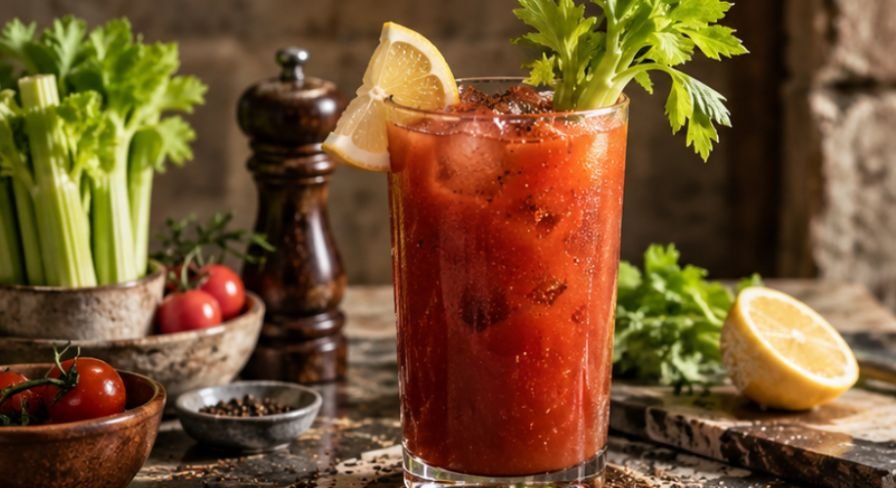
Shake 1 1/2 ounces blanco tequila, 1/2 ounce pepperoncini brine, and 3/4 ounce fresh lime juice with ice. Strain over fresh ice and top with 2 to 3 ounces soda water.
For more aroma and texture, use a half-rim of coarse salt mixed with crushed coriander seed. Leaving half the rim bare lets the drinker alternate between seasoned and unseasoned sips.
7. Caper-and-Herb Gibson
Stir 2 ounces gin, 3/4 ounce dry vermouth, and 1/4 ounce caper brine with ice. Strain into a chilled coupe and garnish with a cocktail onion and a small thyme or rosemary sprig.
Caper brine is assertive, so keep the first pour small. If the drink feels excessively salty, increasing the vermouth slightly works better than simply adding water.
The 3-Step Savory Cocktail Test
Before serving an experimental recipe, test three things.
First, assess salt. If the cocktail tastes dull, add one teaspoon of brine rather than another large pour.
Second, check acidity. Lemon or lime should make the finish cleaner and brighter without becoming sharply sour.
Third, evaluate aroma. Dill, rosemary, citrus peel, cracked pepper, or celery leaves can dramatically change the first impression of a drink while barely changing the liquid itself.
This teaspoon-by-teaspoon approach is much easier than trying to repair a cocktail after it becomes over-seasoned.
Handle Fresh Ingredients Like Food
Cocktail garnishes are still raw produce. The FDA’s produce-safety guidance recommends washing fruits and vegetables under running water and advises against using soap, detergent, or commercial produce washes.
Penn State Extension’s recipe-safety guidance specifically recommends gently rinsing fresh herbs under cold running water. The produce-washing guidance also advises using cool water for delicate produce such as herbs and avoiding prolonged soaking.
Wash herbs shortly before use, dry them, and keep them refrigerated. Broth, tomato juice, brines, and homemade savory mixtures should also be properly refrigerated after opening or preparation.
If a perishable mixer has sat warm for hours or is outside its safe storage window, discard it rather than assuming the alcohol in the cocktail will make it safe.
Mistakes That Ruin Savory Cocktails
The biggest error is confusing savory with salty. Worcestershire sauce, miso, olives, capers, brines, and pickled vegetables can all contribute salt. Combining several aggressively can quickly overwhelm the base spirit.
Another mistake is over-infusing. Dried mushrooms, herbs, peppercorns, and spices can shift from aromatic to bitter or medicinal. Test small batches, taste regularly, and strain once the desired flavor becomes obvious.
Finally, do not assume savory drinks contain less alcohol simply because they taste less boozy. Alcohol content depends on the measured volume and ABV of the ingredients, not how sweet, salty, or smooth the drink tastes.
Frequently Asked Questions
1. What savory cocktails to make at home are easiest for beginners?
Start with a dirty martini, pickle martini, or pepperoncini tequila cooler. Each uses familiar spirits and one dominant savory ingredient, making adjustments relatively simple.
2. Can I use pickle juice directly from the jar?
Yes, provided the pickles have been stored according to the label and the brine smells and tastes normal. Begin with 1/4 to 1/2 ounce because brands vary considerably.
3. What can I use instead of olive brine?
Try dill pickle, caper, pepperoncini, pickled-onion, or jalapeño brine. Add gradually because each provides a different balance of salt, vinegar, spice, and aroma.
4. Can savory cocktails be alcohol-free?
Absolutely. Combine tomato juice, vegetable broth, herb tea, pickle brine, citrus, soda water, or alcohol-free spirits. The same salt-acid-aroma balancing method still applies.
A Better Way to Think About Savory Drinks
Savory cocktails work more like seasoning food than sweetening a beverage. Salt exposes flavor, acid prevents richness from becoming heavy, herbs create aroma, and umami gives the finish greater depth.
Start with one powerful savory ingredient, measure it carefully, and adjust in teaspoons. A pickle martini or pepperoncini cooler is enough to learn the system. Once you can identify whether a drink needs more salt, brightness, dilution, or aroma, the possibilities expand quickly. The best home cocktail may already be hiding in the pickle jar, herb drawer, or refrigerator door.
Leave a Reply