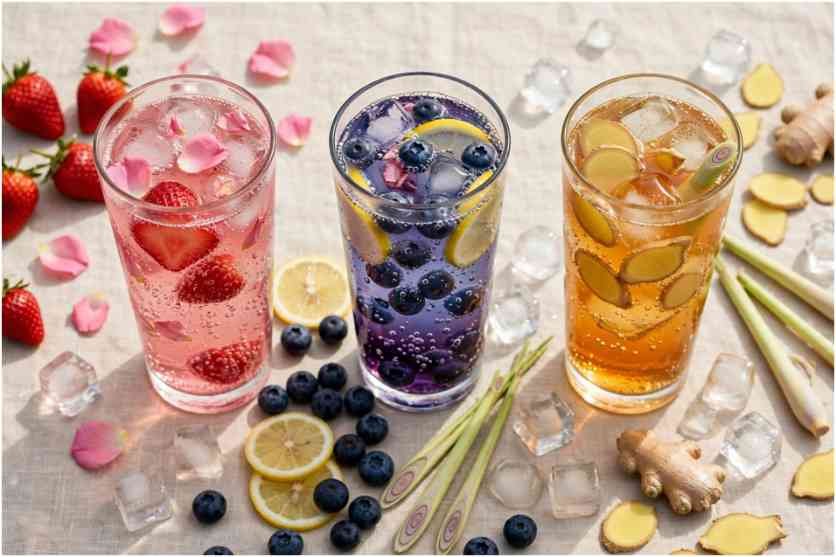
Store-bought craft sodas often suffer from synthetic extracts and cloying corn syrup. I spent months dialing in balanced, complex homemade syrup combinations for sparkling drinks using pantry staples, fresh botanicals, and cold-pressed citrus zest. Sparkling mineral water demands distinct, assertive syrups that cut through effervescence without coating your palate.
Building sodas at home lets you control sweetness, acidity, and aromatic intensity. When you match carbonated bubbles with high-clarity syrups, your standard club soda transforms into an artisan beverage.
The Base Ratio: Crafting the Foundation
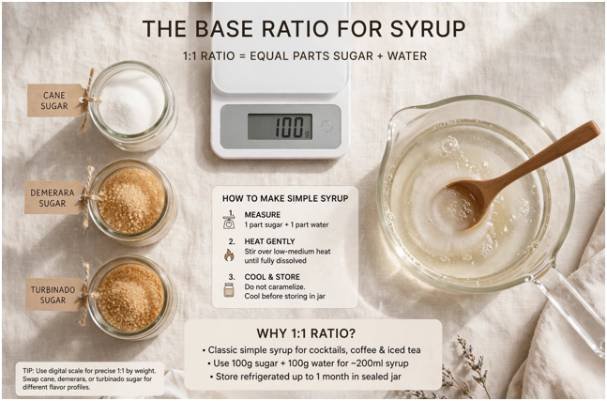
Every successful blend starts with a balanced, properly dissolved sweetener. A standard 1:1 simple syrup by weight provides clean sweetness without crystallization.
I use pure cane sugar for delicate fruit blends. For woody herbs or warming spices, raw demerara or turbinado sugar introduces rich molasses notes. The goal is complete sucrose dissolution without caramelization, verified through principles detailed on ScienceDirect regarding sugar saturation and thermal thresholds.
Temperature Discipline: Extracting Botanicals Without Bitterness
Boiling herbs destroys volatile aromatics. Simmer dense roots like ginger or whole spices for 15 minutes, but remove your syrup from the heat before adding delicate leaves like mint, basil, or chamomile. Steeping herbs at 160°F–175°F extracts bright monoterpenes while leaving bitter tannins and vegetable chlorophyll behind.
For citrus-forward batches, peel strips of zest directly into the sugar before adding hot water. This technique extracts peel oils without scorching them.
The Flavor Combinations Matrix
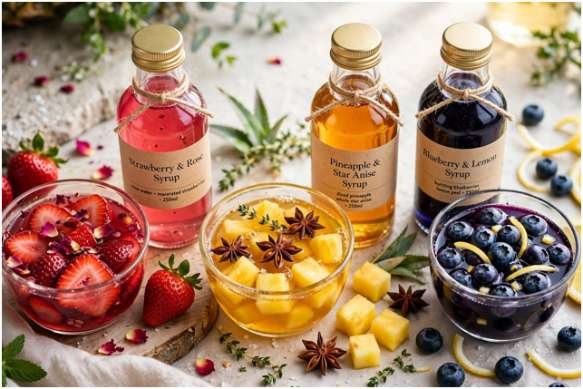
The table below breaks down the nine foundational pairings, including infusion styles, recommended dilution rates, and ideal sparkling water varieties.
| Flavor Pairing | Flavor Category | Infusion Technique | Recommended Ratio (Syrup to Soda) | Ideal Water Pairing |
| Strawberry & Rose | Vibrant Fruit | Cold-macerated fruit, post-heat rose water | 1 oz : 5 oz | Low-mineral club soda |
| Pineapple & Star Anise | Vibrant Fruit | 10-minute hot simmer with crushed whole spice | 1 oz : 6 oz | High-fizz seltzer |
| Blueberry & Lemon | Vibrant Fruit | 12-minute fruit simmer, steeped lemon peel | 1.25 oz : 6 oz | Natural spring sparkling |
| Grapefruit & Sage | Botanical | 5-minute zest simmer, off-heat sage steep | 1 oz : 5 oz | High-sodium club soda |
| Peaches & Thyme | Botanical | Ripe fruit simmer, 10-minute thyme steep | 1.5 oz : 6 oz | Fine-bubble seltzer |
| Lime & Lemongrass | Botanical | Bruised stalks simmered 15 min, raw juice added cool | 1 oz : 5 oz | Crisp mineral water |
| Lemon Chamomile | Botanical | Lemon peel simmer, 7-minute dried flower steep | 1 oz : 6 oz | Mountain spring sparkling |
| Ginger & Black Pepper | Warm & Spiced | 15-minute hard simmer with crushed peppercorns | 0.75 oz : 6 oz | Bold seltzer (ginger beer style) |
| Spiced Apple Cider | Warm & Spiced | 50% cider reduction with cinnamon and orange peel | 1.5 oz : 5 oz | Heavy-effervescence soda water |
Fruity and Botanical Combinations for Club Soda
High fruit sugars require aromatic counterweights. The natural fructose levels documented in the USDA FoodData Central show that strawberries and blueberries need sharp acids or floral notes to prevent a flat, one-dimensional drink.
- Strawberry & Rose: Macerate fresh sliced strawberries in sugar for two hours before heating. Add half a teaspoon of culinary rose water after cooling. The rose heightens strawberry sweetness while avoiding artificial floral flavors.
- Pineapple & Star Anise: Fresh diced pineapple holds up to aggressive simmering. Crack two whole star anise pods into the pot. The liquorice profile balances pineapple acidity, creating an earthy tropical profile.
- Blueberry & Lemon: Simmer fresh blueberries until their skins burst, releasing deep anthocyanin pigments. Strip lemon peel with a vegetable peeler, leaving the bitter white pith behind. Steep the peel in the warm liquid for 15 minutes before fine-straining.
Herbal and Earthy Pairings for Sparkling Water
Herbal syrups turn simple club soda into a refined, dry refresher. Earthy components also serve as an exceptional backbone for a low-sugar grapefruit bitter mocktail.
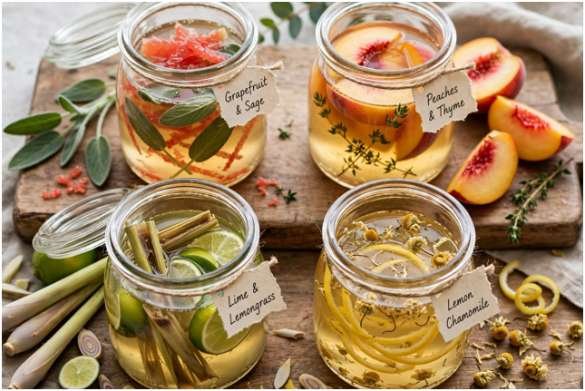
- Grapefruit & Sage: Grapefruit pairs clean, mouth-drying bitterness with soft citrus. Simmer fresh ruby red zest, kill the heat, and submerge five whole fresh sage leaves. The effervescence lifts the sage’s piney aromatics straight to your nose.
- Peaches & Thyme: Summer peaches yield rich pectin that thickens the syrup. Bruise three sprigs of woody garden thyme and steep them as the syrup cools. The savory herb grounds the stone-fruit notes.
- Lime & Lemongrass: Smash fresh lemongrass stalks with a heavy mallet to rupture the inner oil cells before simmering. Whisk in raw lime juice only after the syrup drops to room temperature to protect ascorbic acid from thermal breakdown.
- Lemon Chamomile: Lemon oil brings sharp zest, while whole dried chamomile blossoms introduce honey, hay, and dried-apple undertones. Strain this blend through an ultra-fine mesh to remove blossom pollen.
Warm, Spiced Profiles for Rich Effervescence
Spiced syrups hold up to dense, high-carbonation club sodas. Heavy spices need longer cook times to yield their fat-soluble resins.
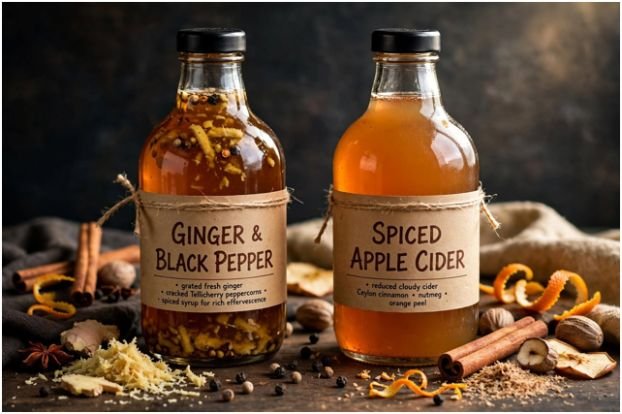
- Ginger & Black Pepper: Grate fresh ginger with the skin on for maximum punch. Add coarsely cracked whole Tellicherry peppercorns to the boil. This blend yields an assertive, fiery throat-kick reminiscent of traditional Jamaican ginger beer.
- Spiced Apple Cider: Reduce unfiltered, cloudy apple cider by half alongside one Ceylon cinnamon stick, cracked nutmeg, and broad strips of orange peel. The reduced malic acid cuts cleanly through dense ice and sparkling water.
Balancing Viscosity, Dilution, and Acidity
Sugar thickens liquid, but too much viscosity dampens effervescence. I keep my table syrups at approximately 50° to 55° Brix (a 1:1 sugar-to-water ratio by weight). This concentration pours cleanly, integrates into carbonated water without aggressive stirring, and preserves delicate carbonation.
Always introduce acidity at the time of assembly, not during the syrup simmer. Cooking lemon or lime juice denatures fresh aromatic esters, leaving a dull, sour taste. Add a quarter-ounce of fresh citrus juice directly over your ice before pouring the sparkling water.
For home storage safety, keep finished syrups refrigerated in airtight glass containers. Food preservation standards maintained by the National Center for Home Food Preservation emphasize clean sanitization practices; adding a half-ounce of high-proof alcohol or a pinch of citric acid will extend storage life past four weeks.
Carbonation Chemistry: Stop Wasting Your Fizz
Pouring sparkling water directly onto a puddle of dense syrup triggers rapid carbon dioxide degassing. The sugar crystals and dissolved solids create thousands of nucleation sites, foaming aggressively and leaving your drink flat in two minutes.
To protect your effervescence:
- Add ice to your glass first.
- Pour your chilled sparkling water over the ice, filling three-quarters of the glass.
- Pour the measured syrup gently down the inside wall of the glass.
- Execute one slow, upward lift with a bar spoon to integrate the layers without agitating the bubbles.
The Bottom Line: Your Soda Stream Deserves Better
Ditch the artificial syrups and treat your fizzy water like a cocktail canvas. Dial in your temperature control, keep your herbs out of boiling water, and always finish with fresh-squeezed citrus.
Frequently Asked Questions
1. How long do homemade syrups stay fresh in the refrigerator?
Standard 1:1 simple syrups stay fresh for up to three weeks when stored in sanitized, airtight glass containers.
2. Why does my sparkling drink lose its fizz immediately after adding syrup?
Dense syrups cause rapid nucleation; pour your chilled sparkling water first, add syrup slowly down the glass wall, and stir once.
3. Can I substitute honey or agave for white granulated sugar?
Yes, honey and light agave work at a 1:1 ratio, though their distinct floral profiles will alter your secondary botanicals.
4. Should I add fresh citrus juice directly into the simmering syrup?
No, simmer only the citrus peel to capture aromatic oils, adding raw citrus juice directly to your glass to preserve brightness.
Leave a Reply