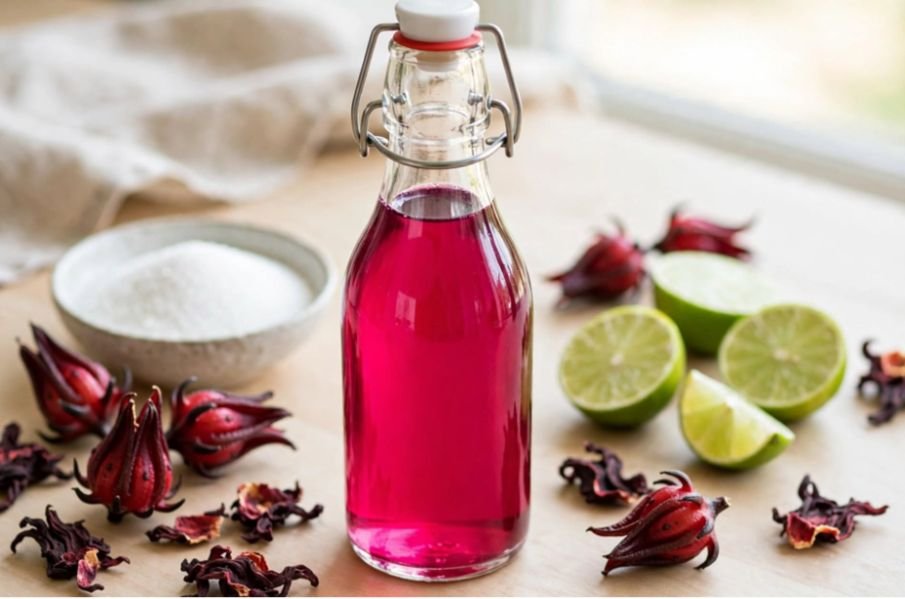
Making homemade hibiscus syrup using dried flowers transformed how I build cocktails at home. When you infuse whole dried calyces into a warm simple syrup base, you get an electric magenta hue and an assertive, cranberry-like bite that artificial bar syrups cannot replicate.
Most recipes tell you to boil the dried flowers directly in the pot. That is a mistake. Boiling scorches the delicate floral oils and pulls out chalky, bitter tannins that overwhelm the natural fruit profile. After testing dozens of batches, I found that an off-heat steep yields a clean, ruby-red infusion with perfectly balanced natural acidity.
Why Dried Hibiscus Flowers Make the Best Cocktail Syrup
Dried hibiscus flowers—commercially labeled as flor de jamaica or zobo—are actually the dried, fleshy sepals (calyces) of the Hibiscus sabdariffa plant. Unlike fresh petals, dried calyces concentrate high levels of malic, citric, and hibiscus acids, according to analytical botanical data from the USDA FoodData Central. This natural acidity provides built-in balance, meaning your syrup acts as both a sweetener and an acid modifier in craft drinks.
The deep crimson pigment comes from anthocyanins, powerful water-soluble antioxidants documented by the National Center for Biotechnology Information (NCBI). These compounds break down under aggressive, prolonged heat, shifting from brilliant ruby red to a murky, rusty brown. Treating the calyces gently preserves their vivid color profile.
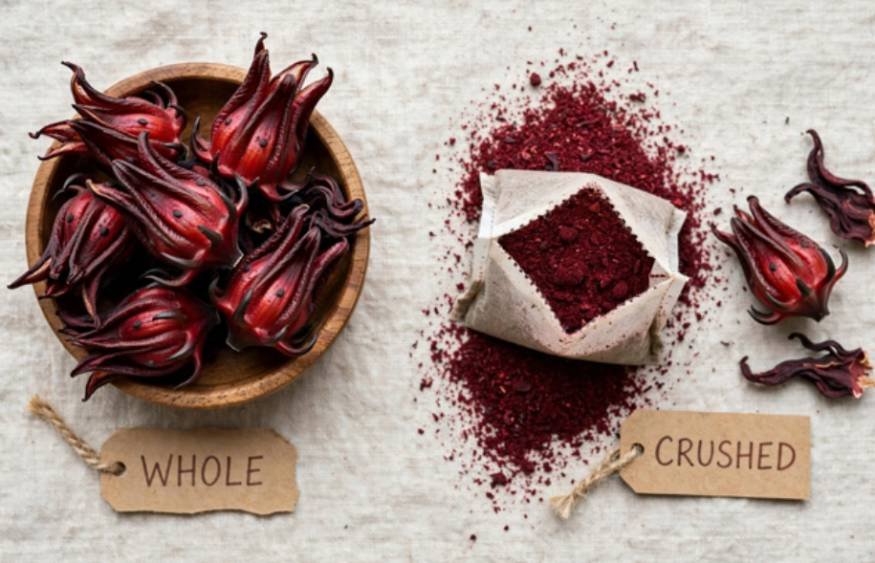
Sourcing Whole Dried Calyces vs. Crushed Tea
Buy whole, intact dried calyces rather than bagged hibiscus tea or fine hibiscus cut-and-sift. Whole flowers let you strain the liquid completely clear without sediment. Crushed tea bags release microscopic botanical dust that turns syrups cloudy and gritty. You can pick up whole dried jamaica flowers at Hispanic grocery stores, Middle Eastern specialty markets, or bulk spice merchants for a fraction of the cost of pre-made cocktail mixers.
The Off-Heat Steep Method (And Why Boiling Ruins Flavor)
Culinary extraction works best when you manage thermal shock. The sugar and water need heat to dissolve into a stable solution, but the hibiscus flowers do not need active boiling to release their pigments and tart acids.
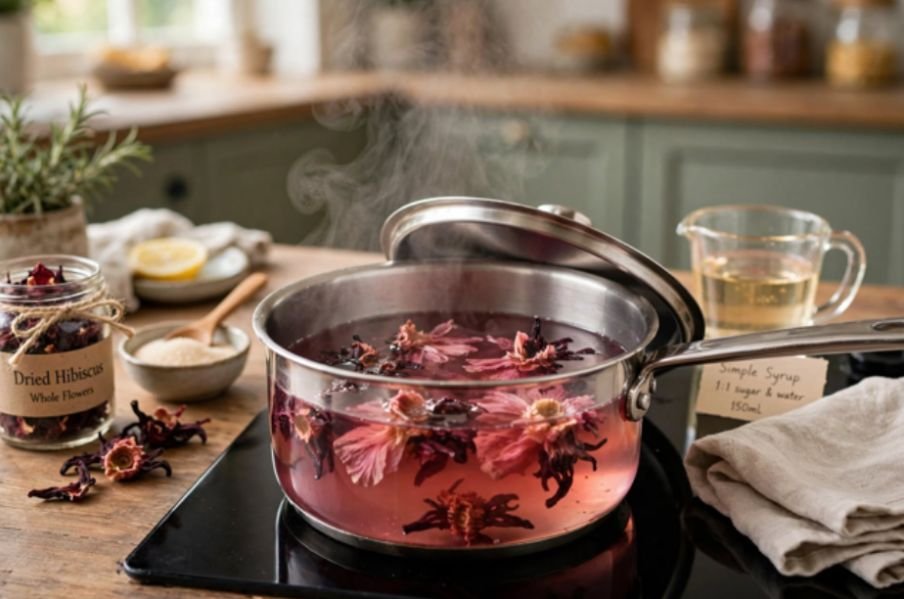
When you boil hibiscus calyces over an open flame for 10 or 15 minutes, the water evaporates unevenly, and the vegetable fibers release astringent vegetal notes. Instead, bring your water and sugar to a clear simmer, kill the flame completely, and add your dried flowers to the hot liquid.
Cover the saucepan with a tight lid. The trapped radiant heat gently hydrates the dried tissue over 15 to 20 minutes. This draws out clean tartness without breaking down the cellular structure of the calyx. You get maximum flavor saturation, zero bitterness, and a crystal-clear syrup.
Master Hibiscus Simple Syrup Recipe
This formula yields approximately 12 ounces of syrup, perfectly measured for a standard swing-top glass bottle.
Equipment You Will Need
- 1 small stainless steel saucepan
- 1 fine-mesh sieve
- 1 unbleached coffee filter or piece of cheesecloth
- 1 clean 12-ounce glass bottle or jar with an airtight seal
Step-by-Step Instructions
- Dissolve the base: Combine 1 cup of filtered water and 1 cup of white granulated cane sugar in your saucepan. Place the pan over medium heat and whisk gently until the sugar granules dissolve completely and the liquid looks clear.
- Infuse off the heat: Cut the heat immediately once the syrup reaches a low, gentle simmer. Stir in ½ cup of whole dried hibiscus flowers.
- Cover and steep: Place a lid tightly over the pan. Allow the petals to steep undisturbed in the residual heat for 18 minutes.
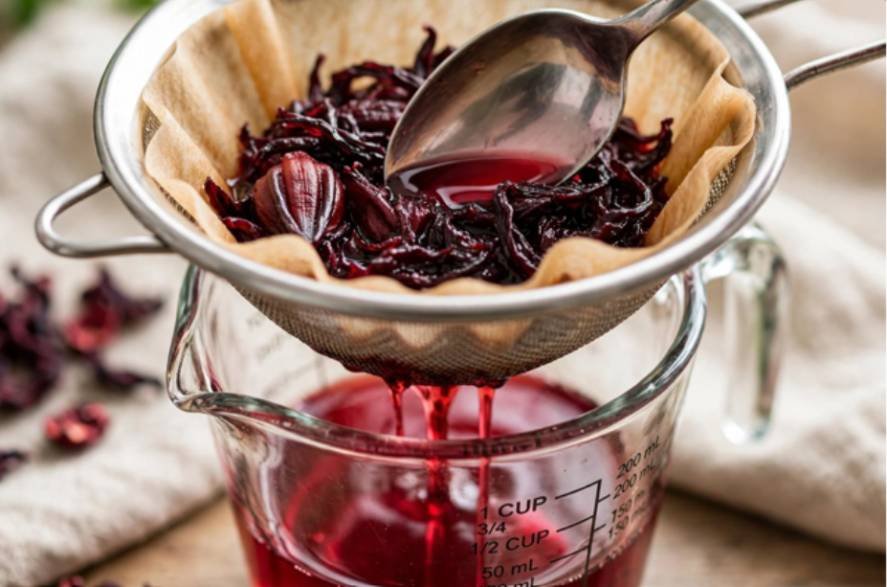
- Strain cleanly: Place your fine-mesh sieve over a glass measuring cup. Pour the warm syrup through the strainer. Press the soaked flowers very lightly with the back of a spoon to release absorbed liquid, but do not crush the solids into pulp. Discard or compost the spent flowers.
- Add citrus and chill: Stir in 1 teaspoon of freshly squeezed lime or lemon juice. The citric acid acts as a natural flavor enhancer and lowers the pH to protect the anthocyanin pigments. Cool the syrup to room temperature before capping and transferring it to the refrigerator.
Flavor Variations and Mixology Pairings
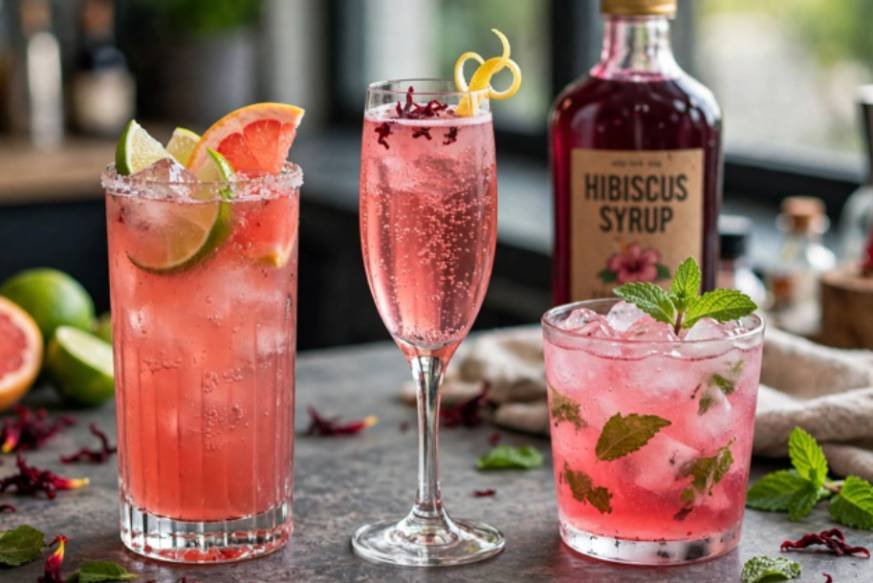
The berry-like tartness of hibiscus pairs cleanly with clear spirits, agave, and dry botanicals.
- The Hibiscus Paloma: Shake 2 ounces of blanco tequila, ¾ ounce of hibiscus syrup, and ½ ounce of fresh lime juice with ice. Strain into a highball glass over fresh ice and top with 3 ounces of grapefruit soda.
- Ruby French 75: Combine 1 ounce of London dry gin, ½ ounce of hibiscus syrup, and ½ ounce of lemon juice in a shaker. Strain into a champagne flute and top with chilled brut sparkling wine.
- Non-Alcoholic Spritz: Stir 1 ounce of syrup into 5 ounces of sparkling mineral water over crushed ice with a sprig of fresh mint.
Crafting Floral-Savory Syrups for Home Bars
If you enjoy building complex flavor profiles, you can layer herbs and heat alongside the dried hibiscus flowers. For savory cocktails, infusing garden botanicals into a rosemary simple syrup with fresh herbs creates an earthy balance that suits aged whiskeys and gins.
To add warm spices directly into your hibiscus base, toast a cracked cinnamon stick and two whole allspice berries in your dry saucepan for 60 seconds before pouring in your water and sugar. The baking spices complement the natural tannins of the flower sepals without masking their bright fruit character.
Shelf Life, Storage, and Prevention of Crystallization
Because this recipe uses a standard 1:1 sugar-to-water ratio by volume, it falls into the medium-water-activity category. Store your finished syrup in an airtight glass container inside the refrigerator. It stays fresh, aromatic, and free of mold for up to 4 weeks.
If you notice tiny crystals forming at the bottom of your storage jar, the sucrose molecules have begun re-crystallizing. To prevent this, add 1 tablespoon of light corn syrup or a few drops of citrus juice during the simmer stage. The glucose and inverted sugars interrupt crystal formation.
For shelf stability beyond a month, either freeze the syrup in silicone ice cube trays or convert the recipe into a 2:1 rich syrup by increasing the sugar to 2 cups per 1 cup of water.
If you prefer fiery margaritas, blending hibiscus with a spicy jalapeno simple syrup delivers a sweet-heat contrast that cuts clean through rich food.
Frequently Asked Questions
1. Can I use hibiscus tea bags instead of whole dried flowers?
Yes, use 4 to 5 pure hibiscus tea bags, but cut the steep time to 10 minutes to avoid cloudiness.
2. How do I make this hibiscus syrup keto or sugar-free?
Replace the granulated sugar with an equal measure of allulose, which dissolves cleanly without recrystallizing when chilled.
3. Why did my hibiscus syrup turn brown instead of red?
The syrup turned brown because the flowers were boiled too hard or exposed to an alkaline water source.
4. Can I reuse the strained hibiscus calyces?
Yes, toss the leftover steeped flowers with a spoonful of sugar and dehydrate them for chewy, candied garnishes.
Pour Yourself Something Vivid
Ditch the factory-made grenadine and chemical mixers. Keep a bottle of this vibrant syrup in your fridge door, and you are always two minutes away from an elevated highball or a crimson mocktail. Grab a bag of whole dried calyces, fire up your kettle, and start your first batch today.
Leave a Reply