
I used to think alcohol-free drinks needed plenty of syrup to feel substantial. Then I started paying attention to what makes a cocktail linger: bitterness, acidity, aroma, tannin, and the slow arrival of spice. Once those pieces came together, drinks stopped tasting like sweet mixers and started feeling layered.
I also noticed that toasted spices changed the experience more than simply adding another ingredient. A cardamom pod warmed in a skillet can smell nutty and floral, while clove develops a darker, woody character. That small step gives an alcohol-free drink a backbone when the rest of the recipe stays dry, tart, and aromatic.
Why Toasting Spices Adds Depth
Cardamom, coriander, clove, cinnamon, allspice, and star anise all work well, but they behave differently. Cardamom gives a floral lift with a warm finish. Clove is intense and earthy. Coriander brings citrusy brightness, while cinnamon adds warmth. One dominant spice and one supporting note create more definition than six spices together.
A dry skillet is enough. Heat the spices until their aroma becomes obvious, then remove them before they darken too much. Crush them lightly afterward to help extraction without creating grit.
Give the Drink a Strong Backbone
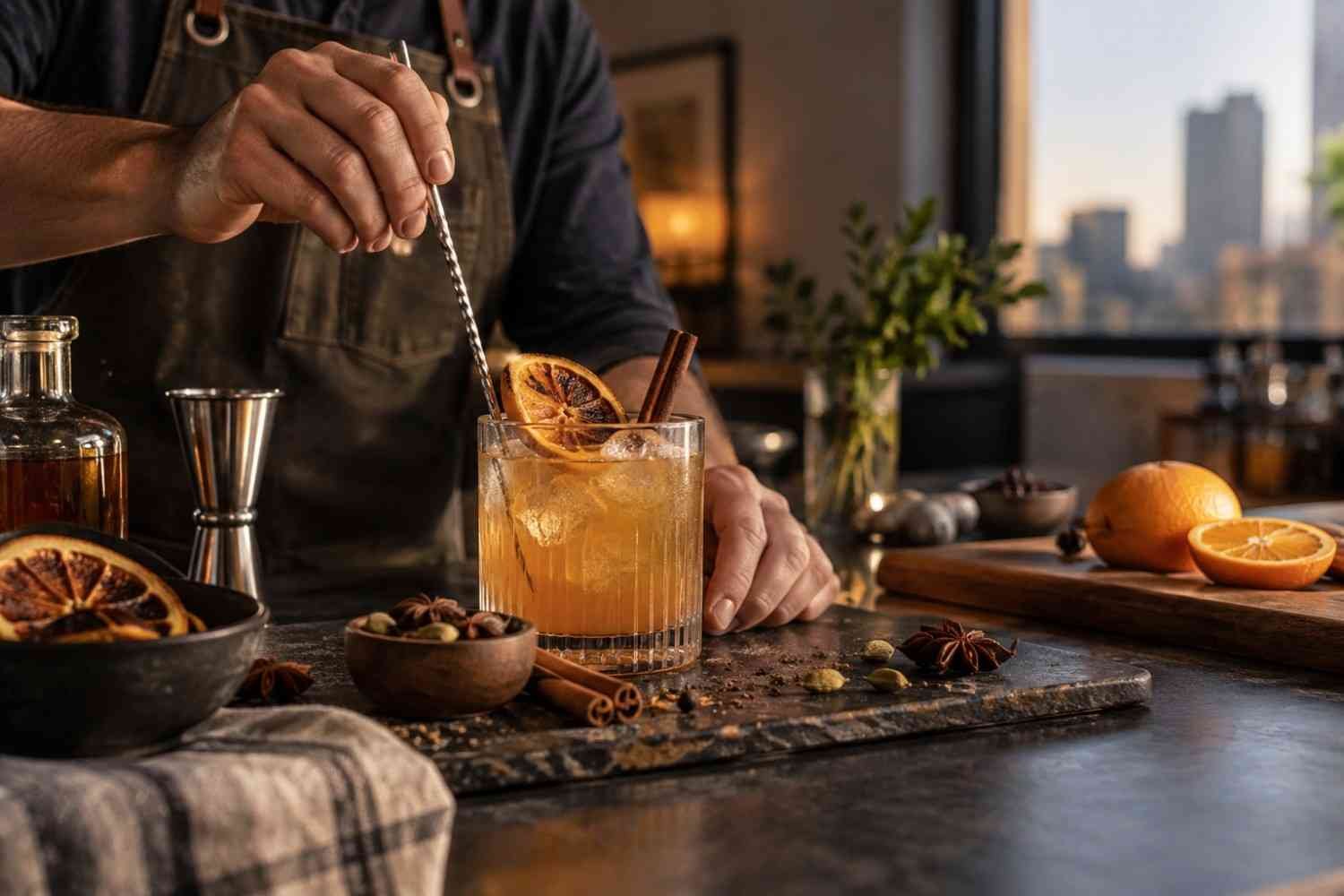
Alcohol contributes more than flavor. It adds body, warmth, aroma, and lingering sensation. An alcohol-free drink needs other ingredients to perform those jobs.
Dry black tea is particularly useful because its tannins create grip and structure. Assam can provide a firm base, while Lapsang Souchong contributes smoky, woody character. Oolong or hojicha can work when a softer roasted profile fits better.
Acidity provides another essential layer. Fresh lime, lemon, grapefruit, or a small amount of drinking vinegar can keep toasted flavors from feeling heavy. A shrub can add fruit and acidity, while tonic water can contribute bitterness and carbonation.
Keep Sweetness in Its Place
Sugar can make spice flavors easier to notice, but too much quickly flattens the drink. A small amount of toasted spice syrup is often enough to carry those aromas through the glass.
The better approach is contrast. Use acid for brightness, tannin for grip, bitterness for depth, and carbonation for lift. Even a tiny pinch of salt can make fruit and spice taste more defined without making the drink salty.
If sweetness keeps taking over, adjust the ratio and strengthen the other elements. That is where how to make mocktails less sweet without losing flavor becomes useful. Preserve flavor intensity while reducing the part of the drink that makes it feel syrupy.
Try a Toasted Hearth Spritz
For a practical starting point, make a concentrated toasted spice syrup with crushed cardamom and whole cloves. Toast four cardamom pods and three cloves in a dry skillet for roughly two minutes, watching closely. Add one-half cup water and one-half cup sugar, simmer until dissolved, then steep for about 20 minutes before straining.
To build one drink, combine 2.5 ounces of strongly brewed, chilled black tea with 0.75 ounce spice syrup, 0.5 ounce fresh lime juice, and a few dashes of nonalcoholic aromatic bitters. Shake with ice, strain over fresh ice, and top with roughly three ounces of ginger beer or tonic.
Build Original Flavor Profiles
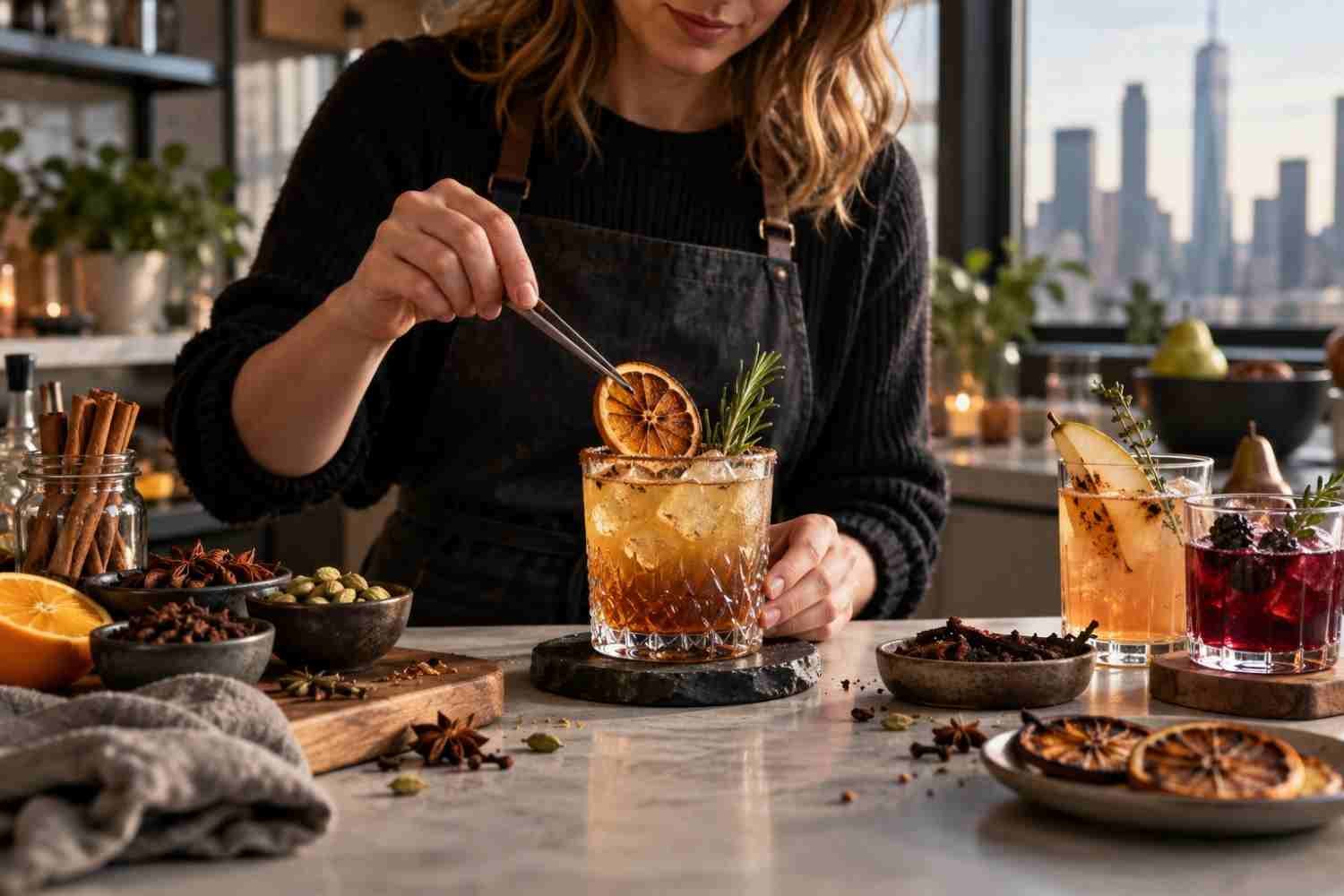
Complex alcohol free drinks become more interesting when they borrow techniques rather than identities from cocktails. Instead of reproducing an Old Fashioned exactly, think about the qualities you enjoy: toasted wood, bitterness, citrus oil, spice, and a long finish.
That mindset opens up more combinations. Toasted coriander, grapefruit, and rosemary can create a dry, aromatic profile. Toasted cinnamon, tart cherry, black tea, and orange can feel darker and richer. Cardamom, pear, ginger, and oolong can create something softer without becoming sugary.
This is also where how to create cocktail-inspired mocktails without copying cocktails fits naturally. The goal is to develop a drink with its own balance and personality, not disguise a juice-based recipe as a familiar cocktail.
Let Aroma Finish the Drink
A layered drink should change from the glass to the palate. Carbonation helps carry aromatic compounds upward, while a garnish gives the nose an immediate preview.
A good backbone should also survive dilution and changing temperature, so the drink remains expressive after several sips. That matters when serving it slowly over ice during a leisurely dinner service.
FAQs: Complex Alcohol Free Drinks With Toasted Spice Flavors That Feel Layered
1. What spices work best in alcohol-free drinks?
Cardamom, cinnamon, clove, coriander, allspice, and star anise are useful choices. Start with one main spice and add one supporting flavor so the drink stays defined rather than muddy.
2. How long should I toast whole spices?
Usually one to three minutes over medium heat is enough. Remove them as soon as they become fragrant. Darkening them too far can create harsh, burnt flavors.
3. Can tea replace the structure alcohol provides?
Tea can provide tannins, bitterness, aroma, and some body, making it a useful foundation. Strong black tea, oolong, hojicha, and smoky teas each create different results.
4. How can I keep a spiced mocktail from tasting sweet?
Balance the syrup with fresh citrus, tannin, bitterness, herbs, or carbonation. You can also reduce the syrup and strengthen the drink’s aromatic ingredients instead of adding more sugar. Taste before making another adjustment, because adding several fixes at once can hide which ingredient actually improved the balance and can quickly make the flavor muddy and heavy.
Why Layering Beats More Ingredients
The most convincing alcohol-free drinks rarely depend on a long ingredient list. They work because each component has a job. Tea supplies structure. Toasted spice supplies warmth. Citrus creates tension. Bitterness adds length. Carbonation lifts the aroma. A carefully chosen garnish completes the sensory picture.
That approach also makes experimentation easier. Change one element at a time and taste before adding another. A drink that feels thin may need tannin or acidity, not another syrup. One that tastes muddy may need fewer spices, not more.
The real trick is learning to notice what the glass is missing. Once you can identify that gap, toasted spices become a tool rather than a gimmick, and alcohol-free drinks can develop the same sense of progression that makes a well-built cocktail memorable.
Leave a Reply