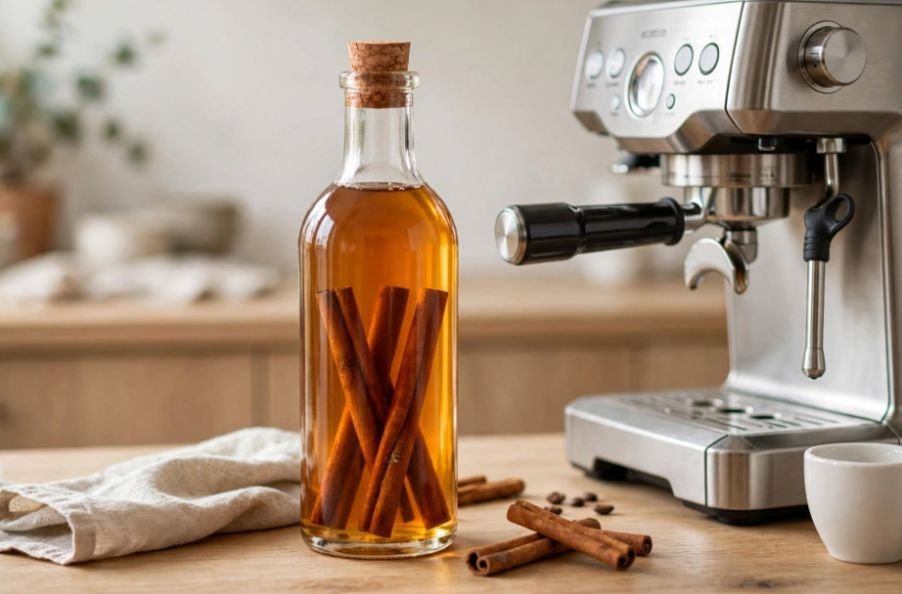
Most spiced syrups taste either sickly sweet or unpleasantly gritty. I spent years perfecting this homemade cinnamon stick simple syrup recipe behind the bar to solve that exact issue. By moving away from ground powders and relying on whole bark extraction, you get a clean, luminous amber syrup that melts smoothly into cold brews, cocktails, and weekend bakes.
Why Whole Cinnamon Sticks Beat Ground Cinnamon Every Time
Stirring powdered cinnamon into hot water seems like an easy shortcut. In reality, ground cinnamon does not dissolve. It forms a slimy, suspended sludge that settles at the bottom of your cup and catches in your throat.
Whole cinnamon quills behave differently. When heated in a balanced sucrose solution, whole bark releases essential aromatic oils without breaking down its fibrous pulp.
Ceylon vs. Cassia: Choosing the Right Bark
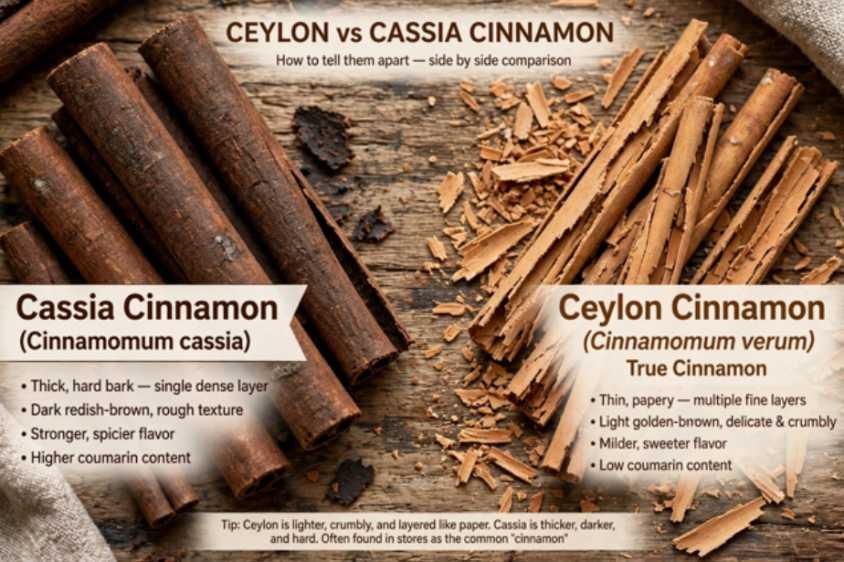
The variety of cinnamon you choose dramatically shapes the finished syrup:
- Cassia Cinnamon: The thick, hard bark common in US supermarkets. High in cinnamaldehyde, it yields the bold, punchy “red hot” profile Americans expect in seasonal drinks.
- Ceylon Cinnamon (“True” Cinnamon): Thinner, papery layers that crumble easily. It delivers delicate, floral, and citrus-edged warmth, making it the preferred choice for lighter rum cocktails and delicate teas.
I prefer Cassia for espresso-based drinks because espresso requires a heavy spice profile to cut through roasted milk notes. For delicate applications, Ceylon wins.
The Extraction Science: Temperature and Tannins
Extracting spice is a delicate thermodynamic exercise. Cinnamon contains both aromatic volatile oils and bitter tannins. If you boil cinnamon vigorously, you burn off the subtle top notes and extract harsh, astringent wood compounds.
According to culinary extraction studies documented by Serious Eats, sugar acts as a flavor carrier while water serves as the solvent. I found the sweet spot: bring the water and sugar just to a low simmer for 10 minutes, then kill the heat completely.
Cover the saucepan and let the mixture steep as it naturally cools down to around 135°F. This sealed steep captures escaping aromatics under the lid, forcing them back down into the syrup while leaving astringent wood compounds behind in the bark.
Ingredients and Equipment for the Batch
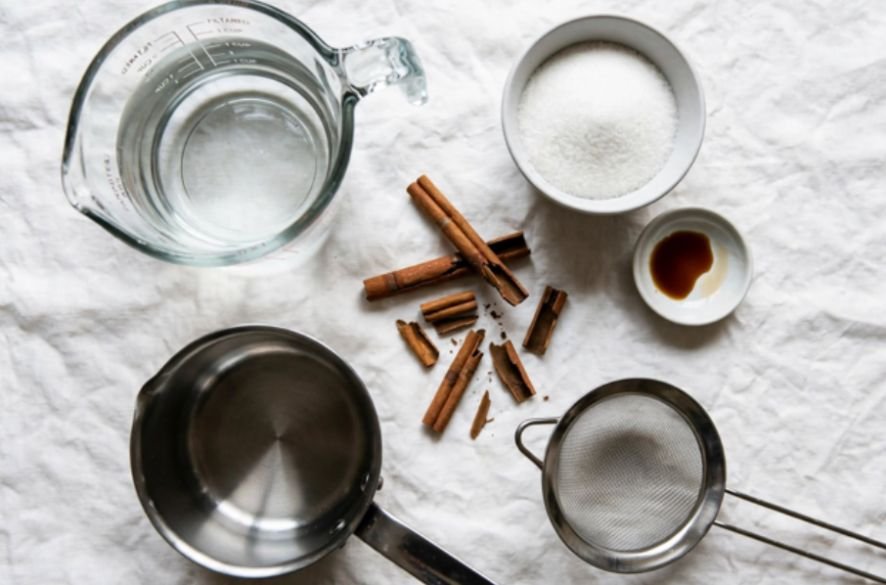
A standard 1:1 simple syrup ratio creates a syrup that dissolves instantly in cold drinks while preserving sufficient moisture for hot drinks. Nutritional databases like USDA FoodData Central document how sucrose stabilization behaves in simple liquid reductions.
You need three core ingredients:
- 1 cup filtered water: Clear water ensures clean spice expression without chlorine interference.
- 1 cup granulated white sugar: Standard cane sugar delivers a neutral, crystal-clear sweetness. Substitute light brown sugar if you prefer deep molasses undertones.
- 3 to 4 whole cinnamon sticks: Crack them in half with your fingers right before cooking to expose inner air pockets and surface area.
- ½ teaspoon pure vanilla extract (optional): Rounds out the finish with warm, creamy aromatics.
For equipment, gather a small heavy-bottom saucepan, a fine-mesh stainless steel strainer, and a sterilized glass bottle or mason jar with an airtight lid.
Step-by-Step Instructions: The Tested Infusion Method
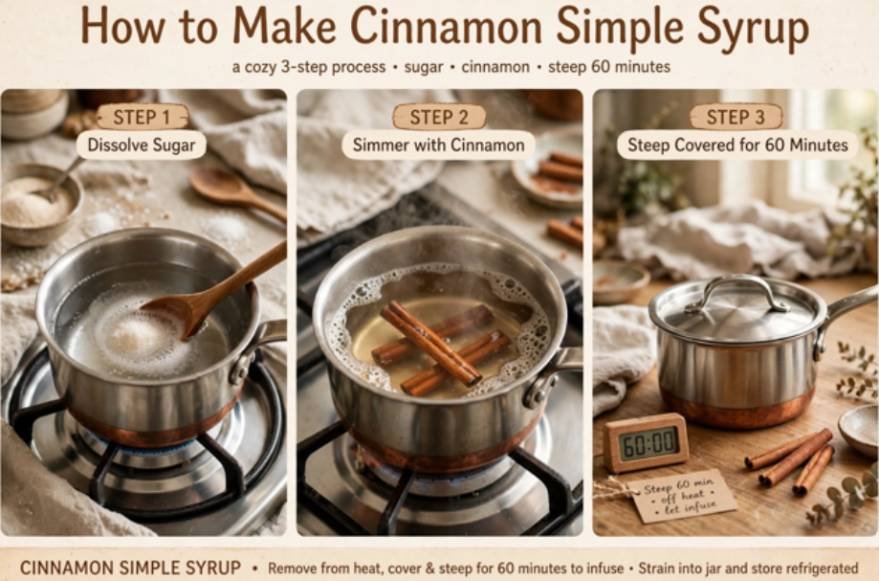
- Dissolve the Base: Pour the water and granulated sugar into your saucepan over medium heat. Stir continuously for 2 minutes until the liquid turns completely clear and no sugar granules scrape against the bottom of the pan.
- Crack and Introduce the Bark: Snap the cinnamon sticks in half and place them into the warm syrup.
- Gentle Simmer: Bring the liquid to a light simmer where tiny bubbles form along the interior perimeter of the pan. Lower the flame immediately to maintain a gentle simmer for 10 minutes. Do not let it boil vigorously.
- The Sealed Steep: Remove the pan from the heat source. Cover tightly with a secure lid. Leave the pan undisturbed on the counter for 60 minutes. The residual heat extracts the deep bark oils while the lid traps the evaporated aromatics.
- Strain and Bottle: Place your fine-mesh strainer over a clean glass bottle. Pour the liquid through to catch the bark and micro-fragments. Stir in the vanilla extract, seal the bottle, and transfer it to the refrigerator.
If you enjoy building seasonal pantries, this technique mirrors the process used for crafting a spicy ginger simple syrup.
How to Use Spiced Cinnamon Syrup Across Drinks and Desserts
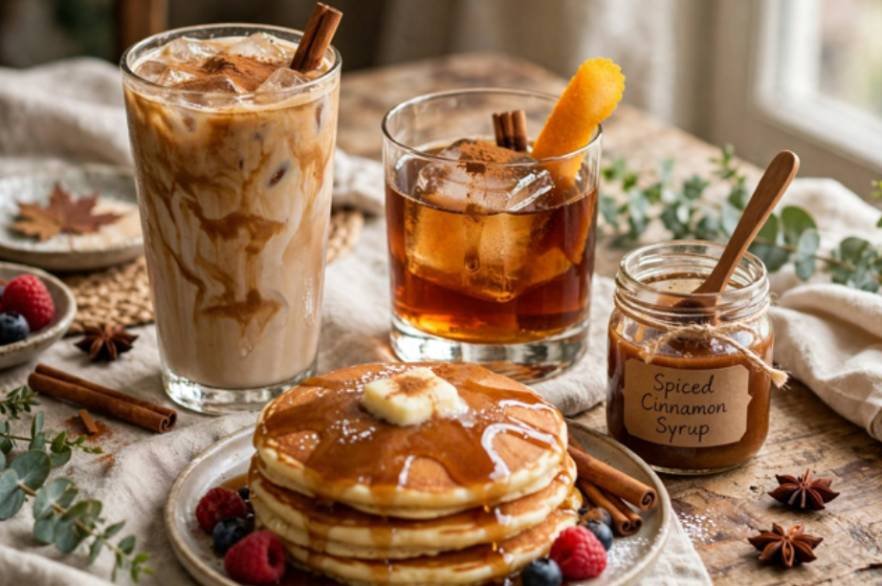
This syrup integrates seamlessly into hot and cold liquids without separating.
Stir two tablespoons into a double shot of espresso, pour over ice, and top with creamy oat milk for an iced spiced latte.
In evening mixology, swap out standard plain syrup for cinnamon syrup in an Old Fashioned; the spice links the charred oak vanillin of bourbon directly to the Angostura bitters.
Drizzle it over warm pancakes, poach firm pears directly in it, or brush it over fresh sponge cake layers before frosting.
This technique is also used for making of hibiscus syrup using dried flowers.
Shelf Life, Preservation, and Storage Benchmarks
Water activity controls shelf stability. Guidelines from the National Center for Home Food Preservation show that standard 1:1 simple syrups retain enough moisture to support mold growth over time if left unchilled.
Keep your cinnamon syrup in an airtight glass container inside the refrigerator. It stays fresh and potent for up to 4 weeks.
If you want to stretch the lifespan to 3 months, add a half-ounce of high-proof neutral spirit (such as 80-proof vodka) to the cooled syrup right before bottling. The alcohol raises the preservation threshold without altering the flavor profile. Discard the batch immediately if the liquid turns cloudy or develops an off odor.
Frequently Asked Questions
1. Can I make this recipe with ground cinnamon instead of sticks?
Yes, but you must filter the syrup through a paper coffee filter to remove the gritty residue.
2. Why did my cinnamon simple syrup turn cloudy?
Cloudiness during storage indicates microbial or mold growth, which means you should discard the batch.
3. Can I freeze cinnamon simple syrup for longer storage?
Yes, pour the syrup into silicone ice cube trays and freeze for up to 6 months.
4. Does cinnamon simple syrup need to be refrigerated?
Yes, 1:1 simple syrups lack sufficient sugar saturation to remain shelf-stable at room temperature.
Ditch the Store-Bought Squeeze Bottle
Pre-made spiced coffee syrups rely on artificial flavor compounds, sodium benzoate, and high-fructose corn syrup to simulate freshness. Simmering whole cinnamon quills on your stove gives you real essential oils, balanced sweetness, and a rich spice profile you cannot buy off a shelf. Crack a few sticks into a saucepan this weekend, bottle your batch, and elevate your daily brew.
Leave a Reply