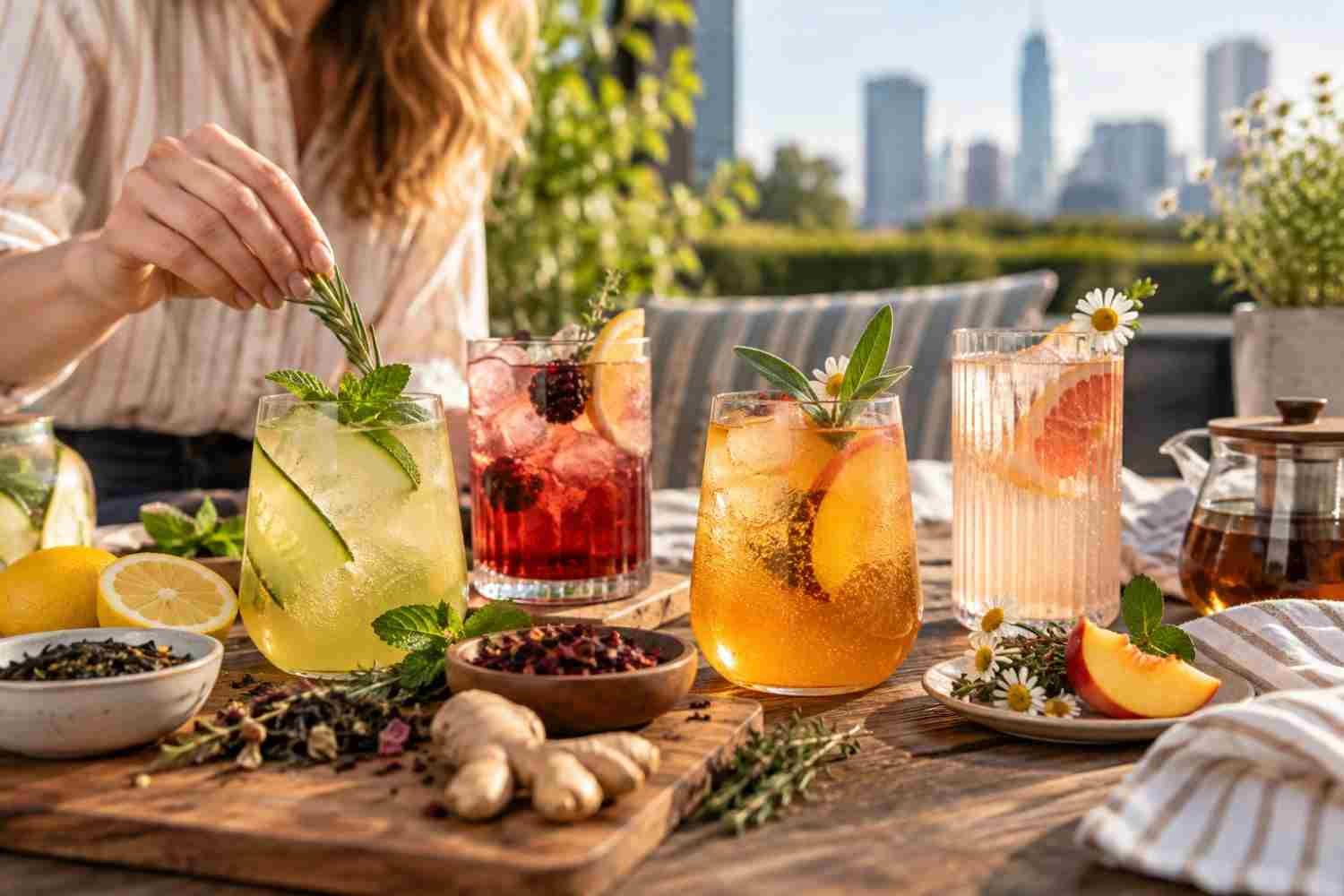
I started noticing that the best alcohol-free drinks rarely need a long ingredient list. When tea brings its own bitterness, aroma, and depth, sparkling water can turn a simple glass into something that feels composed rather than sugary. That changed how I think about mocktails, especially when fresh citrus or herbs are involved.
I also found that sparkling tea works because it gives you more than flavor. Black tea can bring tannins, jasmine adds perfume, hibiscus brings tartness, and herbal teas create softer botanical notes. With the right balance of acidity and bubbles, those qualities make a drink feel grown-up without trying to imitate alcohol.
Why Tea Makes a Better Sparkling Mocktail Base
Tea gives a mocktail structure that fruit juice alone often lacks. Tannins can create a dry finish, while floral or herbal notes add another layer.
The key is choosing a tea that matches the other ingredients. Earl Grey works with lemon because bergamot already has a citrusy aroma. Jasmine green tea suits berries, cucumber, and mint. Hibiscus can handle bold lime and grapefruit because its natural tartness keeps the drink lively.
Tea strength matters, too. A weak brew disappears once you add ice and sparkling water. A concentrated brew holds its character after dilution, but oversteeping can make some teas harsh. Current recipe guidance emphasizes matching water temperature and steeping time to the tea type, particularly for green and jasmine teas.
Sparkling Tea Mocktail Recipes Worth Making
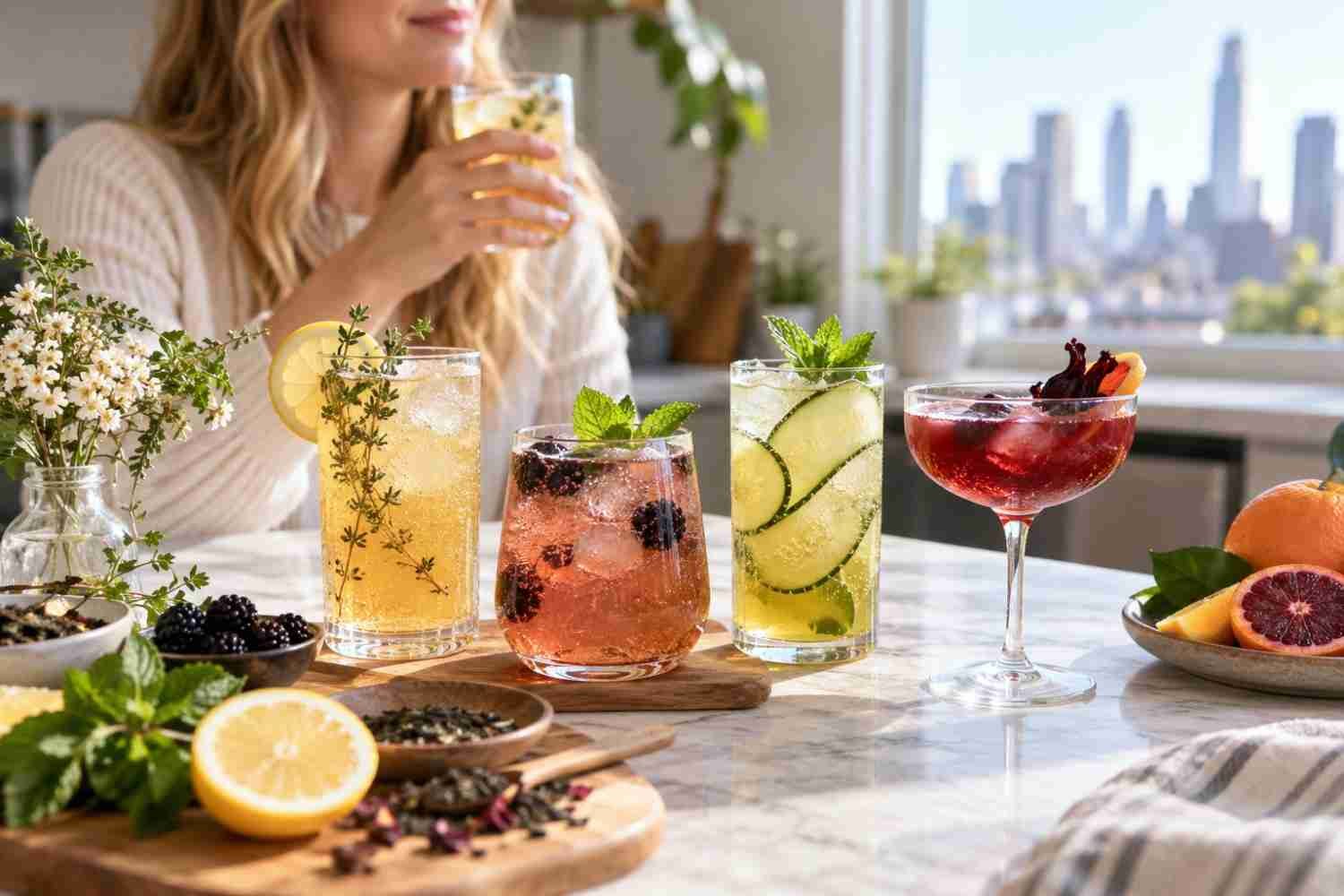
Earl Grey Citrus Fizz
Brew strong Earl Grey, let it cool, then pour 6 ounces over ice. Add 1 tablespoon of fresh lemon juice and finish with 4 ounces of chilled sparkling water. Garnish with a lemon wheel.
If the tea tastes dry, add a little honey while it is still warm rather than loading the finished drink with syrup.
Jasmine Raspberry Spritz
Brew jasmine green tea with water around 175 to 180°F and keep the steep short. Chill it, then lightly muddle a few raspberries in a glass. Add 6 ounces of tea, a teaspoon of lemon juice, ice, and 4 ounces of plain sparkling water. Finish with basil.
Raspberry brings fruitiness, while jasmine supplies perfume. Basil keeps the combination fresh instead of dessert-like.
Hibiscus Lime Sparkler
Steep dried hibiscus in boiling water for 5 to 10 minutes, depending on how intense you want the flavor. Chill the tea, then add 6 ounces to a glass with large ice cubes, fresh lime juice, and 4 ounces of sparkling water.
This version needs little or no sweetener. Hibiscus already has a sharp, cranberry-like tartness, so sweetness can quickly overwhelm its character. A lime wheel adds aroma.
Ginger Tea Garden Fizz
Use strong ginger tea as the base and chill it thoroughly. Add 5 ounces to a glass with ice, then add 1 ounce of cloudy apple juice, a squeeze of lime, and a splash of sparkling water. Garnish with mint or apple.
The apple softens ginger’s heat without turning the drink into juice. If you enjoy layered botanical, citrus, and spice notes, these combinations can also lead naturally into complex zero-proof drink recipes without relying on alcohol-style substitutes.
How to Keep Sparkling Tea From Getting Too Sweet
Start with unsweetened tea and add sweetness only after tasting the finished base. Fresh lemon or lime can brighten a drink without adding sugar, while berries, peaches, apples, and citrus provide natural fruit character.
Treat sweetness as a correction, not the foundation. Brew the tea a little stronger, add acidity, and taste before reaching for syrup. Honey works well with black tea, while a little maple syrup suits apple and rooibos.
This approach also works well for low sugar mocktail recipes with fresh ingredients, because fresh produce can contribute aroma and complexity without requiring much sweetener.
Getting the Bubbles and Tea Right
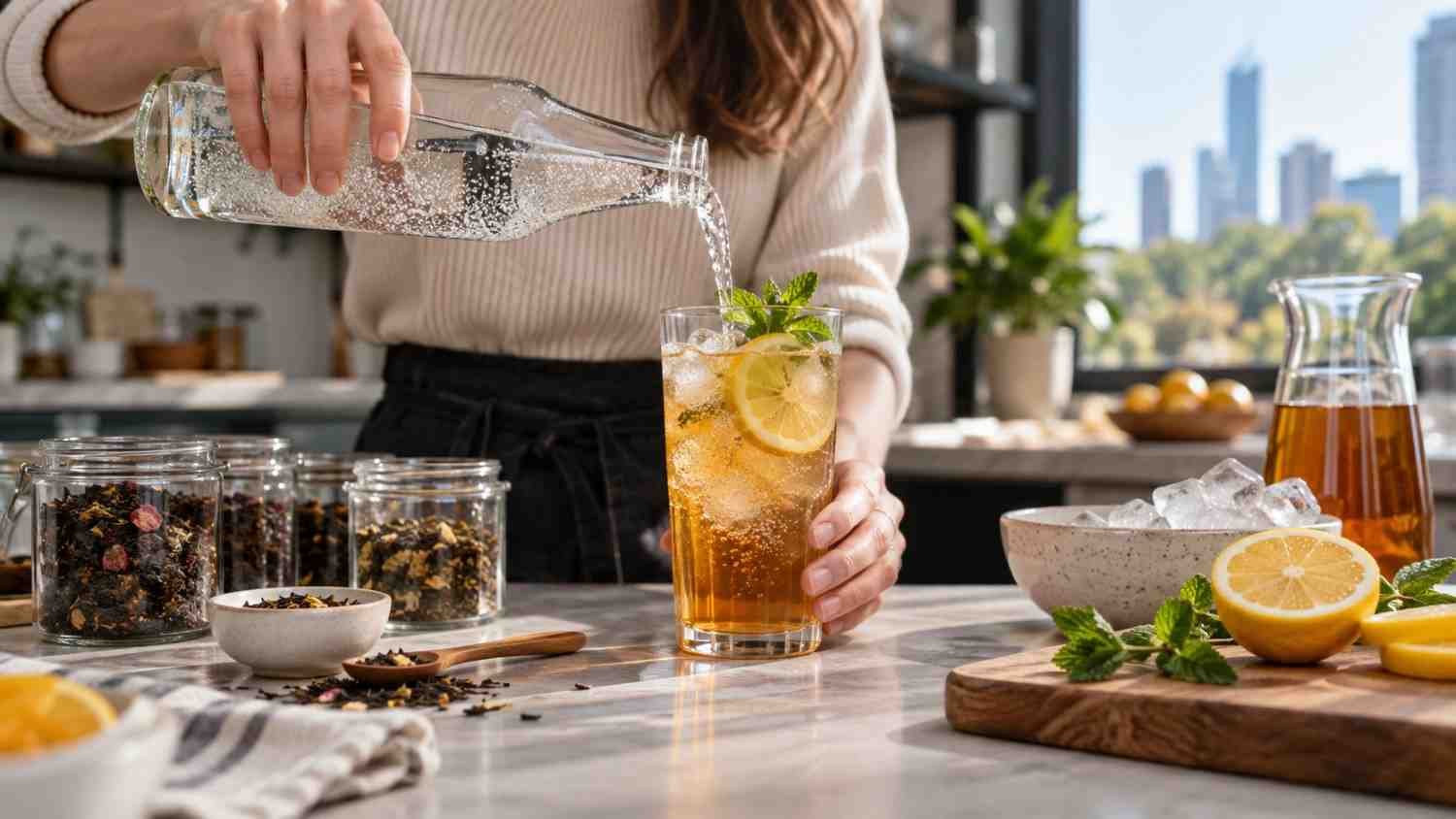
Chill the tea before building the drink, keep the sparkling water refrigerated, and add carbonation near the end. Pouring sparkling water into a warm mixture encourages the bubbles to disappear quickly.
Large ice cubes help drinks stay cold without becoming watery.
For tea preparation, follow the leaves. Black tea generally handles hotter water, while green and jasmine teas benefit from cooler water and shorter steeping. Hibiscus and many herbal teas can take boiling water and longer steep times.
Cold-brew tea when you want a softer base. Sparkling tea recipes commonly use overnight cold steeping before adding chilled carbonation.
Simple Ways to Change the Flavor
Once the basic formula makes sense, substitutions become easy. Swap lemon for grapefruit with Earl Grey, use cucumber and mint with green tea, or pair rooibos with orange and tart cherry. Rosemary can sharpen apple-based drinks, while basil works well with berries.
Keep one flavor in control. If the tea is floral, do not bury it under strongly flavored soda. If the tea is tart, use sweetness sparingly. If the tea is delicate, let citrus and herbs play supporting roles.
Serving Sparkling Tea Mocktails
These drinks work well for brunches, afternoon gatherings, dinner parties, and weeknight dinners. Brew the tea ahead, chill it, prep the fruit, and keep the sparkling water unopened until serving.
For a group, make the tea base in a pitcher but add carbonation to individual glasses. That preserves the fizz and lets guests adjust citrus or sweetness.
FAQs: Sparkling Tea Mocktail Recipes That Go Beyond Sweet Drinks
1. Can I use any tea for a sparkling mocktail?
Almost any tea can work, but black, green, jasmine, hibiscus, rooibos, and herbal teas offer useful flavor profiles.
2. Should sparkling tea mocktails be sweet?
No. Tea, citrus, herbs, and fruit can provide plenty of character without much added sugar. Taste before sweetening.
3. Can I prepare sparkling tea ahead of time?
Prepare and chill the tea ahead, but wait to add sparkling water until serving. This helps preserve carbonation.
4. Which sparkling water works best?
Plain sparkling water is the most versatile. Citrus-flavored versions work when their flavor complements the tea.
Why Tea Changes the Mocktail Equation
A good sparkling tea mocktail does not need to pretend it contains alcohol. Its appeal comes from the balance between aroma, acidity, tannin, fruit, herbs, and carbonation. Once those elements work together, the drink feels complete on its own.
That is what makes tea so useful at home. It gives alcohol-free drinks enough character to slow down and actually enjoy.
Leave a Reply