Whenever I compare cold brew with a traditional cup of drip coffee, the difference in taste is obvious. Cold brew usually feels smoother, less sharp, and naturally sweeter. That leads to an important question: does cold brew have less acid than coffee?
Generally, cold brew can contain lower total or titratable acidity than comparable hot-brewed coffee. However, that does not mean every cold brew is automatically 60% to 70% less acidic or that its pH is dramatically higher. Research shows that brewing temperature, roast level, coffee variety, grind size, steeping time, and concentration all influence the final result.
Understanding that difference helps explain why cold brew often tastes gentler even when laboratory pH readings are fairly close to those of hot coffee.
Why Is Cold Brew Less Acidic Than Hot Coffee?
The biggest difference starts with brewing temperature.
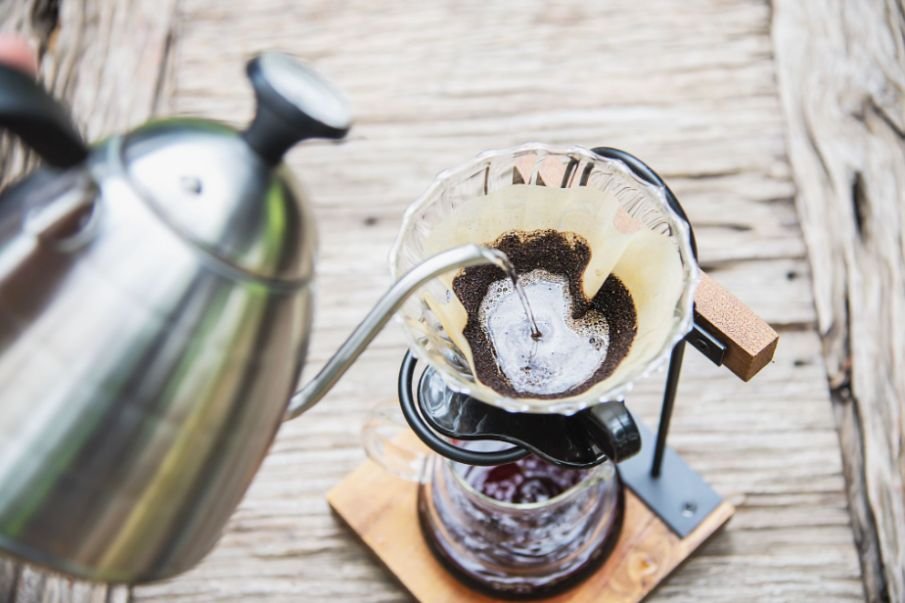
Traditional drip coffee uses hot water, often around 195°F to 205°F. Heat acts as an efficient solvent, quickly extracting flavor compounds, oils, caffeine, organic acids, and bitter compounds from ground coffee.
Cold brew relies on cool or room-temperature water instead. Without high heat, extraction happens much more slowly and produces a different chemical balance.
Coffee naturally contains chlorogenic, citric, malic, quinic, succinic, and other organic acids. Hot water extracts these compounds differently from cold water, which helps explain why hot coffee frequently tastes brighter or sharper.
Cold brew usually steeps for about 12 to 24 hours. I find that this long extraction gives the water enough time to pull out plenty of flavor while maintaining the smoother character people expect from cold coffee.
Does Cold Brew Have Less Acid Than Coffee According to Science?
Scientific research supports the idea that cold brew can have lower total acidity, but the details are more nuanced than many marketing claims suggest.
A study published in Scientific Reports compared hot- and cold-brewed coffees made from the same beans. Researchers found relatively similar pH readings, roughly within the 4.8 to 5.2 range, while hot coffee showed greater total titratable acidity.
That distinction matters.
pH vs Titratable Acidity: What Is the Difference?
pH measures the concentration of hydrogen ions in a liquid and tells us how acidic or alkaline it is at a given moment.
Titratable acidity measures the total amount of acid that can be neutralized. In practical terms, it gives a broader picture of the acid compounds present in the drink.
Two coffees can therefore have similar pH readings but noticeably different total acid concentrations.
Some coffee websites claim cold brew contains 60% to 70% less acid. I would treat that figure as a possible result under particular brewing conditions rather than a universal rule. Peer-reviewed research clearly supports differences in titratable acidity, but it does not establish that every cold brew is exactly 60% or 70% less acidic than every hot coffee.
Why Does Cold Brew Taste Smoother and Less Sour?
Perceived acidity and measured acidity are not identical.
A cup can taste bright, tangy, sour, or sharp because of its balance of acids, sugars, bitter compounds, roast characteristics, and aroma.
Cold extraction tends to emphasize flavors many drinkers describe as chocolatey, nutty, caramel-like, or naturally sweet. At the same time, it often reduces the sharpness associated with some lighter-roasted hot coffees.
For an even creamier texture, you can also explore how to make cold foam without heavy cream and use it as a topping for cold brew without relying on heavy dairy.
That is one reason I can immediately notice a difference between cold brew and conventional drip coffee even if their pH readings are not dramatically different.
Is Cold Brew 60% to 70% Lower in Acid?

You may see the 60% to 70% figure repeated across coffee websites. It is attractive because it gives consumers a simple comparison, but coffee chemistry is not that simple.
Acid levels change with bean origin, roast, brewing ratio, water chemistry, grind size, temperature, and extraction time.
A better conclusion is that cold brewing can significantly reduce certain measurements of total acidity compared with hot extraction, while the actual percentage varies.
This more accurate explanation also prevents confusion between chemical acidity and how acidic coffee tastes.
Does Roast Level Affect Cold Brew Acidity?
Roast level has a major influence on coffee acidity.
Research comparing different roast levels found that darker roasts generally produced lower acidity than lighter roasts. In one study, differences between hot and cold preparations were approximately 0.20 to 0.34 pH units, while roast level itself had an even stronger effect on acidity.
If I want especially smooth cold brew, I usually start with a medium-dark or dark roast rather than assuming the brewing method alone will control acidity.
Light roasts can still make excellent cold brew, but they may retain more fruity, floral, or bright flavor characteristics.
Is Cold Brew Better for a Sensitive Stomach or Acid Reflux?
Many people choose cold brew because they find it gentler on digestion. Its smoother flavor and lower total titratable acidity may help explain why some coffee drinkers prefer it.
However, acidity is not the only factor that can cause discomfort.
Coffee also contains caffeine and other compounds that may affect digestion or reflux symptoms. Cold brew concentrate can contain substantial caffeine depending on the coffee-to-water ratio and how much it is diluted.
For that reason, I would not describe cold brew as a guaranteed remedy for GERD or heartburn. People respond differently, and persistent digestive symptoms should be discussed with a healthcare professional.
Cold Brew vs Iced Coffee: Which Has Less Acid?
Cold brew and iced coffee may look similar in a glass, but their brewing methods are completely different.
The choice of milk can also change the flavor and texture of coffee-based drinks, so understanding the best milk for lattes can be useful when adapting cold brew into a smoother, milk-based beverage.
Cold brew is extracted without hot water. Iced coffee is normally brewed hot and then cooled or poured over ice.
Because iced coffee begins with hot extraction, its acid profile generally resembles traditional hot coffee more closely than true cold brew.
If my goal is a smoother drink with lower perceived acidity, I choose actual cold brew rather than simply chilling regular drip coffee.
Does Longer Cold Brew Steeping Reduce Acidity?

Longer steeping does not necessarily mean lower acidity.
Cold brew commonly sits for 12 to 24 hours because cool water extracts coffee compounds slowly. During that period, caffeine, acids, aromatic compounds, and other soluble materials continue moving into the water.
Steeping far beyond the normal range may create a stronger or less balanced cup rather than a better one.
I get more predictable results by controlling grind size, coffee-to-water ratio, roast level, water quality, and steeping time.
Frequently Asked Questions
1. What Is the Typical pH of Cold Brew Coffee?
Cold brew commonly falls around pH 5, although values differ depending on beans, roast, water, and brewing technique. Scientific studies have recorded hot and cold coffees within relatively similar overall pH ranges.
2. Is Dark Roast Cold Brew Lower in Acid?
Dark roasting generally reduces measurable acidity compared with lighter roasting. Combining darker beans with cold extraction can therefore produce a particularly smooth cup.
3. Is Cold Brew Lower in Acid Than Iced Coffee?
Usually, yes in terms of its overall extraction profile. Iced coffee is brewed with hot water before cooling, while cold brew uses cool or room-temperature extraction from the beginning.
4. Can Cold Brew Still Cause Heartburn?
Yes. Even lower-acid coffee can cause symptoms for some people because caffeine, serving size, concentration, and individual sensitivity can also influence reflux.
Final Thoughts
So, does cold brew have less acid than coffee? Research suggests cold extraction can produce lower total titratable acidity than hot brewing, which helps explain its famously smooth taste. But the difference cannot be reduced to one universal percentage.
For the smoothest cup, I look beyond brewing temperature and consider roast level, extraction time, concentration, caffeine, and bean choice as well. Cold brew is not acid-free, but its combination of slower extraction and lower perceived sharpness can make it an appealing option for US coffee drinkers who find traditional drip coffee too bright or harsh.
Leave a Reply