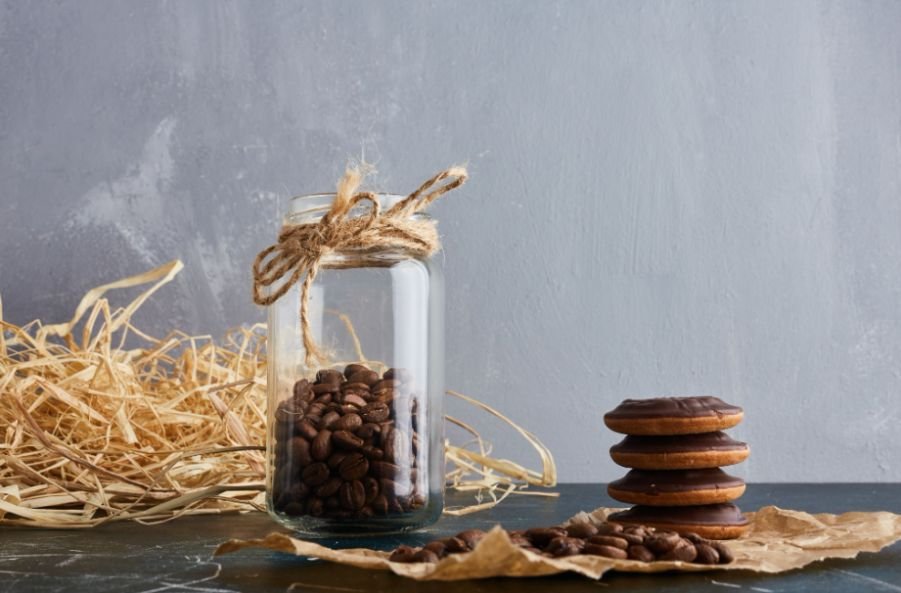
A smooth Mason jar cold brew starts long before the coffee goes into the refrigerator. The texture of the grounds controls how quickly flavor extracts, how much sediment reaches the glass, and how easy the finished batch is to filter. For the best grind size for cold brew mason jar, I use a consistently coarse grind that resembles coarse sea salt, raw sugar, or cracked peppercorns.
This texture works especially well because Mason jar cold brew uses full immersion for many hours. I want the grounds to release flavor gradually without turning the coffee harsh or muddy. When I combine the right grind with a balanced coffee-to-water ratio and controlled steeping time, I can make a cleaner, fuller cold brew with nothing more complicated than a jar and a filter.
What Grind Size Should I Use for Mason Jar Cold Brew?
I start with a coarse to extra-coarse grind, usually around 900 to 1,200 microns as a practical reference. At home, I judge by appearance rather than measuring particles. If the coffee looks like table salt or espresso powder, it is too fine.
Coarse grounds extract gradually and stay large enough for a fine-mesh strainer, cheesecloth, paper filter, or reusable filter to catch. Fine grounds can create sludge, while extremely coarse particles may under-extract.
Why Does a Coarse Grind Work Better for Cold Brew?
Cold brew depends on time rather than high heat. Fine grounds expose more surface area to water, so they extract faster. During a long immersion, that can create harsher flavors and more sediment.
Coarse coffee slows extraction and makes filtration easier. I also prefer a burr grinder because it usually produces a more even particle size than a blade grinder.
What Grinder Setting Should I Use for Cold Brew?
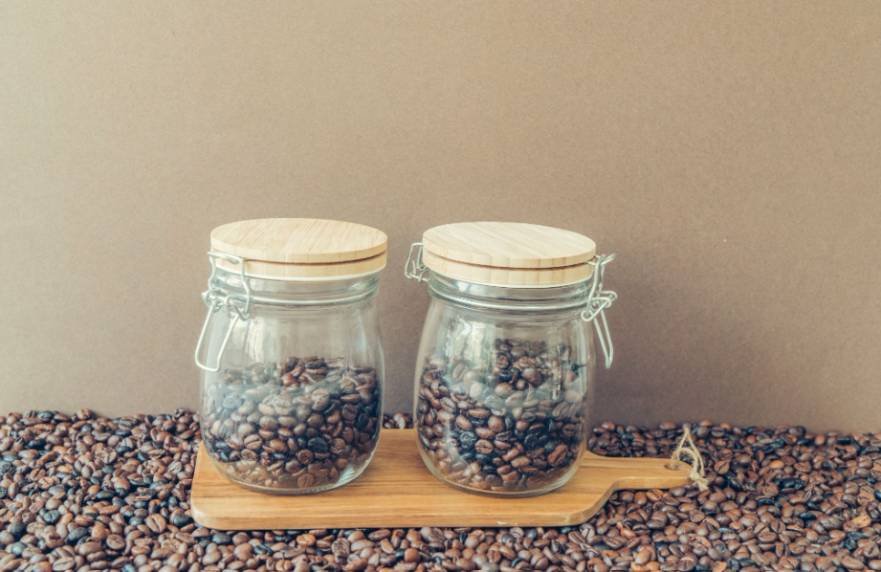
Grinder numbers are not universal, so I treat them as starting points. Some Mason-jar brewing guides use a Fellow Ode around setting 10 and a Baratza Virtuoso around setting 35. A commercial or grocery-store grinder may use setting #9 or a “French Press” or “Cold Brew” label.
I still inspect the grounds. If they resemble coarse sea salt or cracked peppercorns, I am close. Thin coffee pushes me slightly finer; harsh or gritty coffee pushes me coarser.
What Coffee-to-Water Ratio Works Best in a Mason Jar?
For ready-to-drink cold brew, I like a 1:8 coffee-to-water ratio by weight. A useful reference is about 100 grams of coarse coffee to 800 milliliters of water.
For larger batches, the same principles can be scaled up by using a consistent cold brew coffee ratio for 64 oz of water while keeping the grind and steeping time under control.
For concentrate, I use a stronger 1:4 ratio, such as 200 grams of coffee to 800 milliliters of water. I do not force those full amounts into a 32-ounce Mason jar because the grounds take up space. In a one-quart jar, I scale the ratio down and leave headspace for stirring.
I usually steep ready-to-drink cold brew for about 14 to 18 hours. A stronger concentrate may go toward 18 to 24 hours, depending on the beans, temperature, and grind.
How Long Should Coarse Coffee Steep in a Mason Jar?
When I use the best grind size for cold brew in a mason jar, I usually start around 12 to 16 hours and adjust from there. Room-temperature brewing can extract faster, while refrigerator brewing may need more time.
If the brew tastes weak, I first check the ratio, then try a slightly longer steep or a slightly finer grind. If it tastes harsh, I shorten the steep or go coarser.
How Do I Keep Sediment Out of Mason Jar Cold Brew?
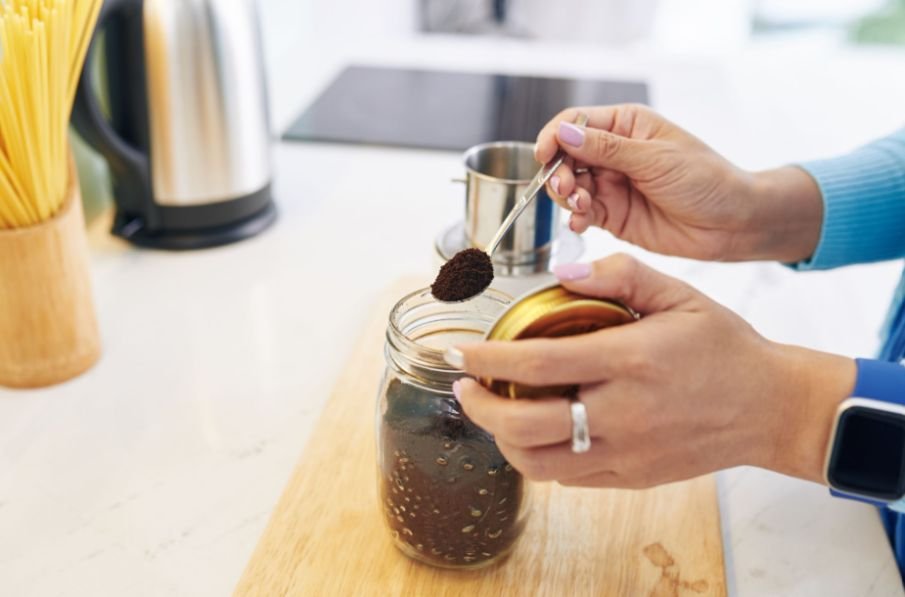
I strain the coffee carefully after brewing. A fine-mesh strainer works for the first pass, but a paper filter, reusable cloth filter, or Mason jar insert gives me a cleaner cup.
Products such as the Rumble Jar Cold Brew Filter and stainless-steel wide-mouth mesh filters can keep coarse grounds contained and simplify cleanup. I also avoid squeezing the grounds because that can push fines through the filter.
Why Does My Mason Jar Cold Brew Taste Bitter or Watery?
If my cold brew tastes bitter, I check whether the coffee was ground too fine or steeped too long. Dark roasts can also taste more intense.
Once the cold brew has the right balance, it can also be used as a base for other coffee drinks, including learning how to make a latte at home with milk and espresso-style flavors.
If it tastes watery, I check for too little coffee, too much water, or an overly coarse grind. I correct the ratio before making a large grind adjustment.
Can I Use Regular Pre-Ground Coffee for Cold Brew?
Yes, but it is not my first choice. Most supermarket pre-ground coffee is finer than ideal for long cold-brew immersion, so I expect more sediment. The effects of grind size and temperature also influence extraction, which means finer grounds can behave differently depending on whether I brew at room temperature or in the refrigerator. If pre-ground coffee is my only option, I shorten the steep slightly and filter more thoroughly.
Does Roast Level Change the Grind Size?
I still start coarse with any roast. Dark roasts can produce more fines, while lighter roasts may need a little more extraction. I fine-tune steep time first, then the grind.
Frequently Asked Questions
1. Is Coarse or Medium-Coarse Better for Cold Brew?
I prefer coarse coffee for long Mason-jar immersion because it filters easily and gives me better control over extraction.
2. Can Coffee Be Ground Too Coarse for Cold Brew?
Yes. Extremely large particles can under-extract. I usually fix that by steeping longer or moving one small step finer.
3. Should Cold Brew Grounds Look Like French Press Coffee?
Yes. French press and cold brew both work well with relatively coarse grounds, though I still judge the finished flavor.
4. Does a Finer Grind Make Cold Brew Stronger?
It can increase extraction, but it can also create bitterness, sludge, and difficult filtration. I usually adjust the coffee-to-water ratio first.
Final Thoughts
For the best grind size for cold brew mason jar, I keep things simple: coarse, consistent grounds that resemble sea salt, raw sugar, or cracked peppercorns. I pair that grind with filtered water, a 1:8 ready-to-drink ratio or a stronger 1:4 concentrate ratio, and a controlled steep.
Once those basics are right, I make small adjustments based on taste. That gives me a smoother, cleaner Mason-jar cold brew without turning every batch into a guessing game.
Leave a Reply