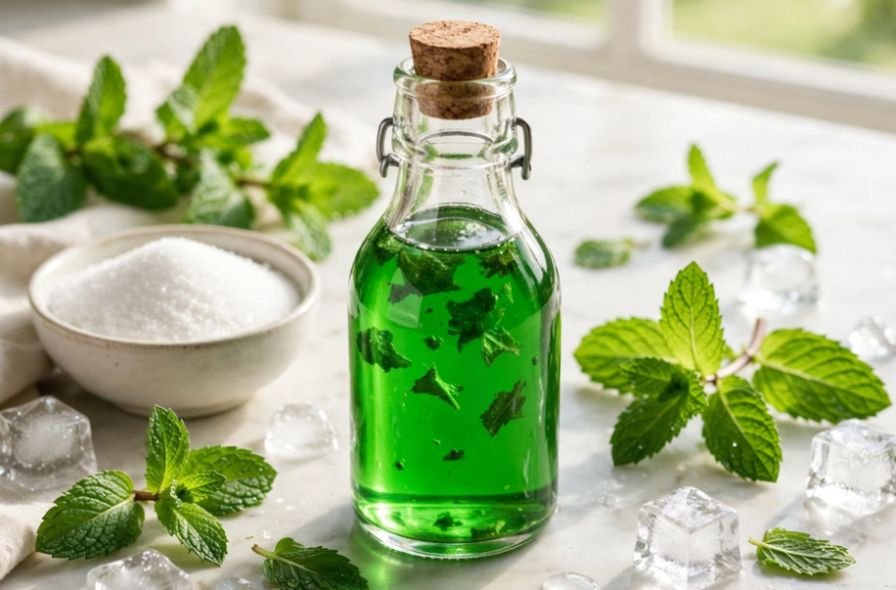
Nothing ruins a cocktail presentation faster than pouring a dingy, olive-drab liquid when you expected radiant emerald green. I spent years watching my homemade syrups turn the color of stagnant puddle water before I stopped treating mint like tea.
If you need a reliable fresh mint simple syrup recipe without turning brown, the secret comes down to controlling a single plant enzyme: polyphenol oxidase.
By applying a targeted 15-second blanch or bypassing heat completely through cold maceration, you preserve the natural chlorophyll while locking in vivid, crisp flavor.
The Science of Brown Mint Syrup (And How I Fixed It)
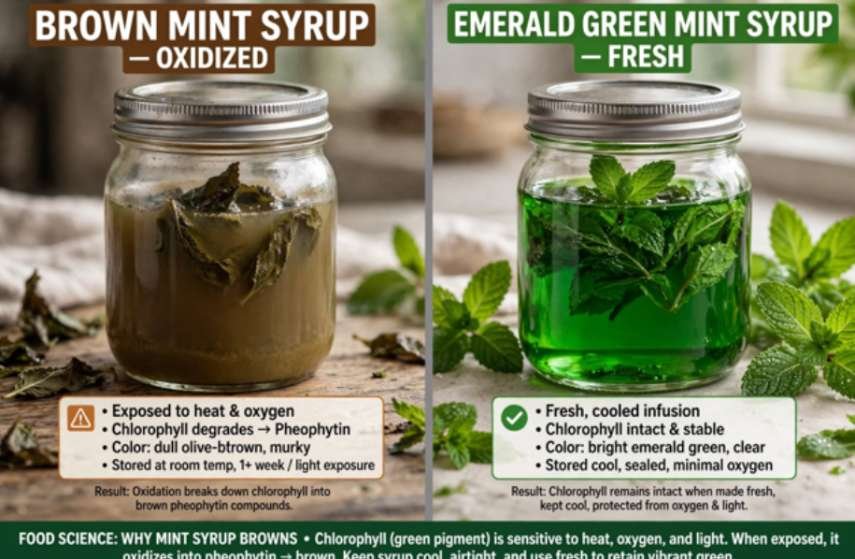
Every time you bruise, chop, or simmer mint leaves, cellular walls collapse. This damage exposes phenolic compounds to oxygen. In the presence of ambient air, the plant enzyme polyphenol oxidase converts clear phenols into brown pigments called quinones.
When you drop delicate mint leaves into hot syrup, you accelerate this enzymatic reaction before the heat has time to fully neutralize it.
According to research on polyphenol oxidase thermal inactivation cataloged by the National Center for Biotechnology Information, temperatures must exceed 160°F to denature the browning enzyme. However, prolonged exposure degrades bright green chlorophyll into dull grey-green pheophytin.
To win both battles, you must denature the enzyme instantly without stewing the herb. Culinary food scientists at Serious Eats have long championed this principle for vibrant herb purees: shock the leaves in boiling water, stop the cooking instantly in ice, and blend the leaves with cooled syrup.
Method 1: The Blanch and Shock Technique for Emerald Color
This remains my favorite technique when visual appeal matters most. It produces an opaque, jewel-toned green that transforms mojitos, juleps, and iced teas.
Ingredients and Equipment
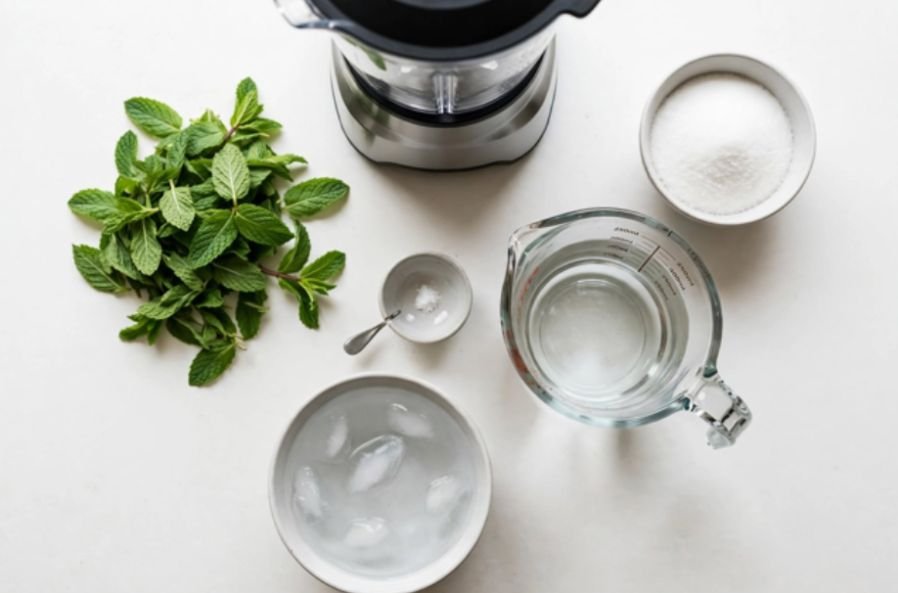
For this method, select culinary spearmint belonging to the botanical family Mentha spicata, which carries high sweetness and low menthol bitterness.
- 1 cup fresh spearmint leaves, packed with stems completely removed
- 1 cup white granulated cane sugar
- 1 cup filtered water
- 1/8 teaspoon citric acid or 1 teaspoon fresh lemon juice
- Large bowl of ice water
- High-speed blender
- Fine-mesh sieve and a paper coffee filter
Step-by-Step Blanching Process
- Strip the stems thoroughly: Mint stems carry bitter tannins that leach into water and darken the mixture. Strip every stem down to the clean leaf.
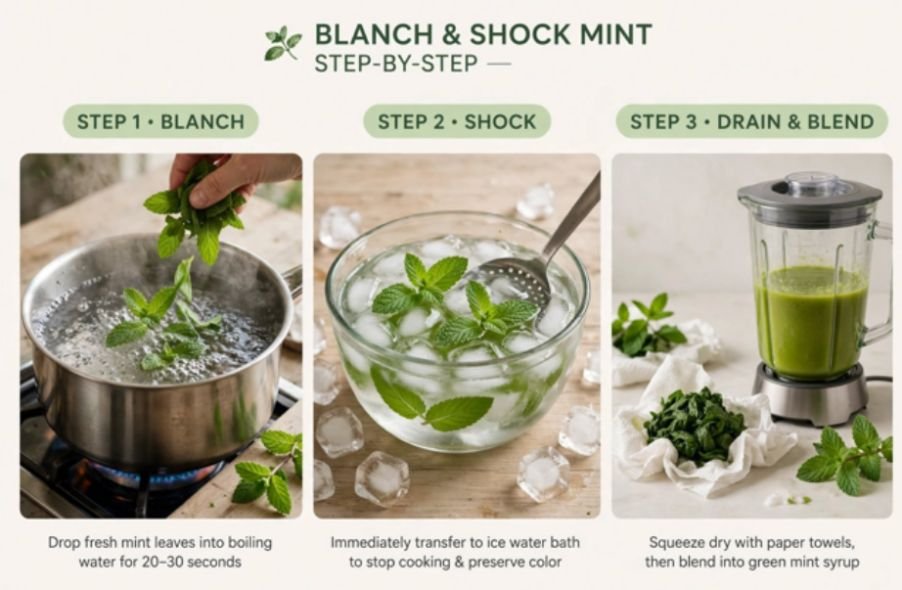
- Flash-boil the leaves: Bring 4 cups of unsalted water to a rapid boil in a saucepan. Drop the mint leaves into the bubbling water. Submerge them completely for exactly 15 seconds. Do not exceed this window.
- Submerge in ice water: Lift the leaves out immediately with a spider strainer or slotted spoon. Plunge them directly into your prepared ice water bath. Leave them submerged for 60 seconds to halt residual heat transfer.
- Squeeze dry: Pull the chilled leaves from the water and press them firmly inside clean paper towels. Squeeze out as much moisture as possible. Excess water dilutes your sugar ratio and shortens shelf life.
- Dissolve the base syrup: In a clean pot, combine 1 cup of sugar and 1 cup of filtered water. Warm over medium heat until the sugar crystals vanish. Set the saucepan aside until the liquid reaches room temperature.
- Puree and strain: Pour the cooled base syrup into your blender pitcher. Add the dried blanched mint and the pinch of citric acid. Blend on high for 45 to 60 seconds until completely liquified.
- Filter slowly: Pour the blended liquid through a fine-mesh strainer lined with an unbleached coffee filter or a double layer of cheesecloth. Let it drip through naturally without forcing the plant sediment through the mesh.
The resulting liquid is clear, translucent, and astonishingly green.
Method 2: Cold Maceration for Crisp, Uncooked Flavor
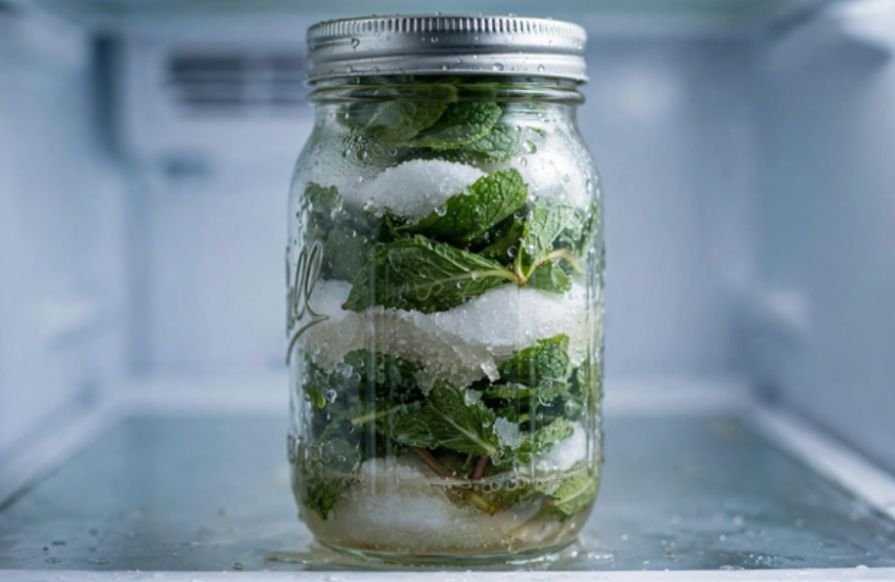
If you prefer unadulterated botanical flavor without any hint of cooked greens, cold maceration is your answer. While the green tint remains softer and less neon than the blanching method, it captures raw herbal volatile oils flawlessly.
Ingredients and Tools
- 100 grams fresh mint leaves, rinsed and air-dried
- 100 grams extra-fine white baker’s sugar
- 100 milliliters cold filtered water
- 1 clean quart-sized glass canning jar with an airtight lid
Step-by-Step Cold Extraction
- Layer the ingredients: Place a thin layer of mint leaves at the base of the jar, followed by a light dusting of white sugar. Continue alternating layers until both the mint and sugar are exhausted.
- Refrigerate for 36 hours: Seal the jar tightly and place it on a middle shelf in your refrigerator. Avoid leaving it at room temperature. Over the next day and a half, the sugar draws moisture and oils out of the leaves through osmotic pressure. Shake the jar gently every 12 hours.
- Dissolve remaining granules: Open the jar and pour in the 100 milliliters of cold water. Stir gently with a bar spoon until any residual sugar granules dissolve into the extract.
- Strain and bottle: Pass the syrup through a fine sieve into an amber glass bottle. Discard the spent leaves without pressing them hard.
Three Rules to Keep Green Syrup Vibrant for Weeks
Preserving the brilliant color of your syrup requires attentive post-processing habits:
- Always use refined white sugar: Turbinado, honey, raw sugar, and demerara add amber notes that immediately skew your syrup brown. Save richer raw sugars for an earthy cinnamon stick simple syrup or a spicy ginger simple syrup, where deep caramel colors look natural.
- Drop the pH with citric acid: Adding a microscopic pinch of citric acid preserves color by lowering the pH below the threshold where oxidative enzymes can reactivate.
- Filter out all micro-particulates: Suspended plant solids oxidize in storage and turn brown at the bottom of the bottle. Taking the extra five minutes to pass the syrup through a paper coffee filter removes this pulp entirely.
How to Use Your Syrup in Drinks and Desserts

Stir half an ounce into fresh lemonade, mix it with club soda and fresh lime for an instant zero-proof refresher, or drizzle it over a bowl of sliced strawberries and vanilla bean ice cream.
If you enjoy making flavored syrups at home, you can also learn how to make orgeat syrup from almond milk for a creamy, nutty alternative.
For classic cocktails, replace standard simple syrup with this vibrant green version in a Southside, Mint Julep, or Mojito to elevate both visual aesthetic and garden-fresh flavor.
Frequently Asked Questions
1. Why did my mint syrup turn brown immediately after boiling?
Boiling mint leaves directly in sugar water cooks the chlorophyll into brown pheophytin while releasing bitter tannins from the plant tissue.
2. Can I use peppermint instead of spearmint for simple syrup?
Yes, but peppermint contains higher menthol levels that can taste like mouthwash, while spearmint offers a balanced, sweeter profile.
3. How long does blanched mint simple syrup stay green in the fridge?
Stored in an airtight, sterilized glass container, the syrup maintains its bright green color and flavor for up to three weeks.
4. Can I freeze fresh mint syrup to preserve the color?
Yes, freezing the syrup in covered silicone ice cube trays preserves color and aroma for up to six months.
No More Muddy Syrups: Your Next Bar Project
Dull brown infusions belong in compost bins, not inside highball glasses. Once you harness rapid enzyme blanching and delicate fine straining, you will never settle for murky herbal syrups again.
Grab a fresh bunch of market mint, set up an ice bath on your counter, and bottle your first batch of luminous green syrup tonight.
Leave a Reply