
The martini can go from crisp and savory to aggressively salty with a difference of just half an ounce of brine. That is why a good pickle martini recipe with vermouth needs more than vodka poured over pickle juice. Vermouth provides the botanical, slightly bitter middle note that keeps vinegar, salt, and alcohol from dominating the glass.
My preferred starting formula is 2½ ounces of vodka or gin, ½ ounce of dry vermouth, and ½ to ¾ ounce of dill pickle brine. Shake it very cold, taste the balance, and adjust the brine rather than automatically pouring in more.
The Best Pickle Martini Ratio
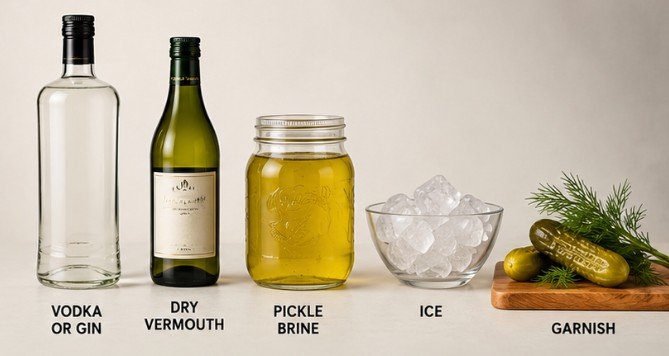
For one cocktail, use:
- 2½ ounces vodka or London dry gin
- ½ ounce dry or extra-dry vermouth
- ½ to ¾ ounce dill pickle brine
- Plenty of ice
- 1 dill pickle, cornichon, or fresh dill sprig for garnish
If you already know you love strongly briny cocktails, increase the pickle juice to 1 ounce. I would not begin there, however. Different pickle brands vary significantly in salt, vinegar, garlic, sugar, and spice intensity.
That variation matters more than many recipes acknowledge.
Pickling solutions normally contain some combination of vinegar, salt, water, herbs, spices, and sometimes sugar. University of Minnesota Extension notes that acid and salt are fundamental components of traditional pickling liquids, which helps explain why one jar’s brine can taste much sharper than another.
How to Make a Pickle Martini With Vermouth
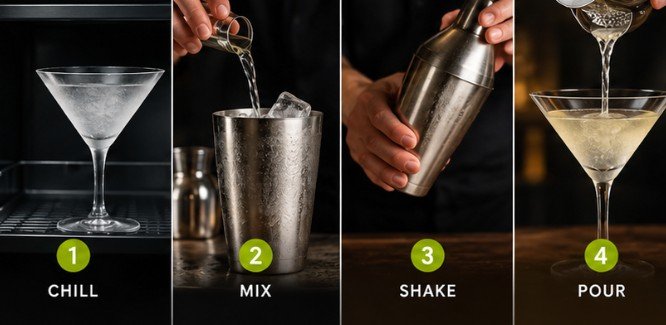
1. Chill the glass first
Put a martini or coupe glass in the freezer for several minutes. A cold glass slows warming after the cocktail is strained, particularly important for a drink served without ice.
2. Measure instead of free-pouring
Add 2½ ounces of spirit, ½ ounce vermouth, and ½ ounce pickle brine to a shaker filled generously with ice.
Measuring is particularly useful here because pickle juice is a concentrated seasoning as much as it is a liquid ingredient.
3. Shake until thoroughly cold
Shake for about 15 seconds. The ice chills the cocktail while introducing enough water to soften the alcohol, vinegar, and salt.
A traditional martini is often stirred for clarity and a silky texture, but shaking works well for pickle martinis because the brine benefits from vigorous integration and extra dilution.
4. Taste before increasing the brine
Strain a tiny spoonful before serving. If the cocktail tastes mostly like cold vodka, add another ¼ ounce pickle juice and shake briefly.
If the pickle flavor is obvious but you can still detect vermouth and the base spirit, the ratio is working.
5. Strain and garnish
Double-strain into the chilled glass if the brine contains herbs or spice particles. Garnish with a small dill pickle, cornichon, pickle slice, or fresh dill.
A large pickle spear looks dramatic but can release additional brine into the cocktail as it sits, gradually changing the balance.
Vodka or Gin: Which Works Better?
Both make excellent versions, but they produce noticeably different drinks.
| Base spirit | What it contributes | Best choice if you want |
| Vodka | Clean, neutral background | Pickle flavor to dominate |
| London dry gin | Juniper, citrus, herbs | A more complex savory martini |
| Citrus-forward gin | Bright aromatic notes | A fresher, lighter pickle profile |
| Botanical gin | Floral and herbal flavors | A more adventurous cocktail |
Vodka is the easier starting point because you can judge the pickle-vermouth balance clearly.
Gin becomes more interesting when the pickle brine contains dill, coriander, mustard seed, garlic, or pepper because those flavors can overlap with gin botanicals.
Why Vermouth Makes the Drink Better
Removing vermouth entirely may sound logical if the goal is maximum pickle flavor, but the result often tastes less like a martini and more like chilled seasoned vodka.
Dry vermouth brings wine acidity, herbs, mild bitterness, and subtle sweetness. Those characteristics create a bridge between strong distilled spirits and acidic pickle liquid.
For the pickle martini recipe with vermouth, ½ ounce is a dependable middle ground. Drop it to ¼ ounce if you prefer an extremely dry drink. Increase it toward ¾ ounce if the pickle brine is unusually salty or sharp.
Vermouth should also be treated like wine after opening rather than like shelf-stable vodka. Refrigerating an opened bottle helps preserve its fresher flavor.
The Three-Sip Balance Test
Instead of judging the cocktail by whether it tastes “pickle-y enough,” evaluate three things.
First sip: acidity. You should notice a clean vinegar snap without immediately puckering.
Second sip: salt. Salt should sharpen the drink rather than coat your mouth.
Third sip: spirit and vermouth. You should still be able to identify something besides pickle juice.
If the third sip tastes exclusively of brine, add a little more spirit or vermouth. If the cocktail tastes alcoholic and flat, another ¼ ounce of brine usually helps.
This method is more reliable than sticking rigidly to one measurement because commercial pickle formulas vary.
Choose Pickle Brine Carefully
Classic dill pickle juice is the safest flavor choice. Garlic dill, spicy pickle, bread-and-butter, fermented, and sweet pickle brines can all work, but they create substantially different cocktails.
Sweet pickle juice may require less vermouth because added sugar already softens acidity. Spicy brine can overwhelm gin botanicals. Highly garlicky brine works best in small quantities.
For opened jars, follow proper refrigeration instructions. Oregon State University Extension advises storing opened pickles refrigerated with the pickling liquid covering them.
There is also an important distinction between using refrigerated pickle juice immediately in a cocktail and reusing old brine for food preservation. Penn State Extension cautions against treating previously used pickle brine as fresh preserving liquid because its acidity can change after contact with food.
How Strong Is This Martini?
A cocktail glass can make a drink look smaller than it really is. It can be made using 3 ingredient cocktails for beginners.
The National Institute on Alcohol Abuse and Alcoholism defines one U.S. standard drink as containing roughly 0.6 fluid ounces, or 14 grams, of pure alcohol. A 1.5-ounce serving of 80-proof spirits is approximately one standard drink.
Using 2½ ounces of 40% ABV vodka or gin plus ½ ounce of roughly 18% ABV vermouth works out to approximately 1.8 U.S. standard drinks before accounting for brand differences.
Ice dilution lowers the concentration of alcohol in each sip, but it does not remove the alcohol already poured into the shaker.
Watch the Salt as Well as the Alcohol
Pickle brine can contain substantial sodium, and amounts vary widely by brand.
The American Heart Association specifically lists pickles among packaged foods that can be high in sodium and recommends comparing Nutrition Facts labels between products.
For someone watching sodium intake, a simple improvement is using ½ ounce rather than a full ounce of brine and relying on dill, lemon peel, pepper, or a pickle garnish for additional aroma.
Common Pickle Martini Mistakes
The most common problem is simply adding too much brine too early. It is much easier to add another quarter ounce than to rescue an oversalted drink.
Warm ingredients are another problem. Strong savory flavors become harsher as a martini warms, so use plenty of fresh ice and a properly chilled glass.
Do not assume every jar of pickles produces interchangeable juice either. Taste the brine first. A sweet brine, spicy brine, or heavily seasoned garlic brine may need a completely different ratio.
Finally, do not skip vermouth simply because you want an intense drink. A small amount can actually make the pickle character clearer by giving it something to contrast against.
Frequently Asked Questions
1. How much pickle juice should I put in a martini?
Start with ½ ounce per 2½ ounces of vodka or gin. Increase to ¾ or 1 ounce only if you want a much saltier, more pickle-forward cocktail.
2. What vermouth is best for a pickle martini?
Use dry or extra-dry vermouth. Its herbal, lightly bitter profile complements dill and vinegar without adding the obvious sweetness associated with sweet vermouth.
3. Should a pickle martini be shaken or stirred?
Either works, but shaking provides stronger chilling and dilution, which can soften salty, acidic pickle brine. Stirring produces a silkier, clearer drink.
4. Can I make a pickle martini with gin instead of vodka?
Yes. Gin creates a more botanical drink, while vodka keeps the pickle flavor cleaner and more dominant.
A Better Martini Starts With Less Brine
The surprising trick to a memorable pickle martini is restraint. I would rather begin with half an ounce of brine and discover that the drink needs another splash than bury good gin, vodka, and vermouth beneath an intensely salty pour.
A well-made pickle martini recipe with vermouth should still taste like a martini: cold, structured, spirit-forward, and aromatic. Pickle juice changes its personality, but it should not erase everything underneath it. Measure carefully, taste your particular brine before mixing, and let the final quarter ounce be a decision rather than a habit.
Leave a Reply