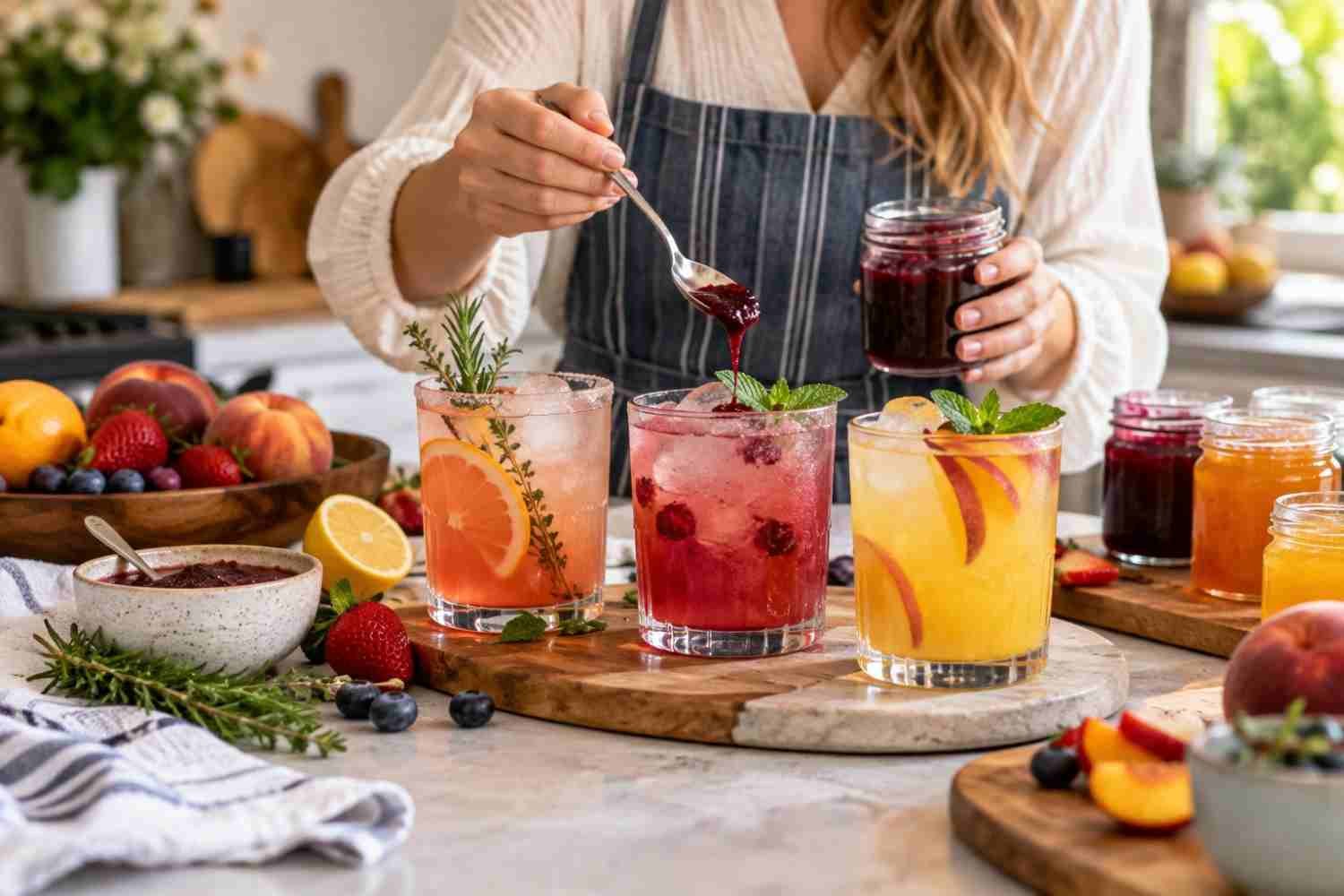
I started paying more attention to fruit preserves when I realized how often a half-used jar sat in my refrigerator after breakfast. Instead of treating it as something meant only for toast, I began stirring small spoonfuls into sparkling drinks. The flavor was deeper than fresh fruit alone, and I could build a good drink in minutes without washing, slicing, or muddling a pile of produce.
I also found that preserves make seasonal mocktails easier to improvise. A jar of strawberry jam can carry a summer drink, while peach, blueberry, apple, cranberry, or orange preserves can shift the same basic idea toward another season. The trick is not adding more sweetness. It is balancing the concentrated fruit with acidity, dilution, bubbles, and an aromatic ingredient.
Why Fruit Preserves Work So Well in Mocktails
Preserves bring concentrated fruit flavor, sweetness, and body. Because the fruit has already been processed with sugar, a little can do more work than a handful of fresh berries.
The goal is a drink that tastes like fruit rather than syrup. Citrus helps immediately because lemon or lime cuts through sweetness and gives the drink a cleaner finish. Sparkling water then stretches the flavor while adding lift. That keeps the fruit recognizable while giving the drink contrast to stay interesting from the first sip.
Build the Drink Around Five Elements
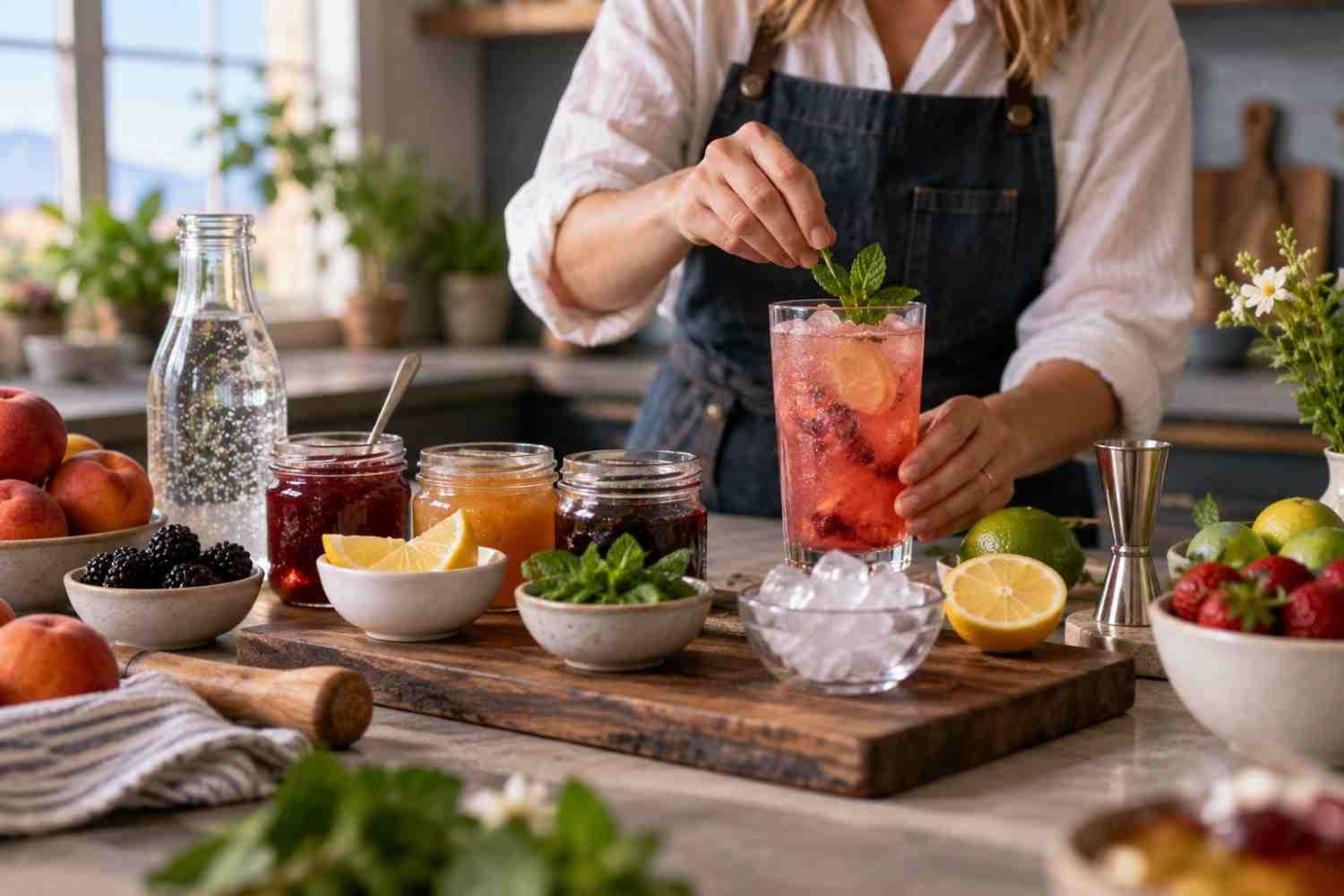
A simple formula makes seasonal fruit mocktails much easier to improvise: fruit preserve, acid, dilution, carbonation, and aroma.
Begin with the preserve. Add roughly 1 to 2 tablespoons to a glass, followed by about 1/2 teaspoon of fresh lemon or lime juice. Add a tablespoon or two of water if the preserve is especially thick. Stir until it loosens.
Fill the glass with ice, then top with sparkling water, club soda, or another lightly flavored bubbly mixer. Stir gently instead of aggressively so the drink stays lively.
Let the Season Choose the Flavor
Spring and summer are natural territory for strawberry preserves. Pair them with lemon and basil, or try tarragon for a more herbal edge.
Peach and apricot work especially well as the weather moves toward late summer and early fall. Lime brings sharper acidity, while mint keeps the combination refreshing. Ginger is another good option when you want a little heat behind the ripe fruit.
Fall opens the door to apple, pear, cranberry, and fig preserves. These flavors can handle cinnamon, ginger, clove, or rosemary. Use spices carefully because too much can make a cold drink taste heavy.
Winter does not mean giving up on fruit. Orange marmalade, cranberry preserves, cherry, and pomegranate-inspired combinations can create bright drinks during colder months. Orange with lemon and sage is especially useful when you want something citrusy without making the drink taste like plain lemonade.
Blueberry and mixed berry preserves are flexible year-round choices. Lime keeps them from becoming jammy, while rosemary adds a woodsy note. If the preserve contains seeds or large pieces of fruit, strain the mixture after loosening it.
Make Preserves Mix Smoothly
Texture is one of the biggest differences between a successful preserve mocktail and a glass that feels like watered-down jam. Cold ingredients can make thick preserves stubborn, so give the fruit base a little attention before adding ice.
For a quick drink, combine the preserve and citrus in the glass, add a small splash of room-temperature water or seltzer, and stir thoroughly. If you are making several servings, loosen the preserve in a small bowl or pitcher first. A whisk works well for thicker jams.
Some preserves contain seeds or fruit skins that are pleasant in a rustic drink but less appealing in a polished spritz. Straining is optional, not mandatory. It depends on the texture you want.
Avoid adding sparkling water too early. If you vigorously stir a thick preserve into a carbonated mixer, you lose some of the bubbles before the drink is ready. Build the fruit base first, add ice second, and finish with carbonation.
Add Complexity Without Making It Heavy
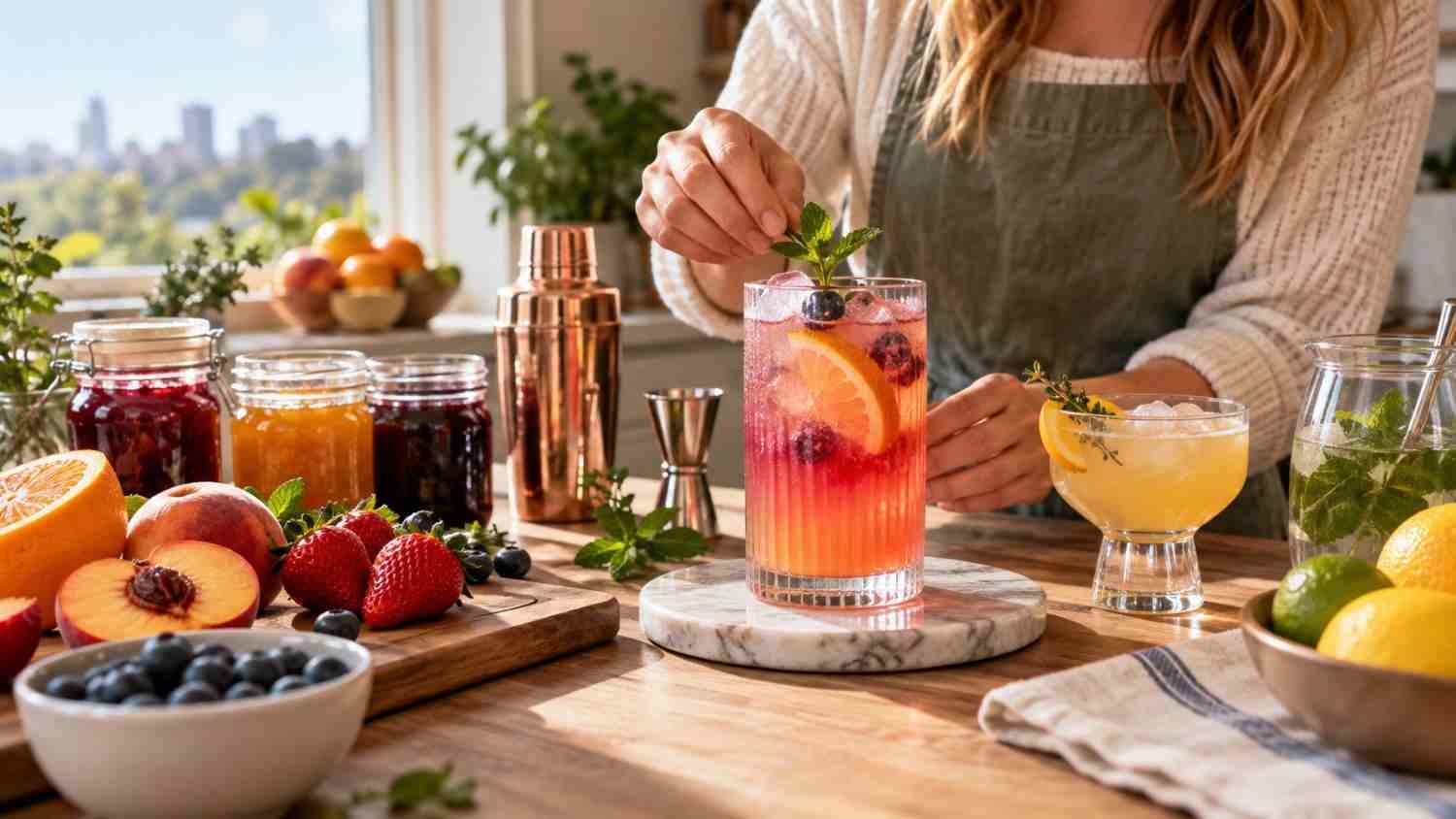
A preserve-based mocktail does not need five syrups and a dozen ingredients. Complexity often comes from contrast. Sweet fruit can meet tart citrus, a savory herb, fresh ginger, or a lightly bitter botanical ingredient.
You can also borrow the sweet-tart idea behind a shrub. Shrubs traditionally combine fruit, sugar, and vinegar, creating a concentrated mixer that works especially well with sparkling water. You do not need to make a full shrub for every drink, but a tiny splash of a fruit-forward vinegar can provide a sharper finish when preserves taste too sweet.
For a deeper flavor profile, try complex alcohol free drinks with toasted spice flavors as a reference point for thinking about how spice, bitterness, and acidity can give fruit more dimension. Toasted cinnamon, lightly crushed cardamom, or a small piece of fresh ginger can work beautifully with darker preserves. Aromatic ingredients can create the impression of depth without overwhelming the fruit, especially when the preserve is already sweet and concentrated. Use them sparingly to keep the drink lively.
Focus on balance, aroma, texture, and length rather than trying to reproduce a specific alcoholic drink. That approach is especially useful when learning how to create cocktail structure without making a sugary imitation.
Serve It Like a Drink, Not a Dessert
Presentation can reinforce the flavor without turning the mocktail into a project. Use ice and one related garnish.
Apple can take rosemary or a thin slice. Orange marmalade needs little more than a strip of peel or sage.
FAQs: How to Make Mocktail Recipes Using Seasonal Fruit Preserves
1. Can I use any fruit jam in a mocktail?
Yes. Strawberry, peach, blueberry, apricot, cherry, orange, cranberry, and mixed berry preserves can all work. Choose one with a flavor you enjoy and adjust the citrus to balance its sweetness.
2. How much preserve should I use?
Start with 1 to 2 tablespoons per serving. Add more only after tasting, because preserves vary widely in sweetness, thickness, and fruit intensity.
3. What can I use instead of sparkling water?
Club soda, seltzer, tonic water, ginger ale, or lemon-lime soda can work. Choose based on how sweet or bitter you want the finished drink.
4. How do I stop jam from clumping?
Mix the preserve with citrus juice and a small splash of water before adding ice or carbonation. Stir thoroughly, or loosen larger batches with a whisk.
Why Seasonal Ingredients Keep Mocktails Interesting
What I like most about preserves is the freedom they give you to work with what is already in the kitchen. A seasonal jar does not need to become a complicated recipe. It can become the starting point for a drink that changes with the calendar, your pantry, and your mood. That approach is especially useful when learning how to create cocktail-inspired mocktails without copying cocktails.
The best combinations usually come from a simple instinct: let the fruit lead, then give it something sharp, fresh, fizzy, or aromatic to push against it. Once that balance clicks, one jar of preserves can keep producing different glasses at home today.
Leave a Reply