A mocktail does not become sophisticated simply because it contains less syrup. Remove too much sweetness without replacing what it was doing, and the drink can quickly turn into sour sparkling water.
The real trick behind how to make mocktails less sweet without losing flavor is to rebalance the drink around acidity, bitterness, aroma, texture, and dilution. Sugar is only one part of flavor. Once the other elements become stronger, you can use surprisingly little sweetness while still making a drink taste complete.
That matters especially with alcohol-free drinks because spirits normally contribute heat, bitterness, aroma, dryness, and body. A good mocktail has to recreate some of those sensations from other ingredients rather than compensating with juice and syrup.
Why Do Mocktails Taste Too Sweet So Easily?
Many home mocktails start with fruit juice, flavored syrup, ginger ale, lemonade, or tonic. Combine two or three sweet ingredients and the sugar builds much faster than most people expect.
For perspective, the FDA’s guidance on added sugars lists a Daily Value of 50 grams of added sugar for a 2,000-calorie diet. Syrups, honey, sweetened mixers, and concentrated fruit juices can all contribute added sugars.
But sweetness is also a sensory problem, not simply a nutrition calculation.
Research indexed by the National Library of Medicine’s PubMed database found that sweetness and acidity can suppress each other’s perceived intensity in mixtures containing sugars and citric acid. That helps explain why adding a little fresh lime can make an overly sweet drink suddenly taste far more balanced.
The goal, therefore, is not necessarily to eliminate sweetness. It is to stop sweetness from dominating everything else.
Use Five Flavor Levers Instead of More Sugar
1. Reduce the Sweetener Gradually
Start by cutting syrup rather than removing it completely. If a recipe calls for 1 ounce of simple syrup, try ½ to ¾ ounce first. Taste the drink before making another adjustment. A small amount of sugar can still soften acidity and carry fruit and spice flavors without making the finished drink taste sugary.
This gradual approach also makes sense for people accustomed to sweeter beverages. The American Heart Association recommends gradually reducing sweetness rather than assuming every sweetened drink has to be replaced overnight.
Also check the ingredients you are stacking together. Pineapple juice plus grenadine plus ginger ale may need no additional syrup at all.
2. Increase Acidity Before Adding More Flavoring
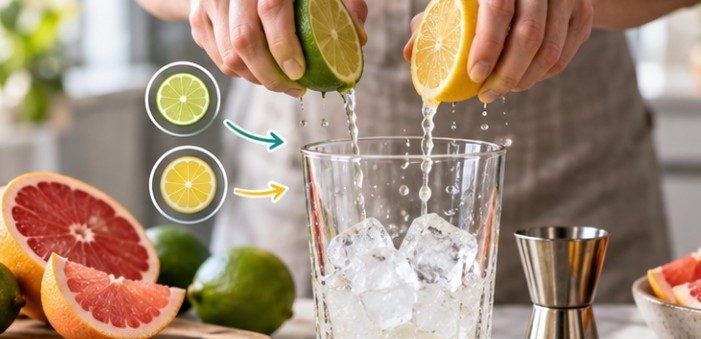
Fresh lemon and lime are the easiest tools for correcting excessive sweetness, but they are not the only options.
Grapefruit provides acidity with some bitterness. Verjus offers softer grape acidity. Unsweetened cranberry can create tartness, while a small amount of drinking vinegar or shrub can give a mocktail a sharper, fruitier edge.
Make adjustments in small amounts. Add about a teaspoon of citrus, stir, and taste again. Too much acid simply changes the problem from cloyingly sweet to aggressively sour.
A useful rule is simple: if the drink tastes flavorful but sticky, increase acid. If it tastes thin as well as sweet, acid alone probably will not solve it.
3. Introduce Bitterness and Dryness
Bitterness is one reason cocktails can taste complex even when they contain sugar. You can create a similar effect without relying on alcohol.
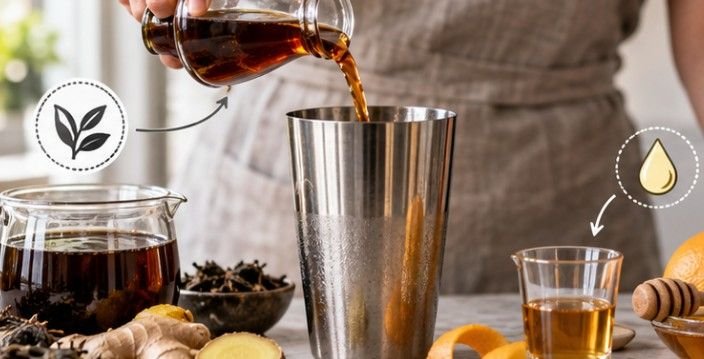
Strong unsweetened black tea is particularly useful because its tannins produce a drying sensation. Green tea, hibiscus tea, coffee, citrus peel, hops-based alcohol-free drinks, and bitter herbs can serve similar purposes depending on the recipe.
Be careful with tonic water. It contributes quinine bitterness, but many tonic waters also contain substantial sugar. Check the label rather than assuming that “bitter” means “unsweetened.”
If you are avoiding alcohol completely, check the label on cocktail bitters as well. Traditional aromatic bitters can contain alcohol even though only small quantities are normally used.
For more ideas on building a drier drink profile, see these cocktails for people who don’t like sweet drinks.
4. Let Aroma Do More of the Work
Your nose contributes enormously to what you interpret as flavor. That means aromatic ingredients can make a reduced-sugar mocktail seem much more expressive without adding another spoonful of sweetener.
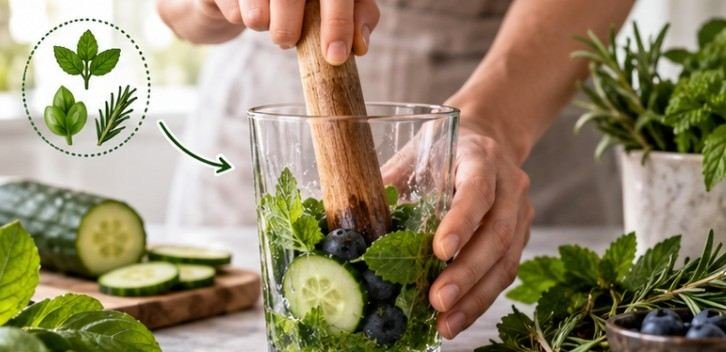
Try mint with lime, basil with strawberry, rosemary with grapefruit, thyme with lemon, cucumber with dill, or ginger with pineapple.
Its recommended to put herbs for adding flavor to beverages and notes that muddling releases aromatic oils. It also warns against excessively muddling delicate herbs such as mint and basil because they can become bitter.
Spices work particularly well when you want a drink to feel stronger. Fresh ginger, cracked pepper, cinnamon, cardamom, or a thin jalapeño slice can provide the sensory “bite” that would otherwise come from alcohol.
5. Add Body, Bubbles, and Dilution
Sometimes a low-sugar mocktail tastes disappointing because sugar was providing texture as well as sweetness.
Strong chilled tea can supply body and tannin. Aquafaba can create foam. A small amount of unsweetened coconut water can soften sharp flavors, while sparkling water adds lift without another layer of sugar.
Dilution matters too. Ice is an ingredient in cocktail construction, not merely decoration. Shaking a concentrated mixture with ice can soften intense acid, distribute aromas, and make flavors feel integrated.
Carbonation can also make a light drink feel more energetic. The Harvard T.H. Chan School of Public Health’s beverage guidance highlights just how much sugar can accumulate in common sweetened drinks, making unsweetened sparkling bases particularly useful when building lighter alternatives.
A Simple Mocktail Balancing Formula
For an 8- to 10-ounce drink, I would start with a structure like this rather than following rigid recipes.
| Component | Starting Amount | What It Does |
| Unsweetened base | 2–3 oz | Provides tea, fruit, vegetable, or botanical flavor |
| Acid | ½–¾ oz | Controls sweetness and adds brightness |
| Sweetener | ¼–½ oz | Rounds sharp edges |
| Aromatic element | Small amount | Adds herbs, zest, ginger, or spice |
| Sparkling water | 2–4 oz | Lengthens and lightens the drink |
Build the concentrated ingredients first, taste them over ice, and add sparkling water last. If it tastes too sweet, add acid or unsweetened base. If it tastes sharp and empty, add a teaspoon of syrup. If it tastes flavorful but flat, try citrus zest, herbs, carbonation, or a tiny pinch of salt before reaching for more sugar.
That approach is often more reliable than measuring sweetness alone. Readers experimenting with reduced-sugar drinks can also use the balancing principles in these low-sugar cocktails that still taste balanced.
Try This Real-World Test
Take a mocktail you already make and divide it into three small glasses. Leave the first unchanged. Add a little citrus to the second. Add citrus plus an aromatic ingredient such as mint, ginger, or grapefruit peel to the third.
Taste them side by side.
The exercise reveals an important point: reducing perceived sweetness does not always require dramatically reducing sugar. Sometimes the drink simply needs another sensation strong enough to create contrast.
Mistakes That Can Make a Less-Sweet Mocktail Worse
Do not replace regular syrup with large quantities of artificial or high-intensity sweetener if your actual goal is a drier flavor. That lowers sugar but may leave the drink tasting equally sweet.
Do not assume fruit juice is automatically low in sugar, either. Juice contributes natural sweetness even when no sugar has been added.
And avoid overcorrecting with lemon juice. A balanced mocktail should not force your mouth to choose between sugar and acid.
The better question is whether sweet, sour, bitter, aromatic, spicy, and textural elements feel as though they belong in the same glass.
Frequently Asked Questions
1. How do you make a mocktail less sweet after it has already been mixed?
Add fresh lemon or lime a teaspoon at a time. Unsweetened tea, club soda, grapefruit, herbs, or additional ice can also dilute sweetness while adding character.
2. What can replace simple syrup in a mocktail?
You may not need a direct replacement. Use a smaller amount of honey syrup, fruit, or syrup, then strengthen flavor with citrus, tea, herbs, spices, or aromatics.
3. How to make mocktails less sweet without losing flavor when using fruit juice?
Dilute the juice with unsweetened tea or sparkling water, then add citrus, herbs, ginger, or a bitter element so the fruit remains noticeable without dominating the drink.
4. Can salt make a mocktail taste better?
A very small pinch can enhance other flavors in some drinks. Use it cautiously; the goal is greater definition, not a noticeably salty mocktail.
The Last Sip
Learning how to make mocktails less sweet without losing flavor becomes much easier once you stop treating sugar as the main source of taste. Build the drink around contrasts instead: tart citrus against fruit, tannic tea against syrup, fresh herbs against bubbles, or ginger heat against a small amount of sweetness.
Start by reducing one sweet ingredient, then adjust acidity and aroma before changing anything else. Taste after every addition. That simple habit teaches you more about drink balance than memorizing dozens of recipes. The best less-sweet mocktail should not taste like something is missing; it should taste like every ingredient finally has room to speak.
Leave a Reply