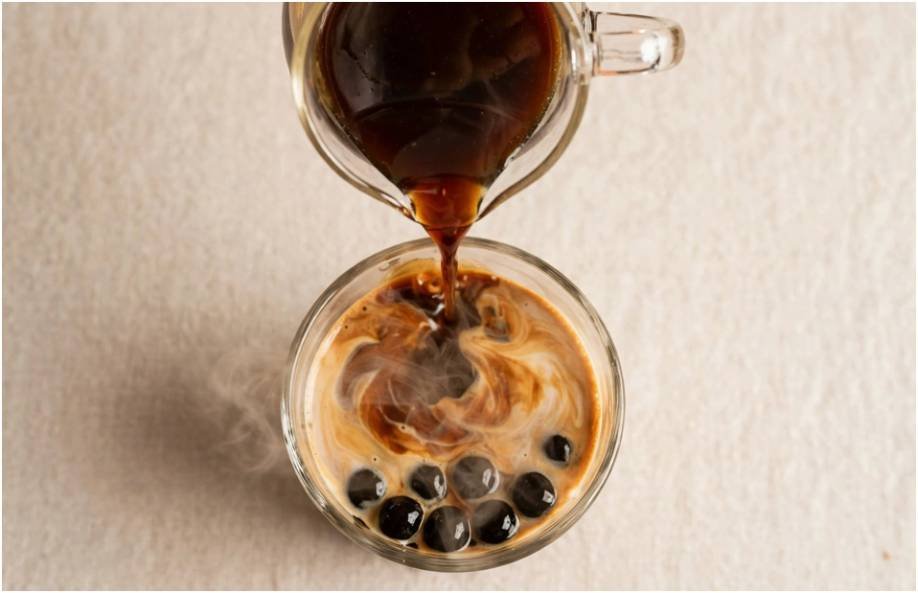
You can turn plain water and brown sugar into coffee-shop-grade syrup in under eight minutes. When learning how to make brown sugar syrup on the stove, the real challenge is not dissolving the crystals; it is preventing premature crystallization while managing water loss. Master this straightforward technique once, and you will never spend six dollars on a watered-down drive-thru latte again.
The Chemistry of Cane Sugar and Thermal Control
Brown sugar is not just sucrose. Standard brown sugar consists of refined white sucrose crystals coated in varying levels of cane molasses, as documented by the USDA FoodData Central nutritional database. That small layer of molasses introduces invert sugars (fructose and glucose), mineral ash, and organic acids that behave differently in a saucepan than pure white sucrose.
Excess heat ruins good syrup. Bringing brown sugar to an uncontrolled rolling boil flashes off water too fast. When the sucrose concentration surpasses saturation before the molasses compounds break down, jagged crystals form along the sides of the pan. Heat your mixture gently over medium-low to protect the subtle, toffee-like nuances of the molasses from scorching.
Light vs. Dark Brown Sugar: Moisture and Brix Variance
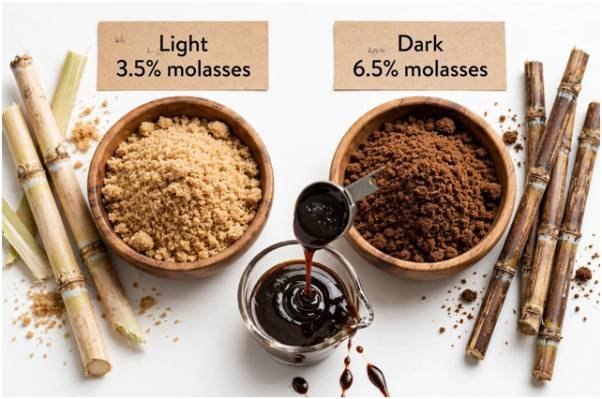
According to processing metrics detailed by King Arthur Baking, light brown sugar contains approximately 3.5% molasses by volume, whereas dark brown sugar contains nearly 6.5%. That difference changes both moisture content and flavor intensity.
Light brown sugar delivers soft caramel, butterscotch, and honeyed undertones, which complement delicate drinks like iced matcha or light-roast pour-overs.
Dark brown sugar supplies rich malt, roasted toffee, and rum-like depth, pairing naturally with dark espresso and boba milk tea.
Because dark brown sugar carries higher levels of dissolved solids, it produces a slightly denser syrup body at the exact same liquid ratio.
Equipment and Ingredient Proportions
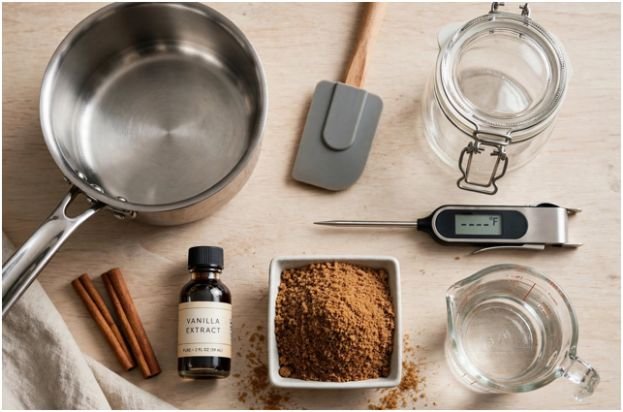
A standard batch relies on a 1:1 ratio by volume for everyday drinks:
- 1 cup (200g) packed brown sugar, light or dark
- 1 cup (240ml) filtered water
- 1 whole cinnamon stick, optional for bakery notes
- 1 teaspoon pure vanilla extract, stirred in off the heat
For a lower-glycemic alternative, try our recipe for sugar-free simple syrup using allulose or monk fruit.
Step-by-Step Stovetop Brewing Technique
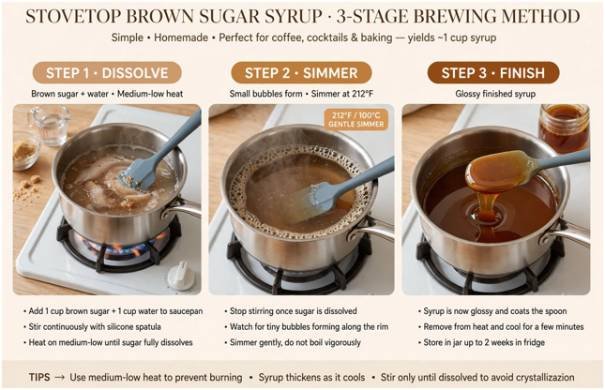
- Combine in the Pan: Add your brown sugar and filtered water to the saucepan. Drop in the cinnamon stick now if you want an infused spiced syrup.
- Dissolve Under Medium-Low Heat: Set the burner to medium-low. Stir gently with a silicone spatula, sweeping the bottom corners of the pan. Continue heating until every grain dissolves completely, which takes about 3 to 4 minutes.
- Control Your Target Temperature: Keep an eye on the surface. Small pin-sized bubbles will form along the outer rim as the liquid approaches a simmer.
If you need a heavy bar syrup for craft cocktails, you can also make rich simple syrup 2 to 1 by doubling your sugar weight.
Set aside a heavy-bottomed stainless steel saucepan, a heat-resistant silicone spatula, and a clean glass jar with a tight lid. Avoid non-stick pans with flaking surfaces, as small scratches can trigger crystallization.
Thin vs. Rich Viscosity Adjustments
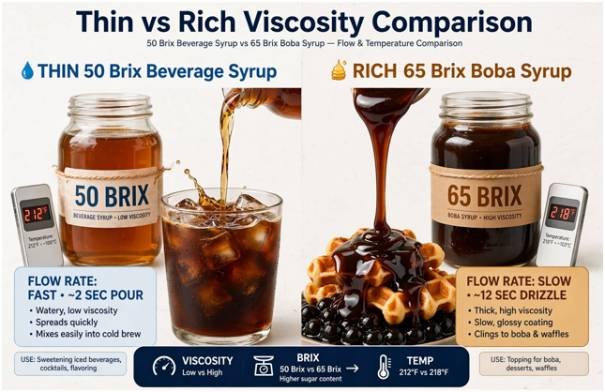
Culinary temperature testing published by Serious Eats highlights that syrup viscosity depends on moisture loss rather than cooking duration. Use a digital candy thermometer to match your intended drink style:
- Thin Beverage Syrup (50° Brix): Pull the saucepan off the burner the instant all sugar granules dissolve (around 212°F / 100°C). This creates a light, pourable liquid that disperses into cold brew, iced lattes, and cocktails without sinking to the bottom.
- Thick Boba & Pancake Drizzle (65° Brix): Lower the heat to maintain a slow simmer at 215°F to 218°F (102°C to 103°C) for 5 to 7 minutes. Water evaporates, concentrating the sugars into a slow-pouring, glossy glaze that clings to boba pearls and waffles.
Kill the heat immediately once your target consistency is reached. Stir in the vanilla extract after removing the pan from the burner so the aromatic compounds do not evaporate in the steam.
Preventing Crystallization: The Inversion Principle
Syrups often turn grainy after three days in the fridge because sucrose molecules lock back together into rigid crystal lattices. In commercial kitchens, we combat this through acid inversion.
Simmering sucrose alongside an acid splits a portion of the disaccharide into single units of glucose and fructose. These irregular monosaccharides physically block sucrose molecules from aligning, stopping crystallization entirely.
If you plan to store your batch for more than two weeks, add 1/4 teaspoon of fresh lemon juice or 1 teaspoon of light corn syrup directly to the saucepan while heating. The minuscule amount of lemon juice is imperceptible to taste, but it keeps the liquid silky smooth.
Shelf Life and Cold Storage Protocol
Let the syrup cool in the pan for 30 minutes. Funnel the cooled liquid into a glass bottle that has been sanitized with boiling water.
Store the sealed bottle in the refrigerator at or below 40°F (4°C), where a standard 1:1 brown sugar syrup remains fresh for 3 to 4 weeks. For longer preservation, pour the syrup into silicone ice cube trays and freeze for up to 6 months, thawing individual portions directly in hot morning espresso. Always discard the batch immediately if you observe cloudiness, surface mold, or a sour, fermented smell.
Brown Sugar Syrup FAQs
1. Can I use raw turbinado sugar instead of brown sugar?
Yes, but the syrup will have a lighter molasses flavor and requires an extra minute of stirring to dissolve the coarse crystals.
2. Why did my brown sugar syrup harden like candy in the fridge?
You simmered the syrup past 220°F (104°C), evaporating too much water and driving the sugar into the thread stage.
3. Can I make this syrup without boiling it?
Yes, brown sugar dissolves in lukewarm water with steady stirring, creating a delicate cold-process syrup ideal for fast cocktail prep.
4. Does brown sugar syrup need to be refrigerated?
Yes, because 1:1 simple syrup retains enough water activity to allow mold growth if left at room temperature past 48 hours.
Stop Settling for Watered-Down Drinks
Ditch artificial coffee syrups and expensive store-bought squirts. With ten minutes and two pantry staples, you have a rich, molasses-forward sweetener that rivals any craft espresso bar. Bottle a fresh batch this weekend, keep it chilled, and upgrade your morning cup.
Leave a Reply